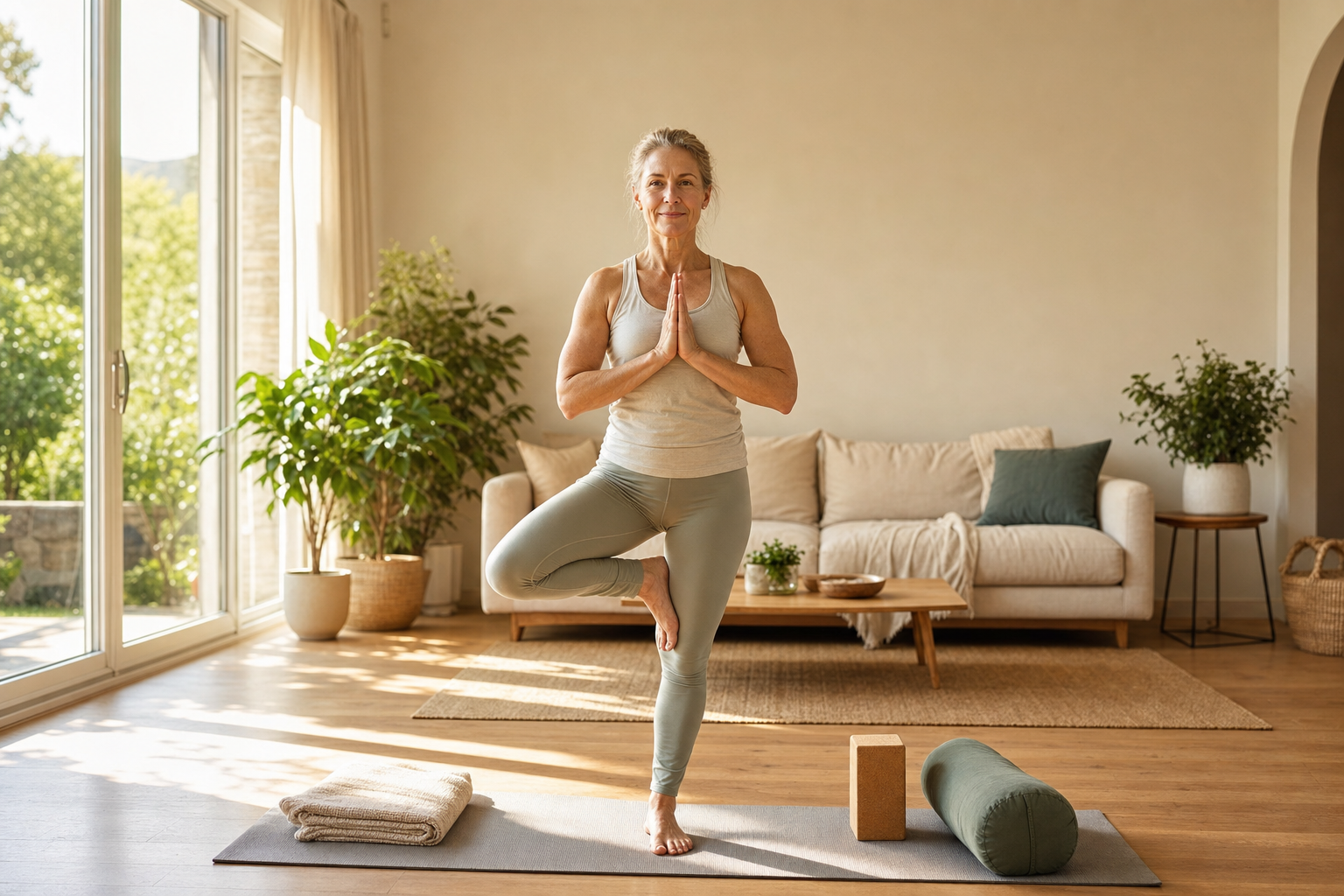
Stiff Joints, Early Mornings, and the Surprising Ways Yoga Can Help
I still remember a patient — let’s call her Karen — hobbling into my clinic complaining of morning joint stiffness. She was in her early 50s, reasonably active, but every day started with a slow-motion struggle to even get out of bed. You know the drill: ankles creak, knees protest, hips feel rusted shut. Sound familiar?
Here’s the thing: joint stiffness isn’t just an “old age” problem. Desk jobs, skipped workouts, old injuries, even too many hours on the couch can leave you feeling like the Tin Man. And while painkillers or topical rubs might numb things temporarily, they don’t address the underlying issue — that your joints are desperate for movement, blood flow, and gentle challenge.
Why Joints Get Stiff (And Why Yoga Is Different)
Let me grab my “science hat” for a second. Stiffness is often your body’s way of protecting itself from further injury. The less you move, the less synovial fluid (the joint’s natural lubricant) gets distributed, and the more the surrounding muscles shorten and tighten. It becomes a vicious cycle: you avoid movement because it hurts, but it hurts because you avoid movement.
Yoga breaks this cycle in three big ways:
- Slow, controlled movements: Unlike ballistic stretching or aggressive gym routines, yoga gently coaxes your joints through their available range of motion, signaling your nervous system that movement is safe again.
- Isometric holds: Many poses strengthen the stabilizing muscles around the joints, which (believe it or not) can actually reduce pain and stiffness over time. A 2014 review in the Journal of Rheumatology found that yoga can significantly reduce pain and improve physical function in adults with osteoarthritis — and it didn't matter whether participants were seasoned yogis or total beginners.
- Focused breathwork: There’s real neuroscience behind why your joints feel less stiff after yoga. Deep breathing downregulates your body’s pain signals and helps muscles relax. If you’re holding your breath during a pose, that tension travels right to your hips, shoulders, or wherever you’re stuck.
The Science: Can Yoga Really Help Stiff Joints?
Let’s get specific. A 2019 meta-analysis in Arthritis & Rheumatology looked at over 1,000 patients with knee osteoarthritis. Participants who practiced yoga for just eight weeks reported a 36% improvement in joint flexibility and a 33% drop in pain levels compared to non-yoga controls. Similar findings hold for rheumatoid arthritis, lower back stiffness, and even “nonspecific” aches that come with the territory after 40.
And it’s not just about pain scores on a chart. My own patients come back after a month of targeted yoga with stories like, “Hey, I can actually kneel in the garden again!” or “I got through a whole flight without my hips locking up.” That’s real-life mobility — the kind that keeps you independent, active, and doing the things you love.
My Top 9 Yoga Poses for Joint Stiffness and Mobility
Alright, onto the good stuff. Here are the poses I recommend most often. You don’t have to be a pretzel, and — honest confession — I can’t touch my toes most days either. Progress, not perfection.
- Cat-Cow (Marjaryasana/Bitilasana): The gold standard for waking up your spine. Move slowly, leading with your breath, and picture each vertebra softly gliding into action.
- Child’s Pose (Balasana): Gently opens the hips, knees, and ankles. Use a folded blanket under your knees if they’re grumpy — there’s no “wrong” way here.
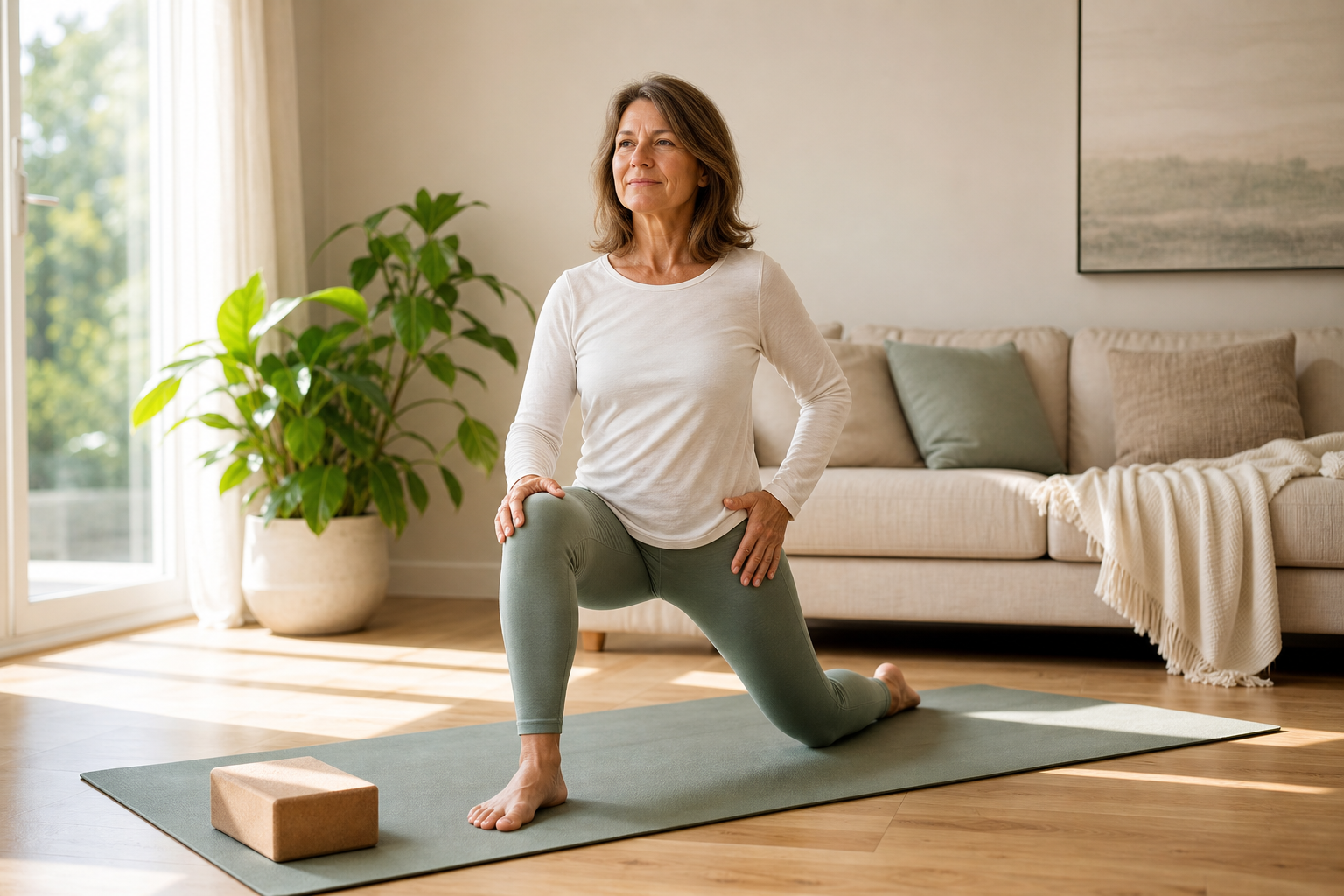
- Low Lunge (Anjaneyasana): Targets hip flexors and knees. If your knees are sensitive, pop a pillow or a thick mat underneath. Don’t force depth; just breathe into your natural limit.
- Seated Spinal Twist (Ardha Matsyendrasana): Great for lubricating lower back and hip joints. I often see people yank themselves into this pose — skip that. Gentle is key.
- Bridge Pose (Setu Bandhasana): Strengthens glutes and stabilizes knees. Hold for three slow breaths, release, repeat. It’s simple, effective, and doesn’t require fancy props.
- Reclined Figure Four (Supta Kapotasana): My favorite for tight hips and cranky sacroiliac joints. If you sit a lot, this is non-negotiable.
- Thread the Needle: Opens the chest and shoulders, relieves upper back tension, and encourages gentle rotation through the thoracic spine.
- Supported Squat (Malasana, with blocks or a rolled blanket): Deep, restorative hip and ankle stretch. Can’t squat all the way down? No shame — prop yourself up and hang out where it feels supported.
- Legs Up the Wall (Viparita Karani): This passive inversion is a game-changer for swelling, achy joints, or simply decompressing your lower back after a long day. I sometimes recommend this as “yoga for people who don’t want to do yoga.”
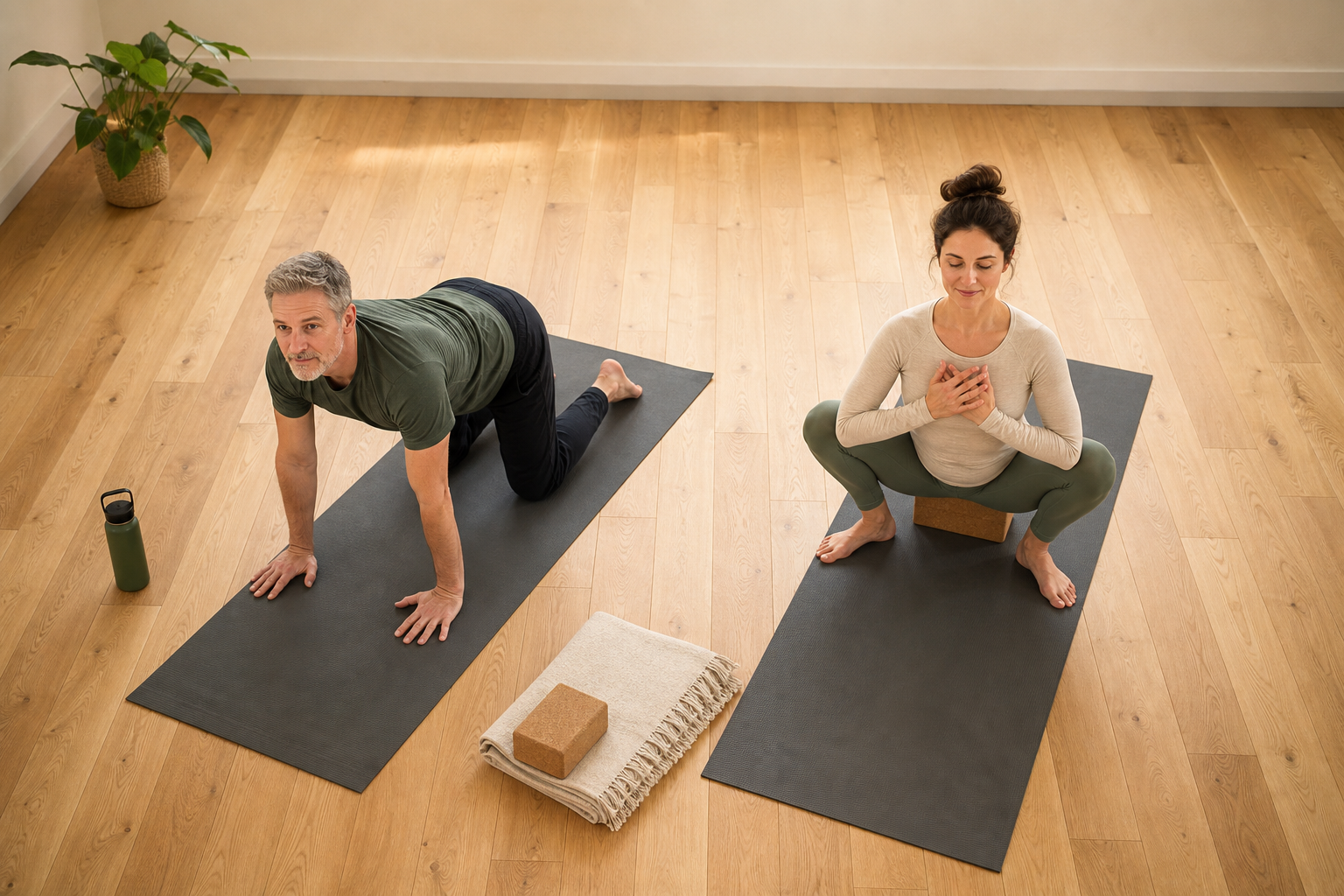
Start with 3-5 poses, spend 30-60 seconds in each, and focus on gentle movement rather than static stretching at first. If you’re nodding along, you’re not alone — most people think yoga has to be a one-hour ordeal. Not true. Five mindful minutes can make a bigger difference than an hour of mindless stretching while scrolling your phone.
How Often? What If I’m Not Flexible or Have Arthritis?
I get this question at least twice a week. You don’t need to be flexible to start yoga — you do yoga to become flexible. For most, 10-15 minutes every other day is a fantastic beginning. If you have arthritis (especially in weight-bearing joints), talk to your doctor or physical therapist first. A 2017 BMJ study found that even gentle chair yoga led to a 20% improvement in mobility for older adults with severe osteoarthritis. The key? Consistency and compassion for your body’s current limits.
My Essential Add-Ons (That Patients Actually Use)
Here’s where it gets interesting — and yes, a little controversial. Most articles will tell you to “just use a mat and your breath.” In reality, gentle props and a few smart tools can make yoga safer and more effective for people with joint stiffness.
- Knee Braces or Compression Sleeves: If you have unstable, achy knees, don’t tough it out. I’ve personally tried the Modvel Compression Knee Brace — it’s affordable, comes as a pair, and the anti-slip silicone means you’re not readjusting during every Down Dog. Over 75,000 reviews can’t all be wrong. Is it a miracle cure? Of course not. But it adds just enough stability to make poses accessible again.
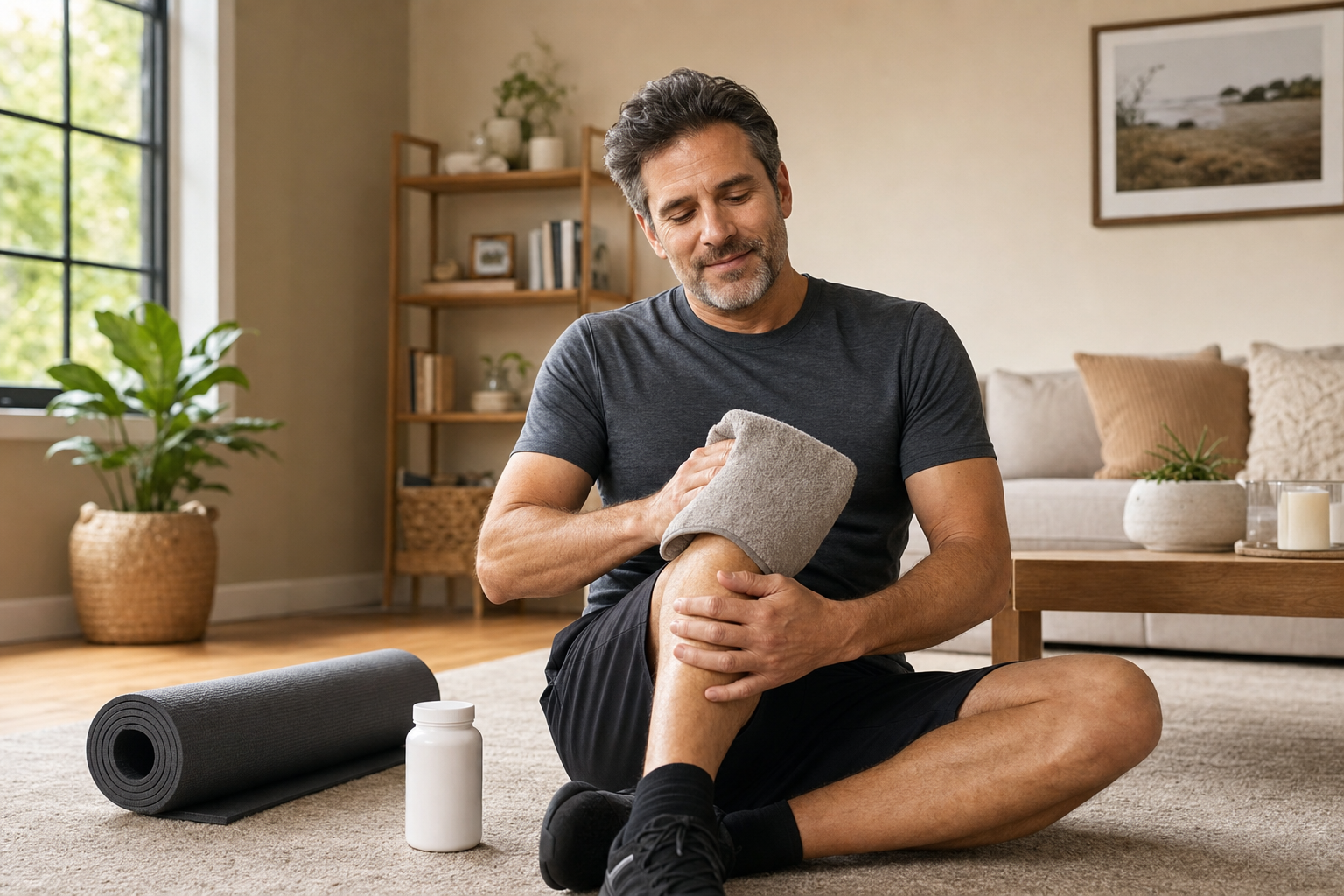
- Heating Pads Post-Practice: Sometimes even gentle yoga leaves joints a bit cranky — especially if you’re getting back into movement. I’m a big fan of the Pure Enrichment PureRelief XL Heating Pad. The XL size covers your whole lower back or both knees at once. The moist heat setting? A game-changer for deep, penetrating relief, especially after new stretches.
- Supplement Support: Now, here’s where the debates get spicy. There’s no magic pill for joints, but certain supplements can support cartilage health and inflammation. I tend to recommend a blend of glucosamine, chondroitin, turmeric, MSM, and boswellia, like Glucosamine Chondroitin Turmeric MSM & Boswellia by Vimerson Health. Multiple studies — notably a 2016 trial published in Clinical Rheumatology — have shown this combo outperforms placebo for mobility and pain reduction, especially when paired with gentle exercise. Just double-check with your doc if you’re on blood thinners or have kidney issues.
Not gonna lie — I was skeptical about supplements for years. But I’ve seen enough patients improve with the right formula (and enough waste money on the wrong ones) to feel good recommending the above when it fits.
Other Science-Backed Strategies to Pair With Yoga
Yoga’s fantastic, but it works best as part of a bigger mobility plan.
- Hydration: Sounds simple, but dehydration can literally shrink your cartilage. I aim for half my body weight (in pounds) as ounces of water a day — so a 150-lb person would target 75 oz. Try it for a week; you might be surprised.
- Gentle walking or cycling: Even five minutes after yoga helps keep synovial fluid moving, especially if you’re struggling with “first step in the morning” pain.
- Anti-inflammatory diet: This is a whole topic on its own, but in short: more fatty fish and greens, less sugar and ultra-processed snacks. I once had a client who cut out soda and lost 40 pounds — and the real kicker, her knee pain halved. Go figure.
The Limits (And Realities) of Yoga for Stiff Joints
I’d love to tell you yoga is the answer to everything, but — I know this is unpopular — it’s not. Some joint stiffness comes from old injuries, autoimmune conditions, or even structural changes (like severe arthritis) that need medical attention. If your stiffness is accompanied by dramatic swelling, fever, or sudden loss of mobility, stop and check with your doctor. That’s not “just getting older.”
But for the vast majority of folks — if you’re dealing with mild to moderate stiffness and just want to move better — the right yoga poses, paired with a few smart tools, can be transformative. And it’s never too late. My mother-in-law started doing Chair Yoga at 74. She’s not doing handstands, but she walks up the stairs without grabbing the railing now.
Key Takeaways for Getting Started
- Start small. Five to ten minutes, a few times a week, is enough to notice change.
- Use props, compression, and heat as needed — there’s no “bonus points” for struggling through pain.
- Breathe deeply. If you’re holding your breath, you’re working too hard.
- Be patient. Stiffness didn’t turn up overnight, and it won’t resolve instantly. But with consistent effort, your body will surprise you.
- And above all — if something feels wrong, sharp, or scary, pause and check in with a professional.
If you try any of these poses or tools, I’d love to hear your experience. Shoot me an email (yes, I actually read them) or drop your questions below. Until then — keep moving, keep breathing, and don’t let stiff joints call the shots. Your mobility isn’t gone for good; it’s just waiting for a bit of encouragement.
Stay well,
Dr. Michael Torres, DC
Chiropractor & Nutrition Counselor