
A Reader’s Frustration—and Why Walking Isn’t Always So Simple
I got an email last month from a reader named Carol. She’s 62, recently retired, and feeling... well, a bit betrayed by her own knees. She asked, “Sarah, everyone says ‘just walk more for your joints’—but my left knee throbs after 10 minutes. Am I just doomed?”
Honestly, I hear this story every week. It’s not just you, Carol. You want to stay active, keep your joints mobile, maybe share a walk with a friend or keep up with grandkids. But the reality? That first step (literally) can feel like a mountain. Pain, stiffness, worry that you’ll make things worse. I’ve seen it in my clinic for 12+ years—most advice out there just doesn’t get it. And here’s the crazy part: research does show walking helps joint health over 50... but only if you do it right.

If Your Joints Protest: You’re Far From Alone
If you’re nodding along, you’re definitely not alone. About 30% of adults over 50 report regular knee, hip, or foot pain (Journal of Rheumatology, 2020). And age isn’t the only culprit—old injuries, extra weight, even just years of living. I see folks who ran marathons in their 30s, and now they’re limping through grocery aisles. Then there are those who avoided movement because of pain, only to find out that doing nothing makes the stiffness even worse. It’s a frustrating cycle.
Here’s where a smart walking program really comes into play—one that respects your joints and helps you gradually get stronger. Not just “walk more,” but “walk wisely.”
What the Science Actually Shows About Walking and Joints After 50
Let’s cut through the myths. “Walking ruins your knees” is one I hear all the time. But the best evidence? Walking, done properly, actually protects your joints. The Arthritis & Rheumatology journal published a study in 2022 following over 1,200 adults aged 50–80. The big finding: those who walked at least 6,000 steps a day (about 45–60 minutes, split however you like) had less cartilage loss and lower risk of knee osteoarthritis progression.
But here’s the kicker—they didn’t just throw on sneakers and go. Successful participants started slow, tracked their steps, and paid close attention to pain cues. Researchers noted that the consistency mattered more than the actual speed or distance at first.
Other studies (BMJ, 2019) show that moderate walking boosts joint lubrication, improves cartilage health, and even reduces inflammatory markers in people over 50. And a 2018 meta-analysis found a 20–30% lower risk of mobility issues in regular walkers versus sedentary peers. That’s huge.
How Walking Helps (But Also How It Can Backfire)
- Synovial fluid circulation: Walking acts like a pump, moving lubricating fluid through your joints. Think: WD-40 for your knees.
- Muscle activation: It builds up the muscles that stabilize your joints, which reduces stress on the cartilage.
- Inflammation reduction: Regular motion helps manage inflammation—unless you overdo it, then the opposite happens.
- Bones get stronger: Weight-bearing activity (like walking) helps maintain bone density, especially important post-menopause.
But I’ve also seen people go from zero to 10,000 steps overnight—next thing they know, they’re icing their knees and skipping walks for a week. Pacing is everything.
Building a Walking Program for Joint Health Over 50: The Details That Matter
Step One: Assess Your Baseline—Without Judgment
Before you hit the trail or treadmill, figure out your real starting point. I usually tell folks: for one week, wear a basic pedometer or use your phone’s step counter. Don’t change a thing yet. How much are you walking now without extra effort? 2,000 steps? 5,000? Be honest. There’s no prize for starting high—this is about sustainability, not ego.
Step Two: Set a Realistic, Joint-Friendly Goal
If your daily average is 3,500 steps, try bumping it up by 500 per week. If you’re already at 7,000? Aim for consistency, not more miles. Research suggests that 6,000–8,000 steps/day is the sweet spot for joint health in most over-50 adults (again, per that major Arthritis & Rheumatology study). But if you can’t hit that right away? No shame. Every extra step counts.
Step Three: Master Pre-Walk and Post-Walk Rituals
I know, stretching seems old-school. But dynamic warm-ups—think gentle leg swings, ankle rolls, a little marching in place—prime your joints for movement. Five minutes is plenty. After your walk, slow down, then do a few static stretches (hamstrings, calves, quads). Got extra stiffness? This is where a heating pad comes in. My mother-in-law swears by her Pure Enrichment PureRelief XL Heating Pad—extra-large, moist heat, covers both knees if she sits cross-legged. It’s not a miracle cure, but it does make that after-walk stiffness feel less intimidating.
Step Four: Pick the Right Gear—It Really Matters
Look, good shoes matter more than fancy accessories. Find a pair with shock-absorbing soles and plenty of toe room. (If you have a high arch or flat feet, talk to a footwear specialist.)
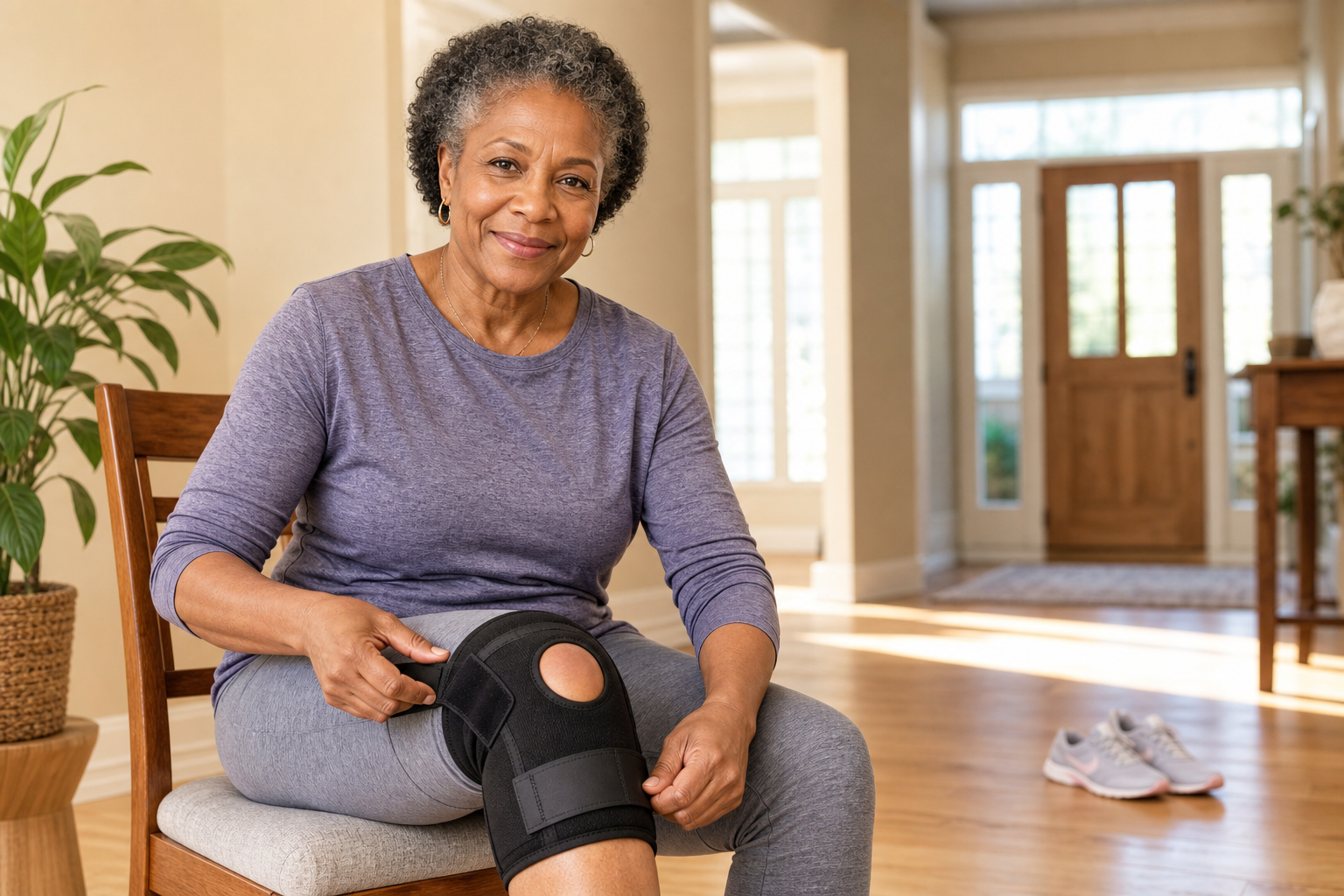
But for those who need a little extra knee stability, especially on inclines or longer walks? A supportive knee sleeve can be a game-changer. The Modvel Compression Knee Brace is popular for a reason—breathable, supportive, and actually stays put thanks to those little anti-slip silicone strips (I’ve seen cheaper sleeves bunch up and become useless halfway into a walk). Quick story: A patient of mine, John, was able to double his walk time after adding these braces, mainly because he felt more confident and less wobbly.
Common Roadblocks: What to Do When Your Joints Push Back
Even the best-laid plans can run into trouble. Here’s what I hear most—and how to troubleshoot:
- Sharp pain during or after walking? Stop, rest, and do not power through. Sharp, stabbing pain (not just soreness) needs evaluation. Talk to your doctor or physical therapist.
- Swelling or warmth around a joint? Ice and elevate. If it’s persistent, get it checked—could be a sign of inflammation or a flare-up.
- Knee feels unstable? Try a compression sleeve for your next walk, and consider strengthening exercises off-days (simple chair squats and calf raises are a great start).
- Motivation tanks? This is real. Find a walking buddy, pick a podcast, or break up your walks into 2–3 mini-sessions a day. Consistency, not heroics, keeps joints healthy.
And here’s the most controversial advice I give: If your joint pain is unpredictable or severe, it’s okay to skip a day or swap for gentle biking or swimming. “No pain, no gain” doesn’t apply to arthritic joints. Listen to your body—there’s no gold medal for suffering through pain.

Nutrition and Supplementation: Does Anything Really Help?
This is where people get overwhelmed. I’ll be honest—I’ve reviewed dozens of joint supplements, and the evidence is mixed. Some people swear by glucosamine and chondroitin (standard dose: 1,500mg glucosamine sulfate, 1,200mg chondroitin). Others feel nothing.
If you’re curious (and your doctor agrees), a comprehensive supplement like Glucosamine Chondroitin Turmeric MSM & Boswellia from Vimerson Health combines several ingredients with some evidence for anti-inflammatory and joint-support effects. Over 43,000 reviewers can’t all be wrong, but again—supplements aren’t magic. And if you’re on blood thinners, have allergies, or other medical issues, always check with your doctor first.
Outside of a bottle, don’t overlook the basics: stay hydrated, aim for a Mediterranean-style diet (think: fatty fish, leafy greens, nuts, olive oil). There’s growing evidence (BMJ, 2021) that these foods can tamp down chronic inflammation, keeping your joints happier in the long run.
Beyond Walking: Cross-Training for Real-World Joint Protection
This is the part most walking articles skip. Sure, walking is fantastic—but your joints love variety. Gentle yoga, water aerobics, cycling, or even basic bodyweight strength moves each week keep your knees, hips, and ankles resilient. Plus, if you hit a setback (we all do), these other activities reduce the odds you’ll just stop moving altogether.
For my clients over 50, I recommend:
- Strength training twice a week: Focus on bodyweight squats, wall push-ups, resistance band work—don’t worry, you don’t need a gym!
- Balance work daily: Stand on one leg while you brush your teeth, or practice simple heel-to-toe walks. Falls are a big concern over 50, and strong joints help, but so does sharper balance.
- Active recovery: Don’t underestimate gentle stretching, foam rolling, and, yes, the occasional ‘lazy day’ with a heating pad if your joints are rebelling.
Why Consistency Wins (and the Secret Sauce Is Patience)
I’ve seen people transform their mobility in six months—with fewer steps than they thought possible. It rarely looks like a straight line. Progress happens in fits and starts. Some weeks, you’ll fly. Others, every joint complains. Here’s the thing: Stick with your program, adjust as needed, and don’t compare your journey to anyone else’s. That’s my soapbox moment—it’s the only way I’d trust myself (or anyone over 50) to make walking a lifelong joint-support habit.
Takeaways: My Prescription for Walking and Joint Health Over 50
- Start with your actual baseline, not your ideal. It’s way more sustainable.
- Increase steps gradually. 500 extra per week is plenty for most.
- Prioritize comfort and support: Good shoes, optional knee sleeve, and—no shame—a heating pad for recovery days.
- Mix it up. Walking’s the anchor, but strength, balance, and stretching matter just as much.
- Be persistent, not perfect. Progress isn’t linear, and missing a day (or week) is not failure.
If you’re over 50 and thinking about starting—or restarting—your walking program, know this: you don’t have to suffer to get stronger. Respect your joints, listen to your body, and lean on the tools that actually help. And if you ever have questions, you know where to find me.
Here's to smoother, steadier steps—no matter what decade you’re in.
Dr. Sarah Mitchell, DPT is a licensed physical therapist, Senior Health Editor at JointReliefReviews, and walking program skeptic turned believer. She’s helped hundreds of adults over 50 rediscover pain-free movement—one step at a time.