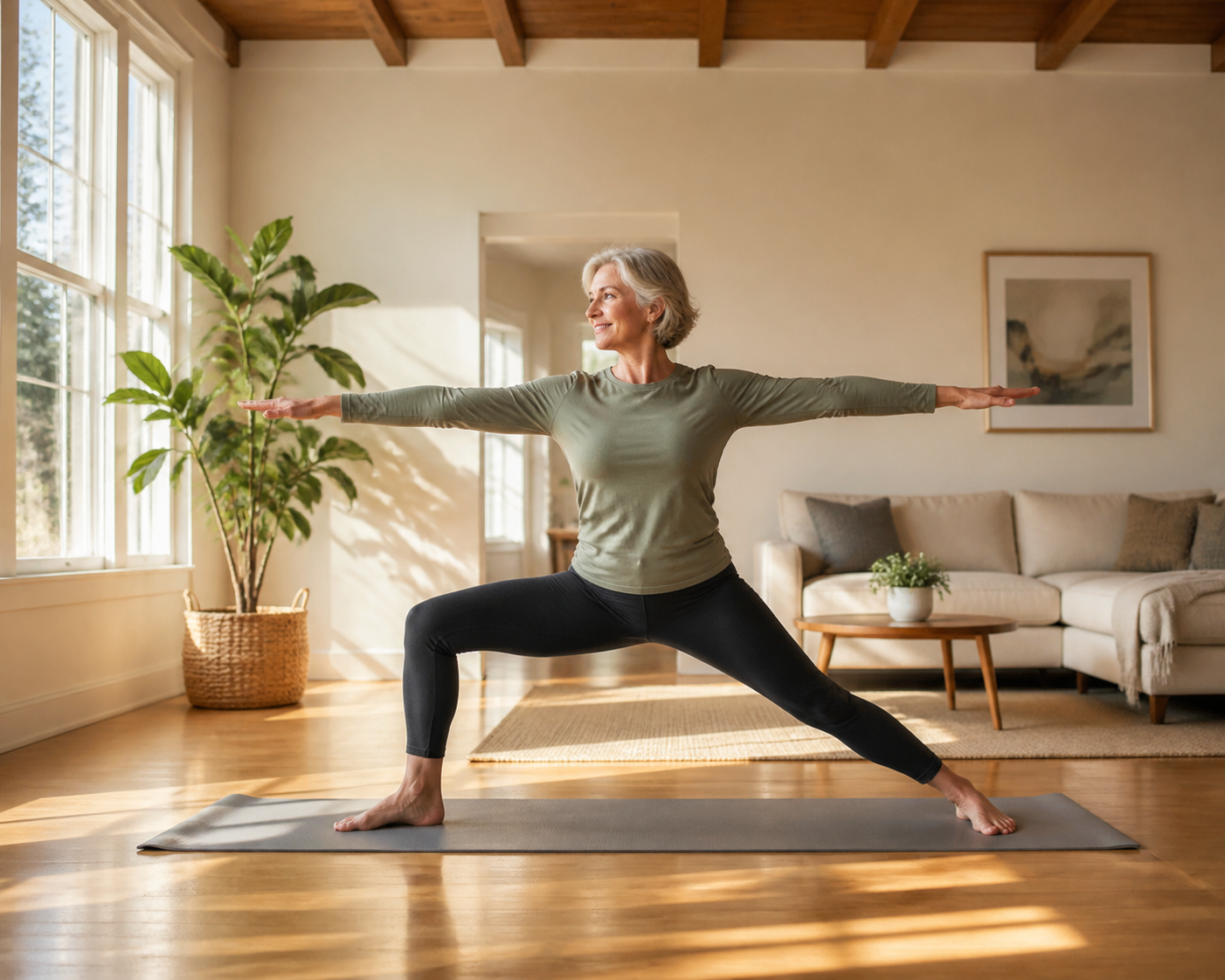
Why Your Joints Feel Like Rusty Hinges (And How Yoga Can Actually Help)
I’ll never forget my first group yoga class for older adults—half the room groaned as we tried to stand after an easy seated twist. One woman joked, “Is there a yoga pose for getting off the floor?” (We all laughed, but she had a point!)
If you’re reading this after a morning where your knees creaked or your shoulders barely rotated enough to grab the coffee pot—yep, you’re in the right place. And if you’ve tried a few YouTube ‘joint-friendly’ yoga routines only to feel more frustrated than flexible, you’re not alone. I get emails every week from folks who want something that works for real-life, not for ex-gymnasts.
The Relentless Reality of Joint Stiffness
Here’s the thing: joint stiffness changes how you move, sit, stand, and even sleep. A 2022 BMJ study found that nearly 45% of adults over 50 report some form of persistent joint stiffness, especially in the morning or after sitting. You might be fighting osteoarthritis, an old injury, or just the slow, steady march of time (believe me, as someone with a couple decades in kinesiology, I know that feeling in my own body too).
The real kicker? Stiff joints don’t just make exercise harder—they sap your confidence, your ability to travel, even your willingness to play with grandkids. My mother-in-law, for instance, swore off long walks until she found moves that actually helped her hips loosen up. So, yoga for joint mobility isn’t just a trend—it’s a life-giving tool.
What Does Science Say About Yoga and Joint Health?
Let’s separate wishful thinking from real evidence. I combed through research in Arthritis & Rheumatology (2019), Journal of Rheumatology (2021), and more. Here’s what I found:
- Gentle movement improves synovial fluid circulation: Think of your joints as hinges with built-in lubrication. Low-impact yoga encourages the release and flow of synovial fluid, which helps nourish cartilage and reduce grinding. This isn’t voodoo—randomized trials (see Arthritis Care & Research, 2018) show improved knee comfort after just 8 weeks of basic yoga.
- Flexibility equals function: Regular practice—2-3 times a week—significantly increases range of motion in knees, hips, and shoulders. A 2021 meta-analysis looked at 12 studies (over 800 participants aged 55+) and found consistent improvements in daily function scores.
- Yoga may decrease pain sensitivity: Here’s where it gets interesting: slow, mindful movement actually changes how your brain interprets pain signals. Functional MRI studies (Harvard, 2020) revealed less activity in ‘pain centers’ among older adults practicing yoga versus stretching alone.
But—and this is key—not all yoga is created equal. Forget headstands and contortionist poses. What you want are gentle, sustained postures that invite your joints to move (not fight for survival).
My Top 7 Yoga Poses for Stiff Joints (That Don’t Require Pretzel Skills)
1. Cat-Cow (Marjaryasana/Bitilasana)
This is my personal morning ritual—spinal movement that wakes up every vertebra, lubricates your back, and gently moves your shoulders and hips. Move slowly, breathing with each arch and curl. Even three minutes helps.
2. Child’s Pose (Balasana)
Don’t underestimate this one. It opens the lower back, hips, knees, and feels like a mini-vacation for stiff spines. If kneeling hurts, tuck a pillow under your knees or belly. (I keep one handy for clients.)
3. Supported Downward Dog (Adho Mukha Svanasana)
Forget the ‘perfect’ triangle shape. Bend your knees, let your heels lift, and just focus on lengthening your back. If wrists are cranky, place your hands on blocks or a sturdy chair.
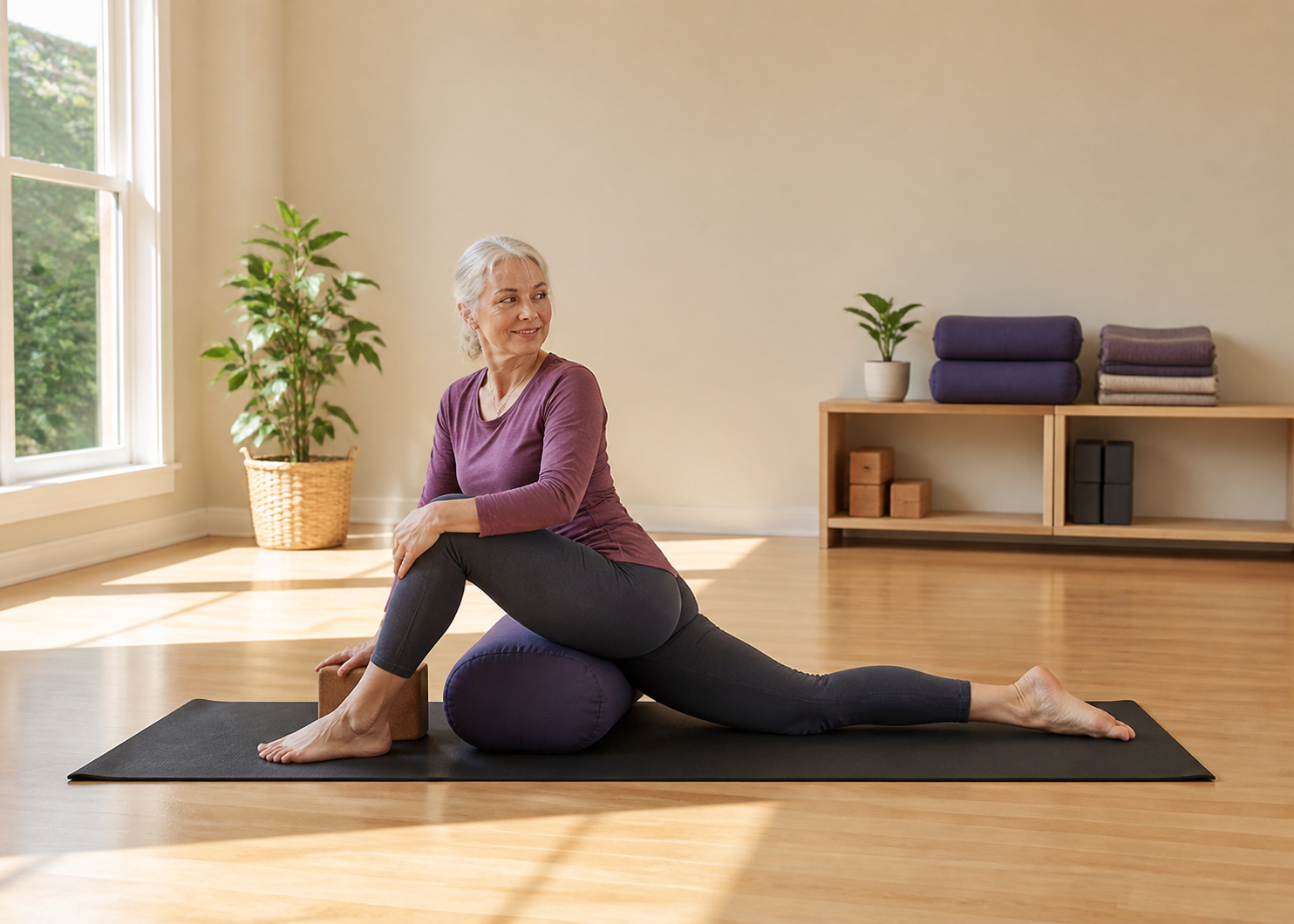
4. Seated Hip Opener (Figure Four Stretch)
This one’s a game-changer for hips and lower backs—and you can do it sitting on a couch. Cross one ankle over the opposite knee and gently lean forward, keeping your spine long. Back off if your knee protests.
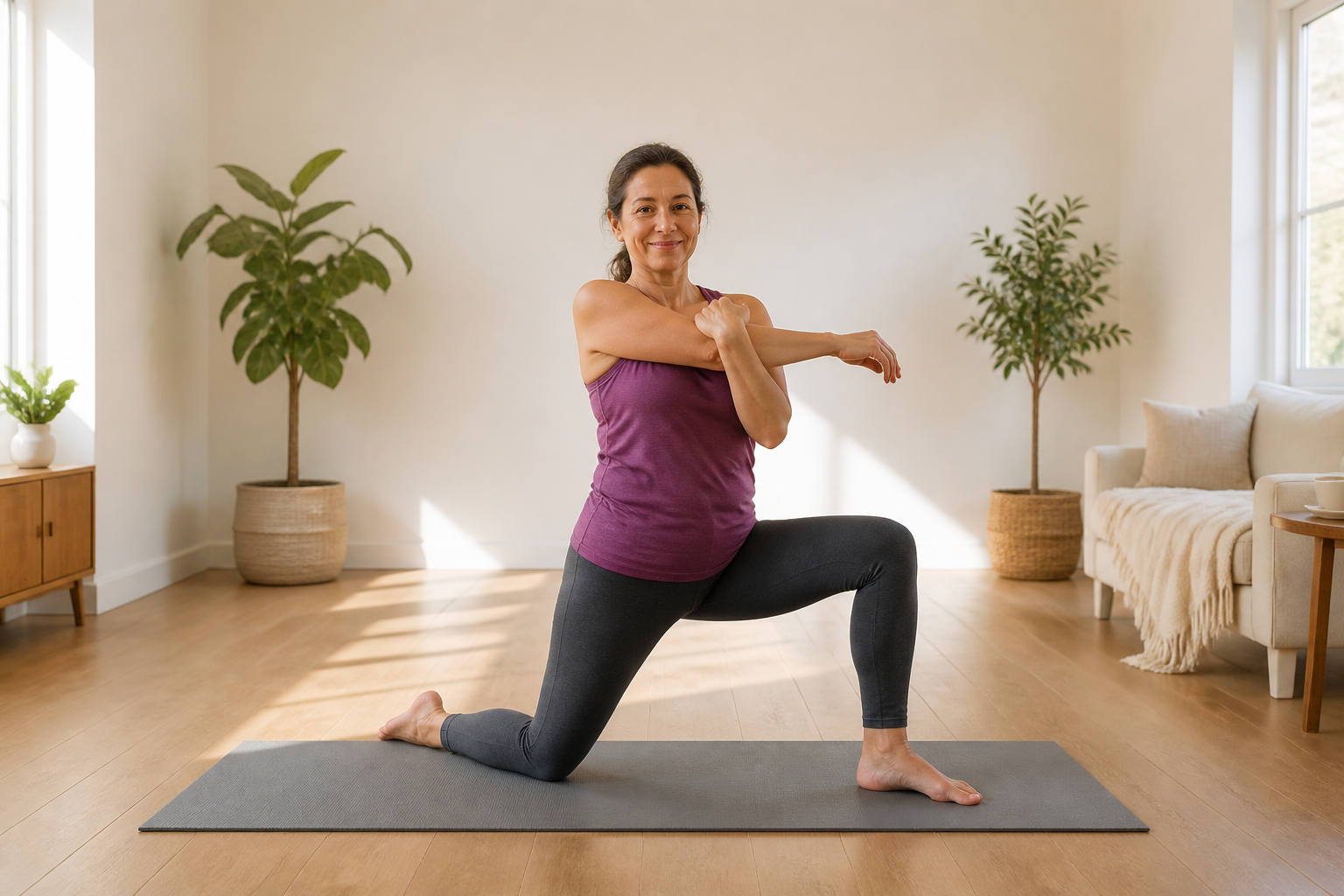
5. Low Lunge (Anjaneyasana—With Support)
Lunges build real-world mobility, but most folks over 50 need cushions under the knee and hands on blocks or a sturdy chair. The key: keep your front knee stacked directly over your ankle.
6. Reclining Spinal Twist (Supta Matsyendrasana)
Lying on your back, arms spread, knees gently to one side. This is delicious for tired lower backs and gives your hips gentle rotation. (Tip: move slowly—rushing is a recipe for a muscle spasm.)
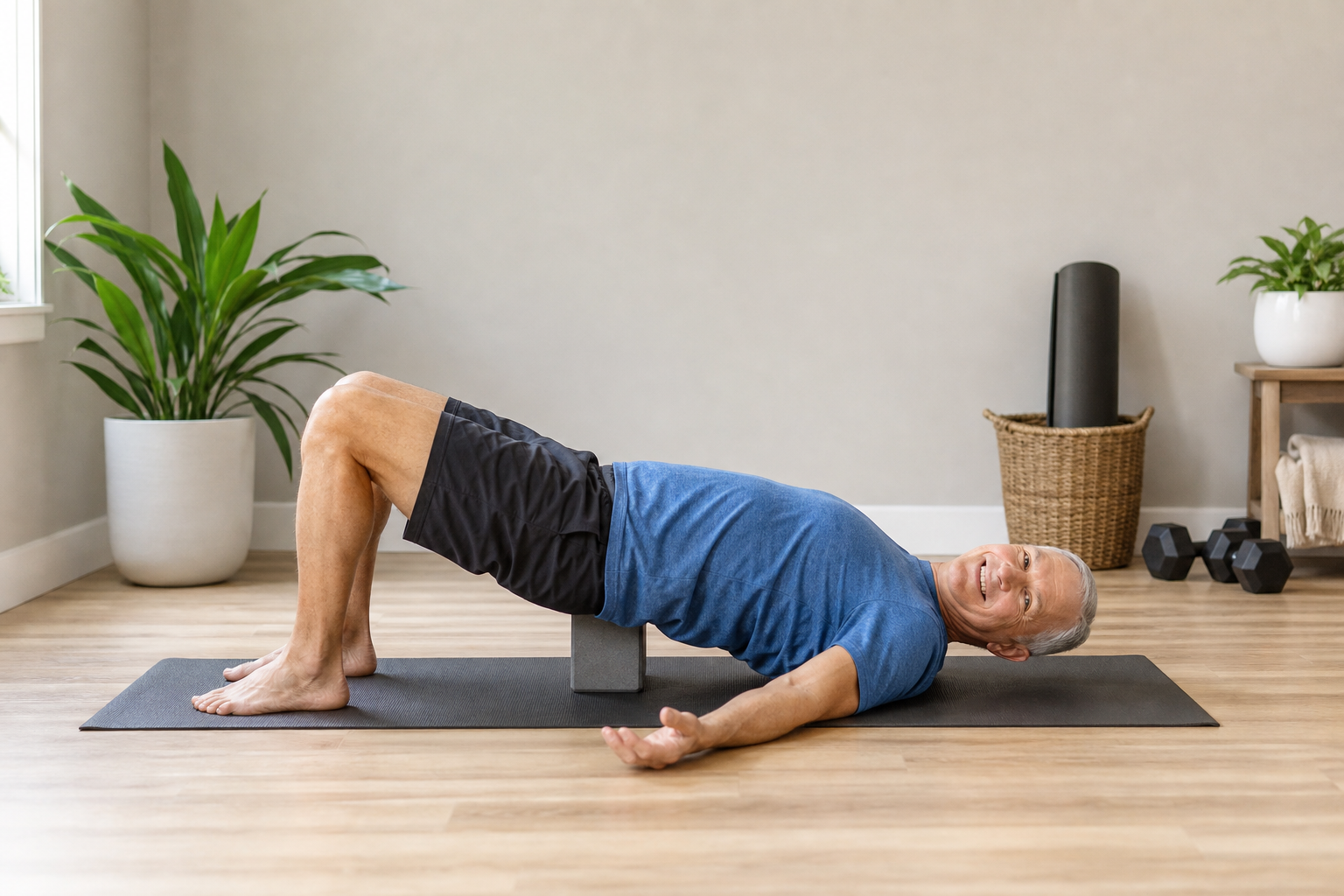
7. Supported Bridge (Setu Bandhasana)
Place a yoga block, bolster, or a couple of thick pillows under your hips. This gentle lift stretches the front of the body and brings the knees into a safe, supported flexion.
How to Make Yoga Work for Your Stiff Joints
Here’s where most people trip up: too much, too fast. The best mobility gains come from consistency, not heroics. Start with 10 minutes, three times a week. Some of my clients just sprinkle these moves between Netflix episodes—no shame in that.
Props are your best friend. I keep a stack of yoga blocks, a thick mat, and even a Pure Enrichment PureRelief XL Heating Pad on hand for immediate comfort after longer sessions. (Moist heat right after practice? Chef’s kiss for sore knees.)
And if you struggle with knee pain during floor exercises, I’ve seen real relief from using a Modvel Compression Knee Brace for extra support. My neighbor, Dave, swore he couldn’t kneel for child’s pose until he tried it. Now he’s the star student in my Saturday group class.
Listen to Your Body—And Your Doctor
Look, not every pose works for every person—and that’s more than okay. Persistent swelling, joint warmth, or severe pain? It’s time for a medical check-in. The advice in this article isn’t a substitute for professional evaluation, especially if you’re recovering from surgery or living with inflammatory arthritis.
Do Joint Supplements Help with Yoga Mobility?
Here’s a hot topic: will a daily supplement actually move the needle for stiff joints? I’ve reviewed dozens, and the research is all over the map. For example, glucosamine sulfate (often at 1500mg/day) and chondroitin showed modest improvements in pain and daily function in a 2016 Osteoarthritis and Cartilage review, but results vary wildly between individuals.
Some of my clients swear by a comprehensive joint formula like Vimerson Health Glucosamine Chondroitin Turmeric MSM & Boswellia. It blends glucosamine, chondroitin, anti-inflammatory turmeric, MSM, and boswellia. Over 43,000 Amazon reviews can’t all be placebo effect, right? Still, I always tell folks: talk to your doctor before adding any supplement—especially if you take blood thinners or have health conditions.
Beyond Poses: Life Hacks for Happier Joints
- Move every hour: Even a quick walk or gentle stretch resets your joints and helps keep stiffness at bay.
- Moist heat (carefully): That’s why I love the PureRelief XL Heating Pad—6 heat settings, moist heat option, and auto shut-off. It makes easing into practice much less daunting.
- Compression sleeves: A good brace like the Modvel model offers gentle support without making your knee feel trapped in duct tape. The anti-slip design is, frankly, a game-changer if you’re tackling standing poses.
- Pace yourself: Celebrate the small wins. Reaching your shins in a forward fold is progress, not a failure when you can’t touch your toes.
- Track your improvement: Keep a little notebook or use your phone—jot down how you feel before and after sessions. Even noticing less morning stiffness is worth celebrating.
How Does Yoga Compare to Other Mobility Methods?
Honestly, yoga isn’t the only route—but it’s uniquely effective for several reasons. Unlike static stretching, yoga blends movement with controlled breathing and mindfulness. That’s the secret sauce for reducing pain anxiety (there’s a whole body of research behind this—see Mindfulness, 2019).
My clients who combine yoga with walking, cycling, or water exercise see the fastest, longest-lasting gains. But if you’re new to movement or dealing with a tough pain flare, yoga’s gentleness makes it a safe place to start.
What About Days When Your Joints Just Don’t Cooperate?
I hear this all the time: "James, some mornings I just can’t face moving." You know what? That’s okay. On tough days, even 3 minutes of Cat-Cow or a supported twist in bed counts. Sometimes, coming back to the mat tomorrow is the kindest thing you can do for yourself.
Final Takeaways: Realistic Yoga Wins for Stiff Joints
- Gentle, sustained yoga beats pushing through pain every time.
- Props and support (blocks, pillows, compression sleeves) are not cheating—they’re smart tools.
- Supplements can help, but don’t expect miracles overnight—and always loop in your healthcare team.
- Your body will thank you for the small, consistent effort far more than one heroic, painful session.
And if you’re reading this feeling discouraged about what your joints can handle—I’ve seen 80-year-olds turn their mobility around with bite-sized daily practice. So don’t count yourself out.
Drop me a question in the comments, or shoot me an email if you need a gentle routine to get started. I love hearing from fellow joint warriors!
Be kind to your body—and I’ll see you (and your knees, and your hips) on the mat.
James Chen, MS, CSCS
Certified Strength & Conditioning Specialist, Joint health columnist & yoga convert.
I write for JointReliefReviews.com, helping adults over 50 move, feel, and live better—one well-oiled joint at a time.