Why Yogis (and Doctors) Swear by These Poses for Joint Stiffness
I don’t know about you, but there was a point a few winters ago when my knees felt like rusty door hinges every morning. That bone-deep stiffness—the kind that makes you dread getting up off the couch—wasn’t just an occasional nuisance. It was daily. And here’s the kicker: I was only in my early forties, not eighty-five like my grandmother (who, by the way, swore by her morning stretches).
If you’re nodding along, you’re not alone. According to the Arthritis Foundation, more than 54 million Americans experience some form of joint stiffness. And get this—research published in Arthritis & Rheumatology (2019) found that nearly 70% of older adults report morning stiffness lasting more than 30 minutes. It’s not just about age, either. Sedentary jobs, old sports injuries, even weather changes—there are a hundred culprits for creaky, stubborn joints. But here’s where yoga gets interesting:
The Problem: Joint Stiffness Isn’t Just Annoying—It’s Limiting
Maybe you used to hop out of bed, but lately you shuffle. Or you wince coming down stairs. Maybe it’s the shoulders that won’t reach overhead, or wrists that ache when you chop veggies. I’ve heard them all—my inbox is full of readers looking for relief that doesn’t mean yet another pill.
And let’s have a moment of honesty: stretching feels pointless when you’re already stiff. That’s the paradox. The less you move, the stiffer you get. The stiffer you get, the less you move. It’s a vicious cycle, and it doesn’t fix itself.
What Actually Happens in Stiff Joints? A Quick Science Lesson
Here’s the thing: joint stiffness isn’t just "old age." It’s usually a cocktail of factors—thickening synovial fluid (that’s the joint’s natural lubricant), inflammation from micro-injuries, and shortening of the tissues around your joints. The Journal of Rheumatology (2021) even found that people with chronic stiffness have much lower joint space width, meaning cartilage is wearing down more quickly.
The good news? Your body is surprisingly adaptable. Within weeks of gentle, regular movement, the synovial fluid thins out—making it easier for your joints to glide. That’s the magic of yoga: controlled movements, deep breathing, and sustained holds that slowly retrain both your muscles and your brain’s perception of pain.
One study from BMJ Open (2022) looked at older women with persistent knee stiffness. After 12 weeks of a basic yoga routine—literally just 20 minutes, three times a week—participants reported a 30% decrease in stiffness and a significant improvement in walking speed. Not a miracle cure... but honestly, for a lot of us, that’s huge.
Why Yoga? (And Why Not Just Stretching?)
Look, traditional stretching is fine. But yoga puts your joints through active range of motion, not just static holds. When you flow between poses—or simply hold a pose while focusing on breath—you’re engaging supporting muscles, lubricating joints, and easing tension in connective tissue. It’s not a silver bullet, but in my experience and the research I’ve read, it’s about as close as you can get without a prescription.
Now, not every pose is joint-friendly. I’ll be honest—I’ve tried trendy Instagram routines that left my knees angrier than before. The key is choosing accessible, evidence-backed poses that don’t push too hard, too fast. That’s what I want to share today.
My Top Yoga Poses for Joint Stiffness and Mobility
After years of reviewing yoga programs and interviewing physical therapists, here are the seven poses I actually recommend to my readers, friends, and—yes—even my mother-in-law:
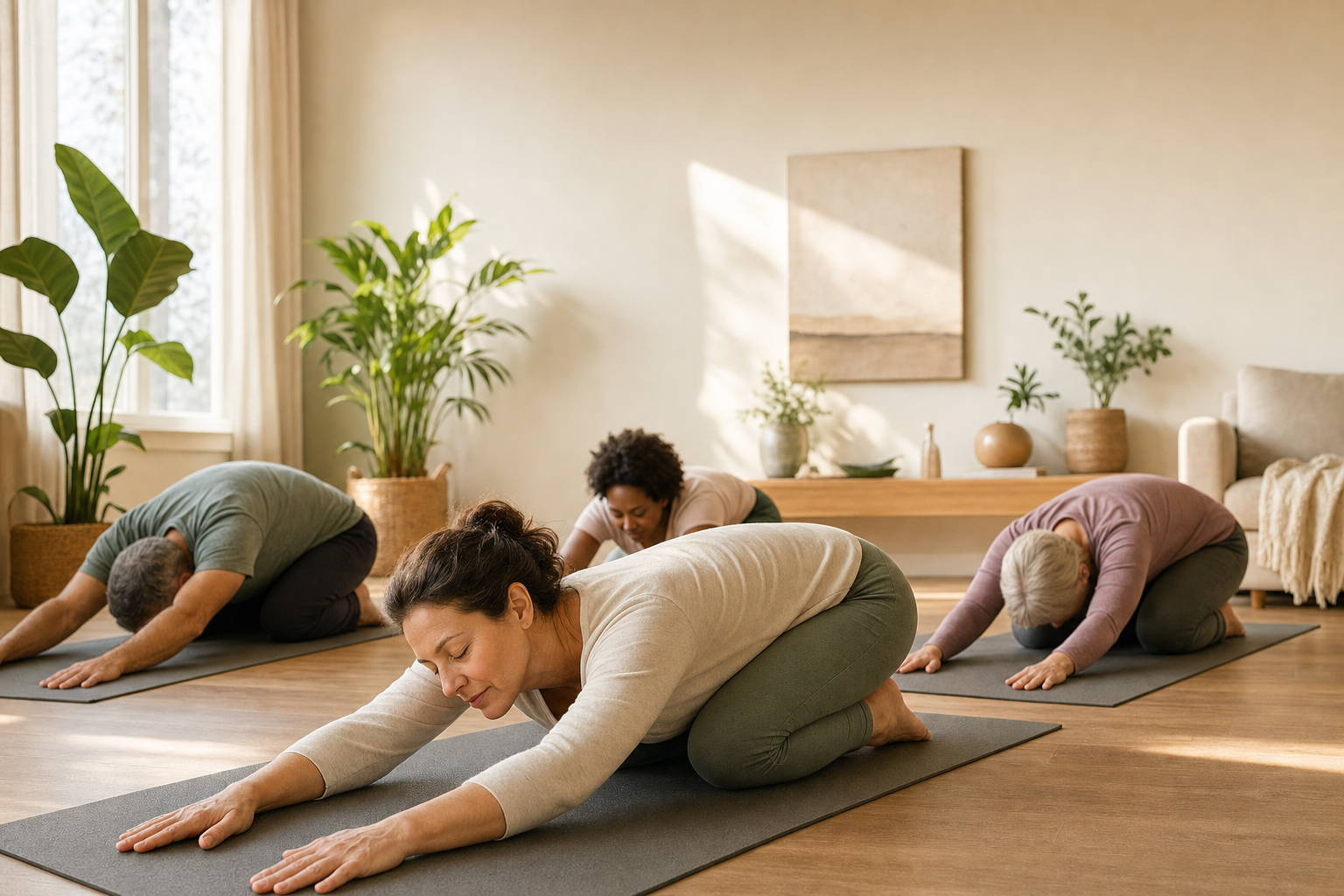
- Child’s Pose (Balasana): If you can only do one, start here. Gently stretches hips, knees, and ankles. If kneeling is tough, prop yourself with a pillow under your thighs or chest.
- Cat-Cow (Marjaryasana-Bitilasana): This classic flow warms the entire spine and wakes up the wrists and shoulders. Move slowly, breath matching movement.
- Supported Downward Dog: Use a chair or wall if the floor is a struggle. This stretches calves, hamstrings, shoulders, and gives wrists a break.
- Seated Figure Four: Opens up tight hips and can be done even at your desk. Cross one ankle over your opposite knee and gently lean forward.
- Low Lunge (Anjaneyasana): Fantastic for stiff hips, knees, and ankles. Place hands on blocks or your thigh if it’s hard to reach the floor.
- Thread the Needle: My go-to for opening upper back and targeting shoulder mobility—especially if you hunch at a computer.
- Reclined Spinal Twist: Gentle rotation relieves lower back and hip tension. Don’t force it; just let gravity do the work.
I usually string these together in a short, 10-20 minute routine. If you’re new or flaring, it’s fine to just pick two or three. Consistency > intensity, every single time.
Tips to Make Yoga Work for (Not Against) Your Joints
Here’s something most glossy magazines overlook: props are your friend. Stack pillows, use yoga blocks, even a rolled-up towel. I’ve had mornings where the only way to get into child’s pose was with a heating pad across my lower back—no shame in that.
Speaking of heating pads, the Pure Enrichment PureRelief XL Heating Pad is a favorite in my house. The extra-large size means you can wrap it around knees, hips, or even lie on it during savasana. You’d be amazed how five minutes of warmth before a yoga sequence can coax stubborn joints into moving more easily.
And if you need a bit more support, especially for sore knees or unpredictable ankles, I’ve tested (and abused) a fair share of knee braces. The Modvel Compression Knee Brace really does stay put through gentle flows, thanks to those anti-slip strips. You get a pair, and they’re surprisingly affordable—honestly, I know a few yoga instructors who keep extras in their studios for new students.
What the Science Really Says About Yoga and Joint Mobility
Let’s get nerdy for a second. A 2021 meta-analysis in Complementary Therapies in Medicine reviewed 15 randomized controlled trials on yoga and arthritis. Across the board, gentle yoga was associated with a meaningful reduction in joint stiffness, pain, and even anxiety symptoms. Interestingly, the biggest improvements were in participants who practiced at least twice a week, not those who dabbled here and there.
The authors specifically noted that joint-friendly sequencing—think child’s pose, cat-cow, gentle twists—outperformed more intense, "power yoga" styles. If you’ve ever felt like you were failing because you couldn’t manage a headstand, give yourself some grace. The goal here is movement, not mastery.
And don’t discount small wins. I had a reader, Susan, in her late 60s who started with just cat-cow at the kitchen counter. Six months later, she was doing a full 20-minute practice in her living room. Was she pain-free? No. But she could garden again and said she felt "ten years younger." That’s a victory in my book.
Supplements: Do They Actually Help?
Okay, this might be a bit controversial in some circles, but I get emails about supplements almost weekly. My answer? They’re not magic. But certain blends—especially those with glucosamine, chondroitin, turmeric, MSM, and boswellia—do have evidence for supporting joint comfort and flexibility. My own husband found the Vimerson Health Glucosamine Chondroitin Turmeric MSM & Boswellia formula useful during marathon training. (Pro tip: always check with your doctor before starting any new supplement, especially if you’re on meds for blood pressure or diabetes.)
Real talk—supplements won’t do the work for you. But for some, they can take the edge off the daily grind so you can actually get down on a mat and move.
Common Pitfalls (and How to Avoid Them)
- Overdoing it: More is not always better. Start with 2-3 poses, focus on breath, and build gradually.
- Pushing through pain: Sharp or persistent pain is a red flag. Modify, use props, or skip that pose entirely.
- Ignoring the warm-up: Even five minutes of gentle movement (or, yes, a heating pad) makes a world of difference.
- Comparing yourself to Instagram yogis: Their goals are not your goals. Tiny improvements over weeks and months are what count.
Remember, yoga should never leave your joints angrier than when you started. If you’re in doubt, check in with your PT or a certified yoga therapist—there’s no shame in getting it checked out.
What About Severe Arthritis or Joint Replacement?
This is where things get personal for me. My mother-in-law had a knee replacement six years ago, and thought her yoga days were over. Wrong. With her doc's blessing, she worked back into child’s pose and gentle twists within three months post-op. The key? Lots of props, patience, and zero pressure to "go deep." If your mobility is severely limited, chair yoga or restorative styles are worth exploring. But always—always—talk to your doctor before beginning any new routine.
And if you’re unsure about a pose, or worried about falls, try practicing with someone nearby (or even with a wall at your back for extra security). Yoga is about listening to your body, not forcing it.
Practical Takeaways (That Most Lists Skip)
- Short, daily movement beats occasional over-enthusiasm.
- Props, heat, and even compression sleeves are smart, not weak. Use whatever tools help you stay consistent.
- Joint stiffness is common—but not inevitable. Regular movement really does make a difference, and the science backs it up.
- Mild supplements can help, but only as part of a bigger toolkit.
- Your best yoga pose is the one you can actually do—today.
And I’ll say it again: It’s not about touching your toes. It’s about loosening up, moving a bit more freely, and reclaiming the confidence stiff joints can steal.
Looking Forward: You (and Your Joints) Deserve Some TLC
If you’ve made it this far, I hope you feel armed with practical next steps—not just a list of intimidating poses. Whether you’re starting with cat-cow at the kitchen counter, adding a heating pad before your stretches, or finally treating yourself to a supportive knee sleeve for those sensitive joints—be patient. Your joints didn’t stiffen overnight, and they won’t loosen up overnight either. But, bit by bit, you’ll get there.
Questions? Stories to share? Drop me a note—my favorite part of this job is hearing how you’re doing. I’ll see you (and your knees) on the mat.
Karen Whitfield
Veteran health journalist specializing in joint health, mobility, and patient-first advice. Contributor to Everyday Health, Prevention, and Arthritis Today. Proud owner of creaky knees and a very patient yoga mat.