Tai Chi Benefits for Arthritis and Balance: What No One Tells You (But Should)
I’ll never forget the first time I watched one of my 72-year-old patients, Donna, glide through a tai chi class. This was a woman who, just months earlier, described her knees as "rusty hinges" and used her walker like a third leg. Yet there she was — arms flowing, feet anchored, posture tall — looking oddly serene. I nudged her husband and whispered, “She’s making it look easy, isn’t she?” He just grinned.
If you’re dealing with arthritis pain or feeling unsteady, the promise of tai chi can sound too good to be true. Maybe you’ve watched a class and convinced yourself, “That’s not for me — I’m too stiff. My balance is shot.” Believe me, I get it. After more than a decade as a physical therapist, I’ve had dozens of patients tell me the same thing. But here’s where it gets interesting: the science (and real-world results) back it up more than most people realize.
The Relentless Toll of Arthritis and Instability
Anyone who tells you arthritis is just about “a little joint soreness” clearly hasn’t tried to climb stairs or get out of their car on a rainy day. The pain is persistent, sometimes sneaky, sometimes sharp. Add in poor balance — which tends to creep up with age, joint stiffness, or lack of physical activity — and suddenly grocery shopping or playing with your grandkids can start to feel like Olympic events.
Here’s the thing: it isn’t just about discomfort. Loss of balance dramatically increases fall risk. According to the CDC, one in four Americans over 65 falls each year. If you have arthritis? That risk bumps up even higher. And let’s be honest — the fear of falling can leave you even more sedentary, which is the opposite of what your joints need.
So What Makes Tai Chi Different?
Most forms of exercise I prescribe to arthritis patients are about “grin and bear it.” Think: resistance bands, stationary bikes, those endless quad sets. Useful? Sure. Fun? Not so much. Tai chi is a different animal. It’s low-impact, slow, and flowing. Movements are gentle but purposeful, focusing on weight shifting, single-leg stance, and core engagement — all the ingredients your body craves if you want to move with less pain and more confidence.
And, unlike a lot of trendy fitness classes that promise the world, tai chi actually has a mountain of research behind it. In fact, the Annals of Internal Medicine published a systematic review in 2019 showing tai chi significantly reduced pain and improved physical function in people with osteoarthritis. In one trial, after 12 weeks, participants reported a 33% decrease in pain scores. That’s not just “statistical significance” — it’s the difference between dreading those stairs and actually climbing them.
Breaking Down the Research: Tai Chi’s True Impact
If you’re wondering whether tai chi is all hype (I was, initially), look at the hard data:
- Pain Relief: A 2016 meta-analysis in Arthritis & Rheumatology pooled results from 9 studies on knee osteoarthritis. Tai chi led to a 20-30% reduction in pain — comparable to standard physical therapy.
- Improved Balance: A 2020 study in the Journal of Geriatric Physical Therapy found older adults practicing tai chi twice a week for 6 months reduced their fall risk by 43%. That’s enormous for anyone worried about tripping over their own feet.
- Enhanced Flexibility & Strength: Tai chi’s gentle squats and lunges (they don’t always look like it, but trust me, your quads and calves know) build muscle endurance. One study in BMJ Open Sport & Exercise Medicine (2018) showed improved lower limb strength after just 8 weeks.
What’s more, tai chi boosts confidence — what therapists like me call “self-efficacy.” Basically, if you feel more stable, you’re more likely to stay active. And that’s where the real magic happens for joint health.
How Does Tai Chi Actually Work for Arthritis and Balance?
Let’s break it down, layer by layer. I promise, no mystical mumbo jumbo — just science and anatomy:
- Slows Down, Safely: Tai chi movements are deliberately slow, so you’re always aware of your body position. This trains proprioception (your “joint GPS”), which tends to get fuzzy with arthritis or after years of inactivity.
- Weight Shifting: Every pose shifts your weight from one leg to the other — teaching your hips, knees, and ankles to work together, which is crucial for stability. If you’ve ever caught yourself stumbling and “saving it,” that’s your balance system at work.
- Core Engagement: Even subtle upper body motions (think: gentle arm circles) help fire up your deep abdominal and back muscles. These stabilize the spine and pelvis, making everyday movements less taxing.
- Gentle Strengthening: The constant semi-squat positions may look passive, but they activate quadriceps, hamstrings, and glutes — the same muscles I target in PT for knee and hip arthritis.
- Joint Lubrication: Movement is medicine. Tai chi’s repeated, pain-free joint motion helps stimulate synovial fluid (your body’s natural joint grease), which can reduce stiffness over time.
And — this one’s underrated — tai chi’s focus on breath and mindfulness can help calm the nervous system. Chronic pain isn’t just physical; it’s emotional. A little stress relief goes a long way.
But What If You’re Too Stiff or Unsteady to Start?
I know what some of you are thinking: “Sounds great, but I can’t even stand on one leg for two seconds, let alone do fancy moves.” First off, you’re not alone. I’ve had patients of all ages — from 40s to 90s — say exactly that. The beauty of tai chi is that it truly meets you where you are.
Even if you can’t stand for long, you can perform most tai chi movements seated (yes, really). Many community centers offer “chair tai chi” for those with more severe arthritis, post-surgical recovery, or advanced age. The benefits? Still there. Still real.
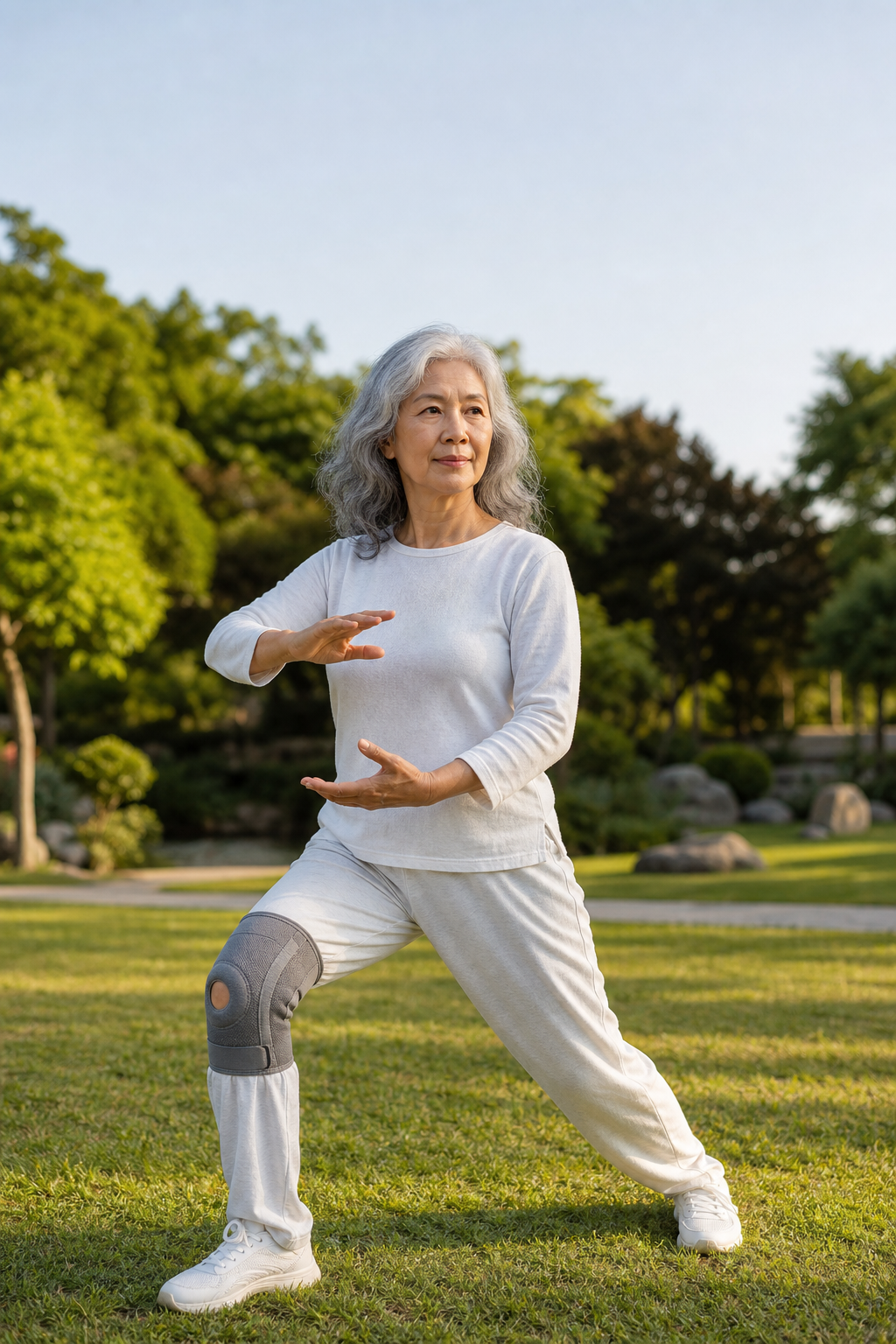
And let’s talk pain flare-ups. On those days, I always remind patients: it’s okay to adjust. Take breaks, modify your range of motion, and listen to your body. If your knees are particularly cranky, supportive gear can make a legitimate difference. I’ve had several patients find relief using the NEENCA Professional Knee Brace — especially those who need extra lateral support for tricky twists or weight shifts. The side stabilizers and patella gel pad really do help, both physically and confidence-wise.
Real-World Tai Chi Tips (From Someone Who’s Actually Seen the Results)
Look, online videos are fine… but as someone who’s taught, adapted, and sometimes struggled alongside my own patients, here are a few pointers you won’t find in every “beginner’s guide”:
- Start Small: Even 5-10 minutes, a few times a week, is better than nothing. Consistency > intensity.
- Group Power: If possible, join a class. The social support (and accountability) is huge. Plus, a good instructor can help you with modifications for arthritis.
- Choose the Right Surface: Flat, non-slip floors are safest. If you practice outdoors, keep it on grass or a yoga mat — avoid uneven paths.
- Mind Your Knees: Never allow your knee to extend beyond your toes during lunges or weight shifts. Slightly bent, not locked.
- Stay Hydrated: Even gentle movement can dehydrate you, especially if you’re not used to activity. Keep a water bottle nearby.
- Pair with Support: On tough days, using a knee sleeve or brace can make a world of difference. The NEENCA brace I mentioned above is a lifesaver for many — especially those who want to try deeper bends safely.
And here’s a little secret: I often recommend Jim Johnson’s Treat Your Own Knees alongside tai chi practice. It’s packed with research-backed home exercises for knee arthritis — and the illustrations are shockingly clear. It’s less than the cost of a pizza, but can give you a solid foundation (literally and figuratively) for joint-friendly movement.
How Tai Chi Compares to Other Arthritis Exercises
Here’s where I tend to ruffle feathers. Yes, swimming and cycling have their place — especially if you’re dealing with severe joint pain. But tai chi offers unique benefits that other low-impact activities can’t quite match:
- Mind-Body Focus: Unlike cycling or treadmill walking, tai chi demands (and builds) body awareness. If you’ve ever “zoned out” at the gym and tweaked your knee as a result, you know why this matters.
- Balance Training: Few forms of exercise specifically target balance with the same precision — or safety — as tai chi. It’s progressive: you can start with double-leg stances, then work up to more challenging single-leg or pivot moves as your confidence grows.
- Joint Range of Motion: Water aerobics is great for movement without load, but tai chi provides gentle, weight-bearing motion — crucial for bone density and long-term joint integrity.
Of course, no one says you have to pick just one. Some of my most successful patients combine tai chi with short walks, a gentle cycling session, or home-based resistance work. The goal is to keep moving — and keep it enjoyable.
When to Be Cautious (And When It’s Time for Help)
Let’s get real for a moment. While tai chi is safe for most people, there are a few “red flags” or scenarios where you should pause and check in with your doctor or physical therapist first:
- Uncontrolled heart or lung conditions
- Recent major joint surgery (within 2-3 months)
- Severe unsteadiness or frequent unexplained falls
- Active joint inflammation with significant swelling or redness
If you’re nodding along, talk to your healthcare provider before jumping into a new exercise regimen. A customized approach — sometimes starting with chair-based movement — can make all the difference.
Making It Easier: Tools That Support Your Practice
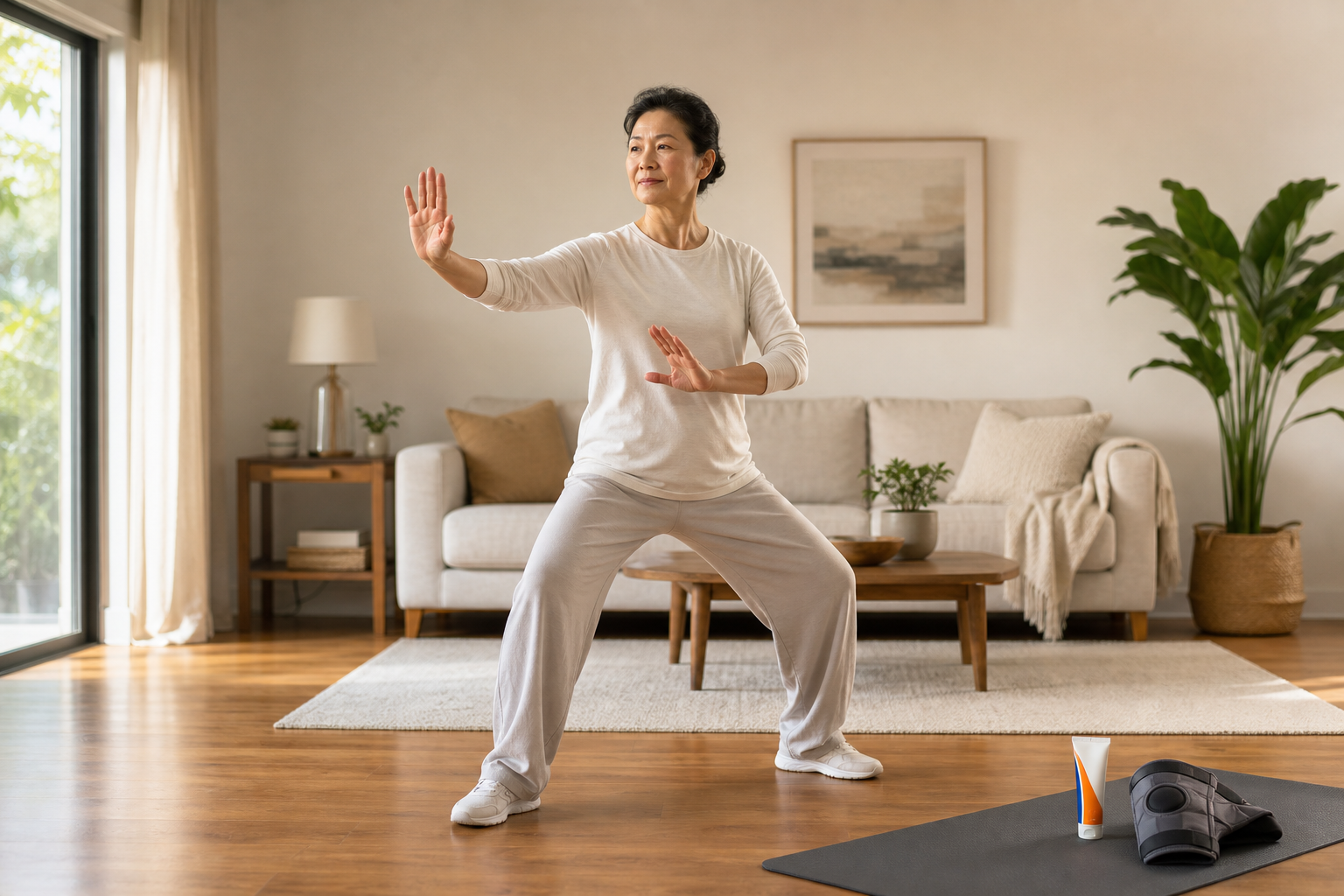
Let’s be honest — not every day is a “tai chi day.” When the weather is nasty or your joints are especially sore, you might need some backup. On my own off days (yes, therapists get arthritis aches too), a little topical relief goes a long way. I’m a long-time fan of Voltaren Arthritis Pain Gel. It’s non-greasy, fast-absorbing, and actually has FDA backing for arthritis pain. Several of my patients use it pre- or post-tai chi, especially for hands and knees — and they swear it helps them keep moving on tougher days.
Supportive shoes, a stable chair for balance, and a simple yoga mat can round out your home setup. You don’t need anything fancy — just a few practical tools that remove barriers.
Takeaways: Why Tai Chi Is Worth a Try (Even If You’re Skeptical)
I’ll be honest — I was a tai chi skeptic myself at first. But after watching dozens of patients transform (and feeling my own creaky knees loosen up), I’m convinced it’s one of the most underutilized tools for arthritis and balance out there.
The research is solid. The risks are minimal. And the potential — for less pain, better balance, increased confidence — is huge. Even if you start with tiny steps, you could be surprised at just how much better you feel after a few weeks.
If you’re ready to try, remember: it doesn’t have to be perfect. Start slow, use the supports (like a NEENCA brace or Voltaren gel) if you need them. Get a friend or partner involved. Most importantly, keep moving. Your joints — and your balance — really can improve, even if that first step feels intimidating.
Now, if you’ll excuse me, I have a tai chi class with three spry octogenarians who always manage to outlast me. Here’s hoping you find your own rhythm — one gentle movement at a time.
Dr. Sarah Mitchell, DPT
Senior Health Editor, JointReliefReviews