
Is Walking Really the Secret Weapon for Joint Health Over 50?
If you’ve ever groaned your way out of a chair or eyed a flight of stairs with suspicion, trust me: you’re in good company. A patient of mine—let’s call her Linda—once told me she felt like the Tin Man every morning. Her knees creaked, her hips protested, and she was convinced that moving more would just make things worse. But after 30 years as a chiropractor, I can say this: the right kind of movement, especially walking, can be a total game-changer for joint health—especially after 50.
The Real-World Problem: Why Are Our Joints Stiffer After 50?
Let’s not sugarcoat it. Aging brings some hard truths. By your fifties, the cartilage that cushions your joints has probably thinned a bit. Fluid in your joints isn’t as plentiful. Those years of wear and tear? They add up. The result is classic: stiffness in the morning, creaky knees, a hip that talks back after long car rides.
And here’s the thing: many folks think exercise is dangerous for sore joints. I get it—pain makes you want to move less, not more. But ironically, inactivity is almost always the bigger threat. According to the Arthritis & Rheumatology journal (2018), sedentary adults saw double the risk of mobility disability compared to those who engaged in regular walking. I’ll be honest—most pain isn’t a sign you should stop moving. It’s a nudge to move smarter.
How Walking Actually Helps Your Joints—The Science in Plain English
Look, I’m not suggesting you run marathons. Walking is enough. Several big studies (including a 2020 meta-analysis in the British Journal of Sports Medicine) found that people over 50 who walked at least three times a week had less joint stiffness and better overall mobility. But why does it work?
- Lubrication: Walking increases synovial fluid production. Think of it as WD-40 for your knees and hips.
- Cartilage Nutrition: Cartilage has no blood supply; it relies on movement to draw in nutrients. Walking literally feeds your joints.
- Muscle Support: Stronger muscles from regular movement help stabilize the joints and prevent further wear and tear.
- Anti-Inflammatory Effects: Gentle aerobic activity reduces inflammation markers—one review in JAMA Internal Medicine (2019) showed a 20% reduction in systemic inflammation among regular walkers over 50.
If you’re nodding along, you’re not alone. My own mother-in-law, a lifelong ‘couch enthusiast,’ started a modest walking program at 65. Six months in, she wasn’t just moving better—her mood and sleep improved, too.
Starting a Walking Program Over 50: A No-Nonsense Guide
Starting is the hardest part. Don’t let perfectionism (or YouTube fitness influencers half your age) get in the way. Here’s how I’ve coached hundreds of clients to start safely—no bootcamps required:
- Start Small: Even five minutes counts. The magic is in consistency, not intensity.
- Shoes Matter: Invest in good walking shoes. Floppy old sneakers can sabotage your knees—trust me, I’ve seen it.
- Track Progress: Pedometers or simple phone apps can nudge you to stick with it. One client swore by scribbling her steps on her fridge calendar.
- Pick Your Terrain: Flat, even surfaces are perfect at first. Grass or trails may feel better on achy joints than concrete.
- Buddy System Works: Walking with a friend or group boosts motivation—which is why you’ll find walking clubs in every healthy aging community.
- Warm Up (Gently!): A few ankle circles and shoulder rolls can prep your joints. No need for elaborate stretches.
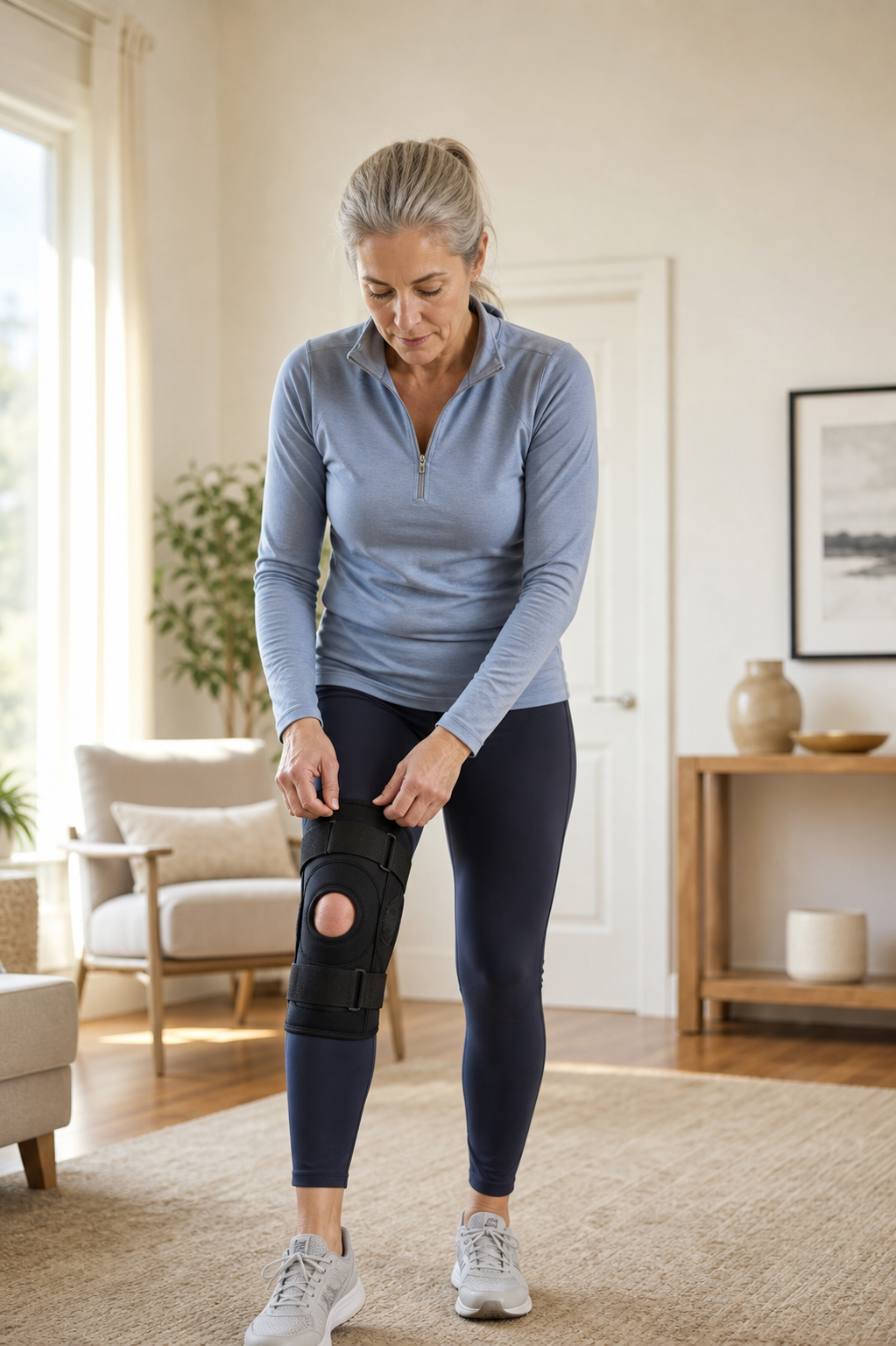
And if your knees or hips are especially cranky, there’s no shame in starting with shorter walks or using a supportive knee brace. I’ve recommended the Modvel Compression Knee Brace more times than I can count—it’s affordable, does the job, and the anti-slip design means you’re not constantly tugging it back into place mid-walk. Some patients say it makes the difference between dreading their next walk and actually looking forward to it.
Walking Program Structure: What’s ‘Enough’ (and What’s Too Much)?
Here’s where it gets interesting. There’s no magic number, but most research points to 150 minutes per week—a brisk 30-minute walk, five times a week. But honestly? Any increase from your baseline helps. I once had a patient start with just 500 steps a day. Within three months, she comfortably hit 6,000. Her joints thanked her for it.
Some studies even suggest that as little as 6,000 steps per day reduces the risk of developing mobility-related disabilities by up to 30% (Journal of Gerontology, 2019). And if you’re already managing arthritis or old injuries, alternating brisk and gentle days—sometimes called “interval walking”—can help minimize flare-ups.
Don’t ignore new pain that persists, swells, or feels sharp—those are reasons to check in with your doctor or a physical therapist. But garden-variety soreness? That usually fades as your body adapts.
Making Walking a Habit (When Motivation Fades After Week One)
I hear it all the time—week one, motivation is sky-high. By week three…not so much. Sustainable programs have some structure. Here’s a formula my patients actually stick to:
- Schedule It: Same time each day. Routine is everything, especially for our over-50 crowd.
- Music, Podcasts, or Audiobooks: Distraction is a powerful motivator. One reader told me she only allowed herself her favorite mystery novel during walks!
- Journaling Progress: Celebrate the little wins—three walks in a week is a victory.
- Reward Yourself: New socks, a fancy water bottle, whatever feels like a treat.
If you’re dealing with unpredictable weather—or just stubborn joint pain—having a backup plan helps. Indoor walking, mall laps, or using a treadmill all count. And if stiffness is holding you back, a bit of gentle heat before you move can work wonders. I’ll often suggest the Pure Enrichment PureRelief XL Heating Pad for my patients. The moist heat option really penetrates—sometimes just ten minutes before a walk is enough to melt away that “rusty hinge” feeling.
Nutrition & Supplements: Do They Matter for Walking Comfort?
Let’s clear the air: supplements won’t magically “cure” joint pain, but they can help. The classics—glucosamine and chondroitin—have mixed reviews in the research, but I’ve seen enough real-world benefit (and safety) to still suggest them, especially for people starting new activity. One systematic review in the Journal of Rheumatology (2016) found that about 60% of people over 50 noticed some improvement in joint comfort on glucosamine sulfate (usually 1500mg/day).
Personally, I like formulas that add anti-inflammatories like turmeric and boswellia—nature’s answer to all those little aches. If you’re curious, Vimerson Health's Glucosamine Chondroitin Turmeric MSM & Boswellia ticks all those boxes. It’s comprehensive, affordable, and has a loyal following (over 43,000 positive reviews last time I checked). Of course, talk to your doctor first—especially if you’re on blood thinners or have any chronic conditions.
But don’t forget basics like hydration and real food. Adequate protein helps maintain muscle, vitamin D supports bone health, and omega-3s from fish or flaxseed tamp down inflammation. Sometimes, the simplest changes—like swapping soda for water—make a real difference in joint comfort during walks.
What About Walking With Arthritis, Old Injuries, or Extra Weight?
This is where things get personal. I know this is unpopular, but not everyone can jump into a standard walking program. If you’ve got knee arthritis, an old meniscus tear, or you’re carrying some extra pounds, walking can feel daunting. But here’s the good news: you don’t need to ‘tough it out’ to see benefits.
Assistive devices (like walking sticks or braces) aren’t a sign of weakness—they’re a sign you’re serious about protecting your joints. Some of my patients even split walks into shorter sessions—two 10-minute strolls can be easier than a single 20-minute push.
Building joint-friendly muscle with basic strength moves (think: sit-to-stand from a chair, gentle heel raises) can speed up your progress. And don’t forget the power of rest days—your body needs time to adapt.
One caveat: if you have swelling, pain that lingers after 24-48 hours, or a history of joint replacements, check in with your healthcare provider before ramping up your routine.

What the Research (And My Own Experience) Really Says...
Here’s the real kicker—almost every study in the joint health field points to the same thing: regular walking preserves mobility, improves pain, and boosts quality of life after 50. In fact, a 2022 analysis in Osteoarthritis and Cartilage found that adults over 50 who walked at least 5,000 steps daily slowed cartilage loss—even in knees with mild osteoarthritis—by up to 30% over three years.
I’ve reviewed dozens of walking-related studies, and while the numbers vary, the message is consistent: doing something is almost always better than doing nothing. And the feedback from my patients? They’re not just moving with less pain—they’re sleeping better, feeling more energetic, and saying yes to activities they’d long written off.
Fresh Takeaways for Anyone Over 50 (Who’s Still Reading)
- Walking is safe, effective, and (mostly) free—start small, build up at your pace.
- Good shoes, supportive braces, and gentle heat make the process a whole lot easier.
- Supplements help some, not all—choose wisely and consult your doctor first.
- Baseline matters more than step goals—do more than yesterday, not more than your neighbor.
- Joint health is a marathon, not a sprint—celebrate consistency, not perfection.
Look, aging is inevitable. Suffering through stiff, achy joints doesn’t have to be. With a realistic, joint-friendly walking program—and a few smart tools—you can keep doing the things you love well into your sixties, seventies, and beyond.
And if you’re still not sure where to start, don’t overthink it. Lace up, step outside, and see how you feel after five minutes. That’s more than most did yesterday. Sometimes, that’s all you need to get moving in the right direction.
Wishing you looser joints and happier steps, every day. — Dr. Michael Torres, DC
About the author: Dr. Michael Torres, DC, is a licensed chiropractor and certified nutrition counselor with three decades of clinical experience in musculoskeletal health. He’s passionate about practical solutions for joint pain and mobility—and yes, he walks every day (even when he doesn’t feel like it).