
Why I Swear by Walking for Joint Health Over 50
I’ll never forget Joan—one of my regulars back at the orthopedic clinic. She was 63, stiff as a board, and firmly convinced that every step would just wear out her knees faster. Fast-forward through six months of (admittedly) gentle nagging and a simple walking program, and she was outpacing her husband around the block. The best part? She could finally keep up with her grandkids at the park. Look, I’ve seen this story play out dozens of times. Starting a walking program over 50 isn’t just doable—it’s a game-changer for joint health.

The Real Problem with Aging Joints
Here’s the thing: our joints really do take a beating over the decades. Cartilage thins, synovial fluid dries up a bit, and those little aches turn into a morning symphony. The CDC estimates that nearly 50% of adults over 65 have been told they have some form of arthritis. I’m not sharing that to scare you—it’s just reality. But the real kicker? I’ve watched so many folks put themselves on the injured reserve, when movement (not rest) is usually what their joints need most.
When you stop moving, your muscles weaken and your joints get stiff, fast. Inactivity can actually speed up joint degeneration—not slow it down. That’s why I always tell patients: “Use it or lose it” isn’t just an old cliché. It’s biology.
How Walking Helps Your Joints—The Science Simplified
Okay, so why walking, specifically? Let’s cut through the noise. Here’s what we know from the research:
- Low-Impact, High Reward: Unlike running or tennis, walking doesn’t pound your joints into submission. The Journal of Rheumatology (2019) found that daily walking reduced knee pain in adults over 50 by up to 30% after just 12 weeks.
- Lubes the Joints: Regular movement boosts circulation of synovial fluid (your joints’ natural oil). This helps nourish cartilage—the stuff that cushioning depends on.
- Reduces Inflammation: An older study in Arthritis & Rheumatology (2014) showed a 24% drop in inflammatory markers in older adults who walked briskly 5 days a week.
- Boosts Muscle Support: Your muscles are your joints’ shock absorbers. The more you move, the more your muscles can stabilize and protect those creaky knees or hips.
Not gonna lie—when I first started digging into the research, I was surprised at how consistent the benefits were across ages, weights, and even in people who already had mild arthritis. Turns out, joints really were designed for wear and tear—with movement.
“But My Knees Hurt When I Walk”—Common Fears, Real Solutions
If you’re nodding along, you’re not alone. I get emails about this every week. Here’s where most people go wrong: they try to do too much, too soon, or completely ignore pain signals. Neither works. The right walking program should fit your baseline, not punish you for where you are.
And believe me—I don’t ignore pain. If you’ve got severe swelling, a hot joint, or sudden sharp pain, stop and call your doctor. But for most mild to moderate joint aches? Smart adjustments can make all the difference.
How to Start a Walking Program for Joint Health Over 50 (Nurse’s Version)
Step 1: Know Your Starting Point
I always begin with a reality check: How far can you walk comfortably right now? Is it one block? Ten minutes? Great—there’s no shame in starting small. Joints love consistency, not heroics.
Step 2: Gear Up (Without Breaking the Bank)
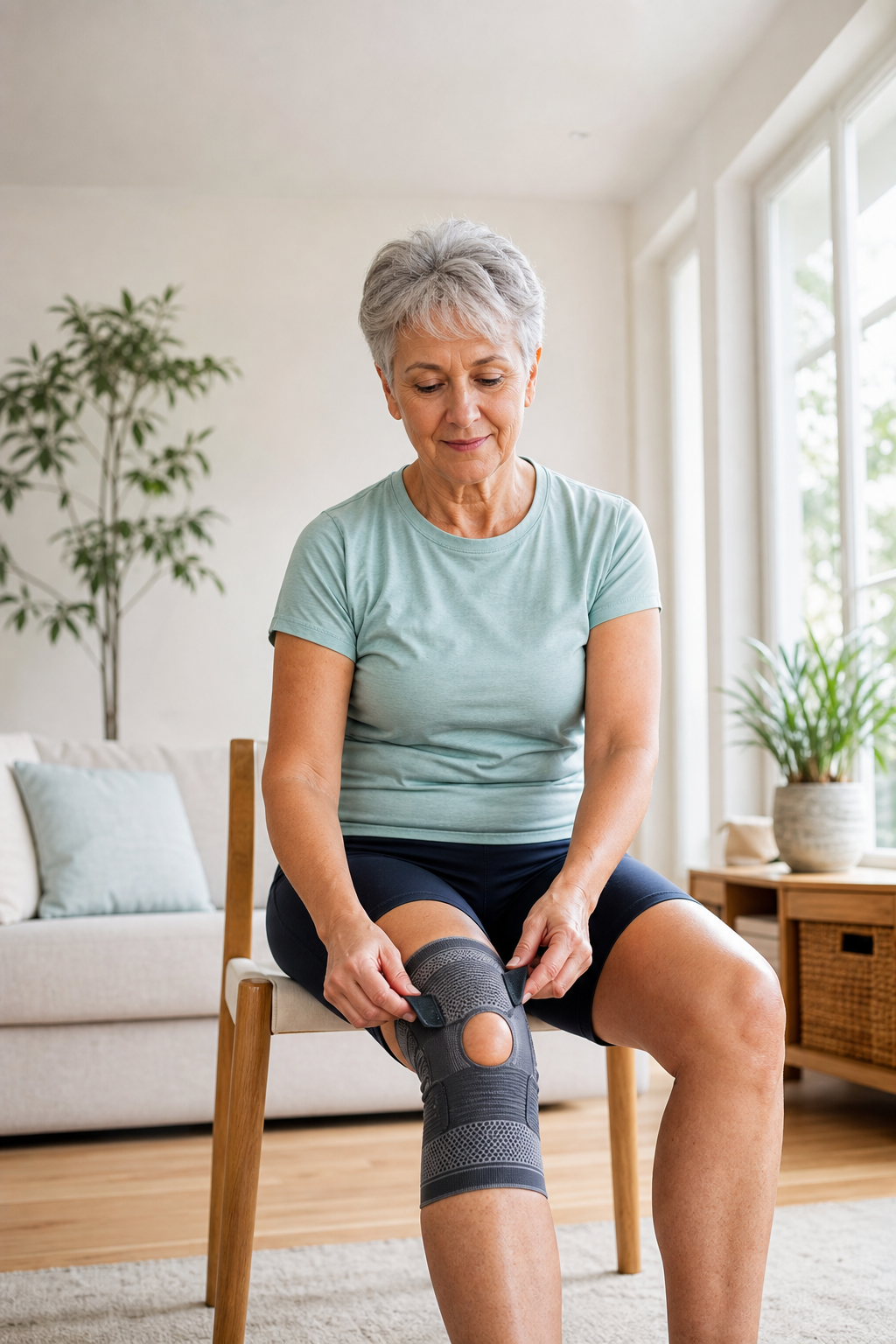
Supportive sneakers are non-negotiable. I see a lot of folks splurging on $200 shoes when something with good arch support ($60-80 range) does the trick. If you’ve got persistent knee pain, external support can be a total lifesaver. Lately, several readers have had great luck with the Modvel Compression Knee Brace. It’s not flashy, but the compression and anti-slip design help keep things snug—without that sausage-casing feeling. Plus, you get a pair for less than the price of take-out.
Step 3: Start Short, Go Slow
Begin with 10-15 minutes at a comfortable pace, 3-4 times a week. Increase your total time by just 5 minutes per walk every week. If you hit a bad day, it’s fine to repeat the last week instead of pushing through pain. I wish more programs would just say that out loud!
Step 4: Warm Up, Cool Down
Even a light two-minute march in place (arms swinging) helps lubricate joints. After walking, gentle stretches for your quads, calves, and hamstrings help keep things loose. My own post-walk ritual is a couple minutes with a heating pad—especially on chilly mornings. The PureRelief XL Heating Pad is a top pick for sheer surface area—it covers both knees or your whole low back, plus it’s got a moist heat option, which is gold for stiff joints.
Extra Tips for Sore or Arthritic Joints
- Flat, Even Surfaces: Start on a track or smooth sidewalk. Trails are lovely but can be risky until your balance improves.
- Pace Yourself: Use the “talk test”—if you can chat but not sing, you’re in the sweet spot.
- Stay Hydrated: Even mild dehydration can make tissues stiffer. Bring a water bottle!
- Weather-Proof Your Routine: Too hot or icy? Malls or rec centers often open early for walkers. (I’ve led more than one “mall walking crew” in my day!)
- Write It Down: Track your walks. It’s motivating—and helps spot patterns if you’re getting sore.
Can Supplements Help Walking Feel Easier?
This is where things get a little spicy. Some folks swear by glucosamine and chondroitin; others say it’s snake oil. The research? Mixed, but not hopeless. A 2016 analysis in BMJ showed that while results vary, about 60% of people with knee OA report reduced pain after 8-12 weeks of a combo supplement. But don’t expect miracles in two days.
Personally, if my joints were acting up and I wanted to tip the odds, I’d go for a multi-ingredient formula with turmeric and MSM. Something like Vimerson Health’s Glucosamine Chondroitin Turmeric MSM & Boswellia covers all the big inflammatory pathways. Just be patient—most studies use 1500mg glucosamine + 1200mg chondroitin daily for at least 3 months. And talk to your doctor before starting, especially if you’re on blood thinners or have allergies to shellfish.
How Walking Programs Compare to Other Joint-Friendly Cardio
I get a lot of questions about swimming, cycling, and elliptical work. Here’s the honest read: swimming is fantastic (zero impact, full-body movement), but less practical for many folks due to pool access and time. Biking’s great if your hips hurt with walking, but it won’t give the same weight-bearing bone protection as walking does. The best exercise? The one you’ll actually do. If walking is convenient, social, and gets you outside, that’s an unbeatable combo for both body and mind.
Mistakes I See (and How to Avoid Them)
- Ignoring Early Pain: If you’re limping after your walks, you may be overdoing it. Dial back the time or intensity.
- Not Using Support: So many folks resist using braces or sticks because they “feel old.” But if it gets you moving without pain, who cares?
- All-or-Nothing Thinking: A missed walk isn’t failure. Life happens. Just get back out there when you can.
- Walking on Poor Surfaces: Avoid cracked sidewalks or steep hills (at first)—they’re a recipe for rolled ankles and sore knees.

When to See a Doctor Before Starting
Okay, I’m a nurse, not a magician. If you have new severe joint pain, unexplained swelling, or a recent fall, see your doctor first. Ditto if you have heart, lung, or balance issues. Most doctors are thrilled to hear their patients want to move more—and can help you rule out red flags before you start.
My Personal Takeaways (and Surprising Benefits)
Here’s what most articles gloss over: Walking programs aren’t just about less pain. I’ve watched patients sleep better, feel less depressed, and reconnect with old friends (or make new ones) on neighborhood walks. And—my slightly controversial opinion—even inconsistent walking is better than none. A 2022 study in JAMA Network Open found that just one to two walks a week slashed the risk of mobility disability by 22% after age 65. Not perfect? Not a problem.
There’s also the issue of bone density. Unlike swimming or cycling, walking trains your body to handle daily load and helps ward off osteoporosis. I’ve seen 80-year-olds who walk daily with stronger bones than some 60-year-olds who “took it easy.” Food for thought.
What I’d Tell My Own Family
If my brother or sister asked (and they have), I’d say: Start with small, regular walks. Invest in supportive shoes, consider a knee brace if you’ve got creaky knees, and don’t skip a gentle warmup. If you’re struggling with post-walk soreness, try a moist heat pad—and maybe a reputable supplement, but only with your doctor’s green light. Most of all, track your progress. It’s amazing how quickly “I can’t” turns into “I did.”
The Short List
- Start slow: 10-15 minutes, 3-4 times weekly, gentle pace
- Use a Modvel Compression Knee Brace if needed
- Warm up and cool down—don’t skip them!
- Try a PureRelief XL Heating Pad for post-walk aches
- Consider Vimerson Health’s Glucosamine Chondroitin Turmeric MSM & Boswellia for extra support (with your doctor’s okay)
- Track your progress for motivation
Final Thought (and My Challenge to You)
You don’t have to run marathons. Honestly, you don’t even have to finish that second lap if your joints aren’t ready. Any walking is better than none, and your joints will thank you—sometimes in surprisingly short order. If you need some extra support—whether that’s a knee brace, a heating pad, or a supplement—there’s no shame in using the tools that get you moving. I’ve seen too many “hopeless” cases get back to gardening, hiking, and dance classes. Why not you?
I’d love to hear how you’re doing after a month. Shoot me an email—let’s keep those joints moving, together.
Linda Hargrove, RN — Orthopedic nurse for 20 years, joint health reviewer, and proud walking program nag