Tai Chi Benefits for Arthritis and Balance: What I Tell My Patients
I’ll never forget the first time one of my patients, a 67-year-old with stubborn knee arthritis, told me she felt more stable than she had in twenty years—after just a few months of tai chi. Not physical therapy, not medication. Tai chi. I’ll be honest: at the time, I was skeptical. But she wasn’t an outlier. Since then, I’ve seen similar results in dozens of patients struggling with joint pain and unsteady feet.
The Daily Struggle: Why Arthritis and Balance Go Hand-in-Hand
Look, if you live with arthritis, you don’t need me to tell you how demoralizing it can feel when simple things—like stepping off a curb or getting up from your favorite chair—start to feel risky. The pain itself is exhausting. But what gets overlooked is how arthritis, especially in the knees, hips, or ankles, quietly chips away at your stability. That slow erosion of balance is why so many people with arthritis start to fear falling (and with good reason: studies show they’re up to 2.5 times more likely to fall than their peers).
One woman I work with—let’s call her Linda—told me she stopped walking her dog because she just couldn’t trust her legs on uneven sidewalks. If you’re nodding along, you’re not alone.
What Does Tai Chi Have to Do With Arthritis and Balance?
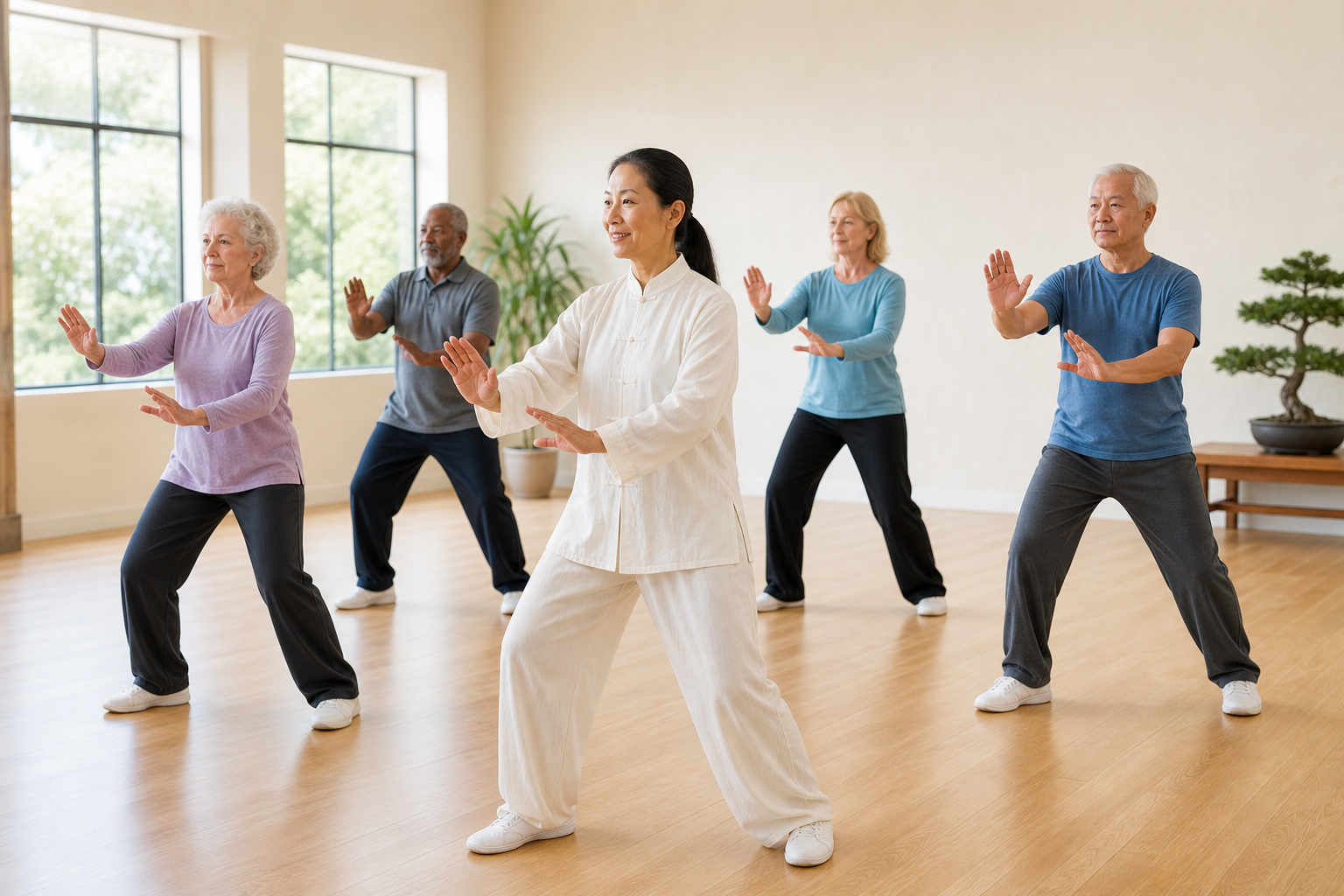
Here’s the thing: tai chi isn’t magic, but it operates on principles that are almost tailor-made for people with creaky, unreliable joints. At its heart, tai chi is about gentle, continuous movement—no jumping, no forced bends, no pounding. It’s movements you can scale up or down, depending on your pain level that day. And it sneaks in balance practice, strength-building, and pain management, all at once.
Sound too good to be true? I thought so too—until I started digging into the research and using it with my own patients.
Let’s Talk Science: What the Studies Say
- Arthritis Pain & Function: In a 2016 Annals of Internal Medicine trial, knee osteoarthritis patients practicing tai chi twice a week for 12 weeks reduced pain by 37% on average and improved function scores even more than a standard physical therapy protocol. That was 150 minutes a week—entirely doable.
- Balance & Fall Risk: The Journal of Rheumatology published a 2013 meta-analysis showing tai chi reduced fall rates in older adults by about 20%—with even bigger effects in those with arthritis or prior falls.
- Mobility Gains: A 2018 review in Arthritis Care & Research concluded tai chi was one of the most effective non-drug interventions for improving balance, walking speed, and joint stability in people with chronic joint pain.
The real kicker? These aren’t studies cherry-picking yoga instructors or marathoners. These are average folks with the same aches, creaks, and occasional bad days as you and me.
How Does Tai Chi Actually Help?
Tai chi is often called “meditation in motion”—but that phrase really undersells the science. Here’s what’s going on, anatomically and neurologically:
- Joint-Friendly Strengthening: The slow moves gently load your muscles—quads, calves, hips—without aggressive impact. This builds stabilizer strength that traditional gym routines often skip.
- Proprioception Boost: That’s your body’s sense of joint position and movement. Arthritis messes with it. Tai chi’s shifting weight transfers retrain this system, so your brain gets more accurate feedback from your feet, knees, and hips.
- Mental Focus: If you’ve ever caught yourself bracing for pain with every step, you know how “anticipatory fear” can make you stiff and more likely to stumble. Tai chi’s mindful movements break this cycle, promoting smoother motion and less tentativeness.
- Natural Endorphins: Gentle movement encourages your body’s own pain-fighting chemicals. Several trials show participants report better moods and less fatigue after just a few sessions.
And the beauty is: you don’t need to be flexible or “athletic.” One of my patients with advanced hip arthritis started in a chair and worked up to 10-minute standing routines—her balance and confidence both soared.
Getting Started: Real-World Tips for Safe Tai Chi with Arthritis
I’ve reviewed dozens of exercise books, gadgets, and online programs for joint health—but tai chi is one of the few things I routinely recommend for arthritis and balance. The problem? Most people try to jump in too fast, or feel intimidated by group classes. Here’s my advice, both as a clinician and someone who’s “been there” with my own knee pain:
- Find Arthritis-Friendly Instructors: Look for classes marketed as “Gentle Tai Chi” or “Tai Chi for Arthritis.” The Arthritis Foundation even certifies instructors (worth checking your area).
- Start Small: Even 5-10 minutes matters. Try a few basic moves at home—there are excellent beginner videos on YouTube if getting to a class is tough.
- Modify as Needed: Don’t force deep bends or wide stances. For knee OA, stand with feet closer together, and always keep a chair nearby for support the first few times.
- Mix in Supportive Tools: If pain or instability is a real obstacle, don’t tough it out. Tools like a NEENCA Professional Knee Brace can make it safer—and less scary—to try new movement. I’ve seen these braces buy real-world confidence for folks just starting out, especially for knee arthritis (and you can adjust them for comfort).
As always, talk to your doctor or physical therapist before starting any new exercise regimen, especially if you have complex joint issues or a history of falls.
Tai Chi vs. Other Exercise: What’s Different?
Here’s where it gets interesting. Most mainstream fitness advice tells people with arthritis to “just walk more” or “try water aerobics.” Those are wonderful, but neither directly targets the proprioception and mindful movement that tai chi does. It’s not just about calories burned—it’s the quality of movement.
And compared to yoga? Tai chi is generally easier for creaky joints, since there are no forced stretches, holds, or weight-bearing on the wrists. I’ve lost count of patients who told me yoga aggravated their pain, but tai chi felt “doable.” There’s even a 2019 BMJ Open trial showing tai chi edged out walking and standard exercise for self-reported joint function in knee OA after 24 weeks.
What Kind of Results Can You Expect?
Progress is gradual—but real. Most studies see measurable improvements in pain, balance, and confidence after 8-12 weeks of regular practice (2-3 times per week). My patients report:
- Less fear of falling, even during daily activities like grocery shopping
- Improved ability to get up from chairs or climb stairs (huge for independence)
- Noticeable pain reduction, often by 30-40% compared to baseline (tracked in clinic journals—yes, I’m that kind of nerd!)
- Bigger social life: a handful tried in-person classes and made new friends—never underestimate the mental health boost
It’s not a miracle cure. Some folks plateau, especially if their arthritis is severe or compounded by neuropathy. But the gains are almost always worth the effort. And if pain flares up (rainy days, anyone?), you can dial the routine back and pick it up again tomorrow—no guilt trips.
Can You Combine Tai Chi with Other Pain Relief Strategies?
Absolutely. In fact, I encourage it. The best outcomes come from layering gentle movement with pain relief tools to make daily life more manageable. For example, several of my patients use Voltaren Arthritis Pain Gel (it’s an NSAID gel with diclofenac sodium—clinically proven, and you don’t need a prescription) before a tai chi session to take the edge off sore knees. Others ice after class, or use a heating pad on stiff mornings.
The main thing: listen to your body. If you feel shooting pain or sudden locking, pause and consult a professional before pushing further.
What About Home Practice? Resources That Actually Work
I’ve reviewed lots of “Tai Chi for Dummies”-type books and videos over the years. Some are great. Some… less so. If you’re a reader (or just want a step-by-step home program that’s actually vetted by research), I often recommend Treat Your Own Knees by Jim Johnson, PT. While not strictly about tai chi, it’s a goldmine for simple strength and flexibility routines you can blend with mindful movement. The exercises are illustrated, and the routines don’t require gym memberships or fancy equipment. My mother-in-law even keeps a copy next to her recliner—true story.
Limitations and What Most Articles Miss
Most articles hype tai chi as a miracle for arthritis. Here’s my honest take—as a chiropractor and someone who’s coached real people through this journey. It’s not a substitute for medication or surgery if your arthritis is advanced. And it can’t reverse joint damage. Some people find the “slowness” of tai chi frustrating at first, especially if they’re used to more dynamic activity. Others struggle with learning the sequence of moves—frankly, I sometimes still mix up the order myself.
But here’s what I’ve actually seen: if you stick with it, even imperfectly, you’ll almost certainly gain a little more balance, a little less pain, and a whole lot more confidence. That’s no small thing.
Fresh Takeaways & Next Steps
- Tai chi is safe, scalable, and science-backed for improving both arthritis pain and balance—no need for perfection.
- Start as small as you need, mixing in supportive tools like knee braces or topical gels to make movement less intimidating.
- Consider blending tai chi with simple home strength routines (like those from Treat Your Own Knees) for even better results.
- Progress won’t always be linear, but give yourself 8-12 weeks—you’ll be surprised how much can change.
If you’re still on the fence, do what Linda did: try one basic move. That’s it. Or join a class for the social lift. If you’re worried about safety or how tai chi might fit with your current care plan, ask your doctor or PT for personalized advice.
I’d love to hear how it goes for you—email me your stories, your victories, even your stumbles. We’re all figuring this out together.
Here’s to steadier feet and stronger joints, one gentle step at a time.
Dr. Michael Torres, DC is a licensed chiropractor and certified nutrition counselor, specializing in musculoskeletal health and natural pain management. He’s written for JointReliefReviews.com since 2013.