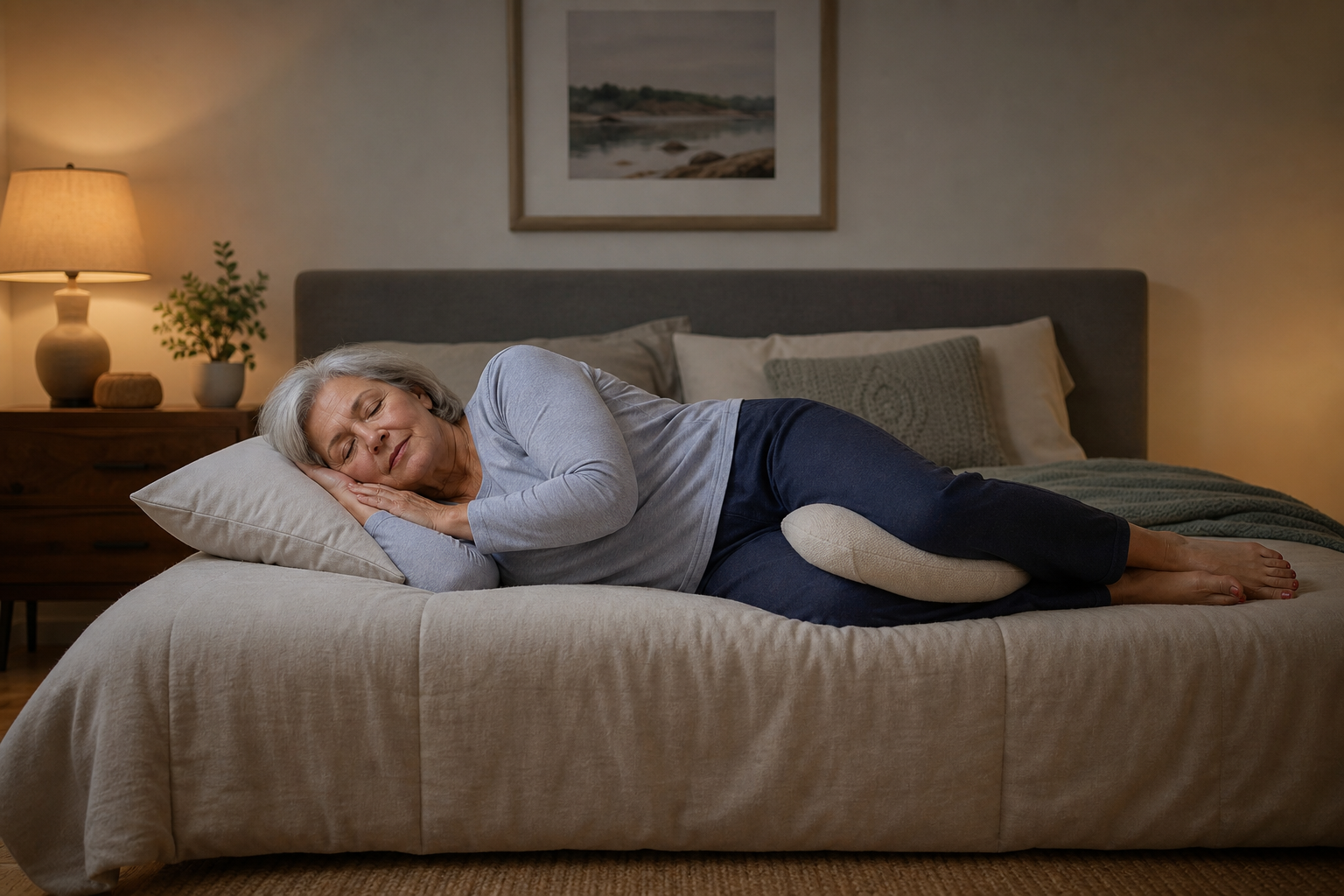
Why Does Sleeping Hurt So Much When You Have Hip or Knee Joint Pain?
I’ll never forget a patient of mine—let’s call her Linda—who limped into my clinic after yet another sleepless night. She looked at me, half-joking, half-desperate, and said, “Sarah, I’d pay a small fortune for a position that didn’t make my hips scream and my knees lock up.” Sound familiar? If you’re quietly nodding along, you’re in good company. Joint pain is the thief that robs us not just of mobility, but of precious sleep. And nothing, absolutely nothing, makes daytime pain feel worse than a lousy night’s rest.
Here’s the thing: The position you sleep in isn’t just a matter of preference. It can be the difference between hours of tossing and turning or waking up genuinely refreshed (or at least, not worse than when you went to bed!). A 2022 study in Arthritis Care & Research found that nearly 70% of adults with osteoarthritis report significant sleep disturbances—most citing pain as the main culprit. That statistic? It’s even higher for those with chronic hip and knee issues. So if you’re frustrated, that’s not just in your head—it’s in the data, too.
The Reality of Living with Hip and Knee Pain at Night
Look, I’ve treated hundreds of patients who dread the moment the lights go out. Why does pain seem to ramp up at night? Physiology is partly to blame. Joint inflammation often spikes in the evening as our bodies slow down natural cortisol production. On top of that, lying still for long periods means less synovial fluid (the joint’s natural lubricant) moves around, making everything feel stiffer and crankier by morning.
But there’s also the mental side—your brain, now free from daytime distractions, suddenly tunes into every dull ache and stabbing twinge. It’s a double-whammy of biology and psychology.
What Science Says About Sleep Positions and Joint Pain
In my years as a physical therapist, I’ve seen all the creative ways people try to outsmart their sore hips and knees at bedtime. Some strategies are genuinely helpful, a few are harmless, but others can actually make things worse. So what does the research say?
A handful of studies—most notably one from the Journal of Rheumatology, 2019—have looked at how body position affects pressure on the hips and knees. The consensus? Side-sleeping with the right support can reduce joint strain… but only if you get your alignment and pillow strategy right. On the flip side, certain positions (think: stomach sleeping) crank up torsion and compression, setting you up for a miserable morning.
The Main Sleep Positions: Pros, Cons, and Real-World Tips
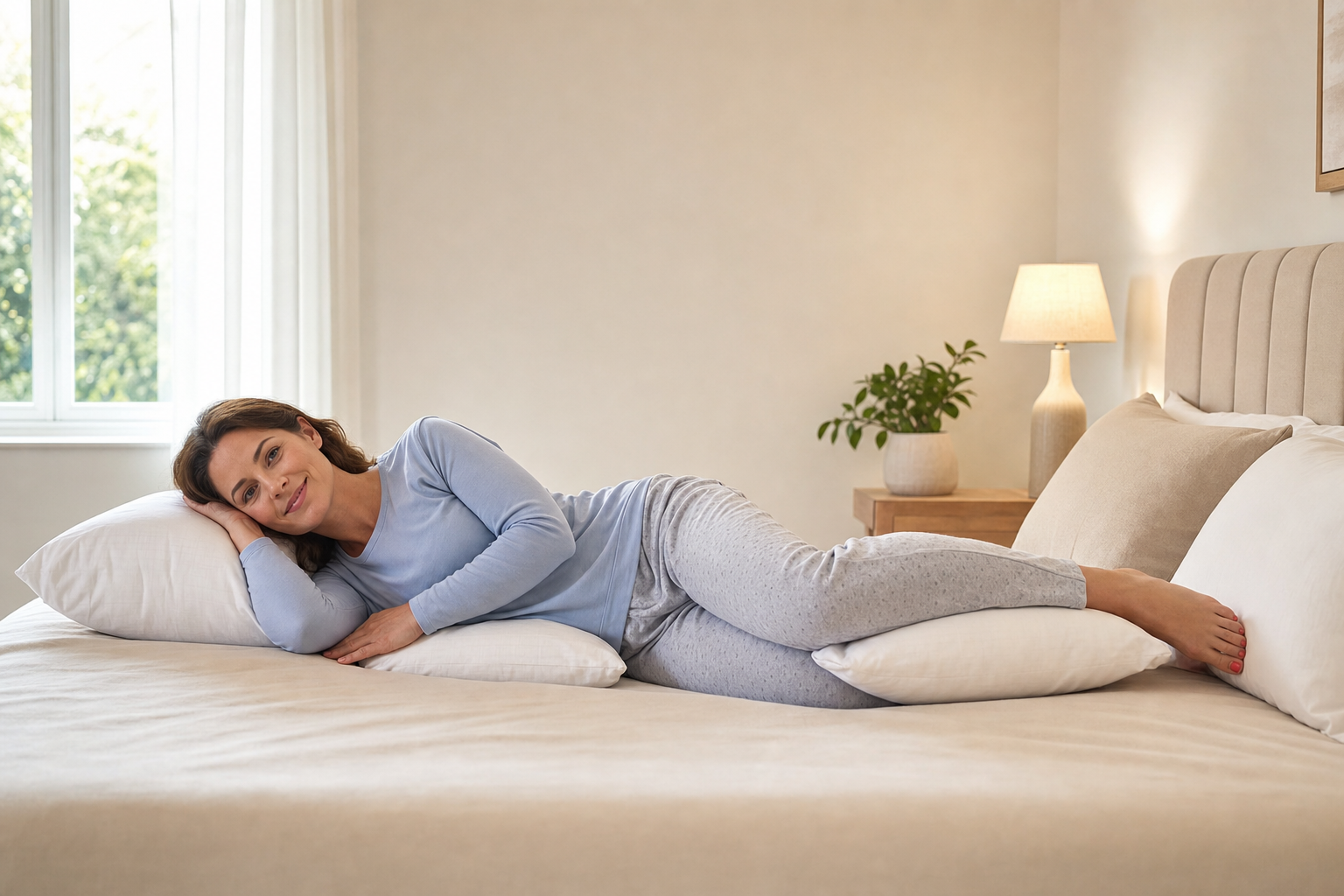
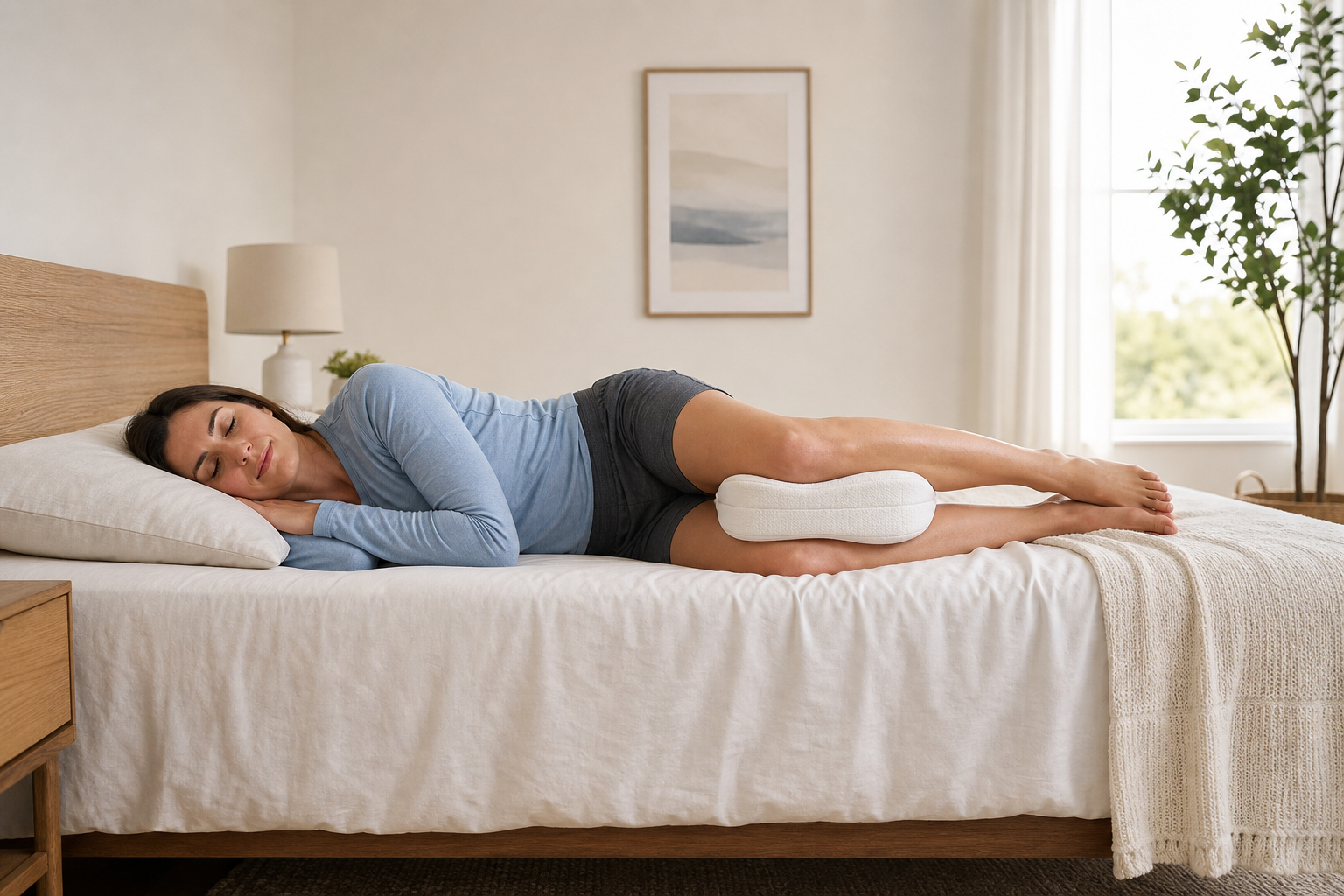
- Side Sleeping: Honestly, this wins for most people with hip or knee pain—IF you use support between your knees and ankles. It keeps the hips level and prevents knee-on-knee pressure (which can really amp up pain if you have arthritis or bursitis). Here’s where it gets interesting: a 2021 study in BMJ Open found that placing a firm pillow between both knees AND ankles reduced pain scores by 32% compared to knees-only support.
- Back Sleeping: Great in theory, but tricky if your lower back isn’t happy. Placing a pillow beneath your knees can work wonders by reducing extension stress on the hips and softening knee discomfort. I usually recommend this for people who can actually fall asleep on their backs (not as common as you’d think).
- Stomach Sleeping: I know, some folks swear by it—but it’s a nightmare for hips and knees. This position forces external rotation at the hips and hyperextension at the knees. Over time? It can actually worsen pain or contribute to new joint issues.
I’ll be honest—I’m not going to convince committed stomach sleepers to switch overnight. But if you’re waking up stiff or sore, it’s worth experimenting with side or back positions, even if you only last part of the night.
Pillow Tactics: Not All Support Is Created Equal
Now, about those pillows. There’s a reason I mention them so often in my clinic. Most people have too few… or too soft… or they fall out of position by midnight. The trick is to use a moderately firm pillow (or a specialized knee pillow) between the knees and ankles. For side-sleepers, hugging a pillow can also take some strain off the upper shoulder and keep your upper spine happy.
If you’re a back-sleeper, a thick pillow under the knees can keep your spine and hips in neutral. And for those with severe knee arthritis? Sometimes a thin towel roll beneath the knee joint itself reduces painful full extension—give it a try.
Should You Buy a Knee Pillow?
This is controversial in PT circles, actually. Some therapists love them, others say a standard pillow works just fine. My take? If a pillow keeps shifting or flattening out, a contoured knee pillow is a game-changer (especially for restless sleepers). But don’t let slick marketing convince you it’s a cure-all. No pillow erases underlying joint inflammation or muscle tightness, but it sure can make the night more bearable.
What About Mattresses & Bedding?
This is an underrated factor. I’ve reviewed dozens of mattresses for joint pain and—unpopular opinion time—most folks don’t need a $2,000 foam slab. You want something supportive, not quicksand-soft, with enough give to cushion bony points (hips, knees) but enough support to keep your spine straight. If you’re rolling out of bed feeling stiffer than when you got in, it might be time to rethink your mattress or try a 2-3” memory foam topper as a stopgap.
Waking Up Stiff? Nighttime Movement Helps
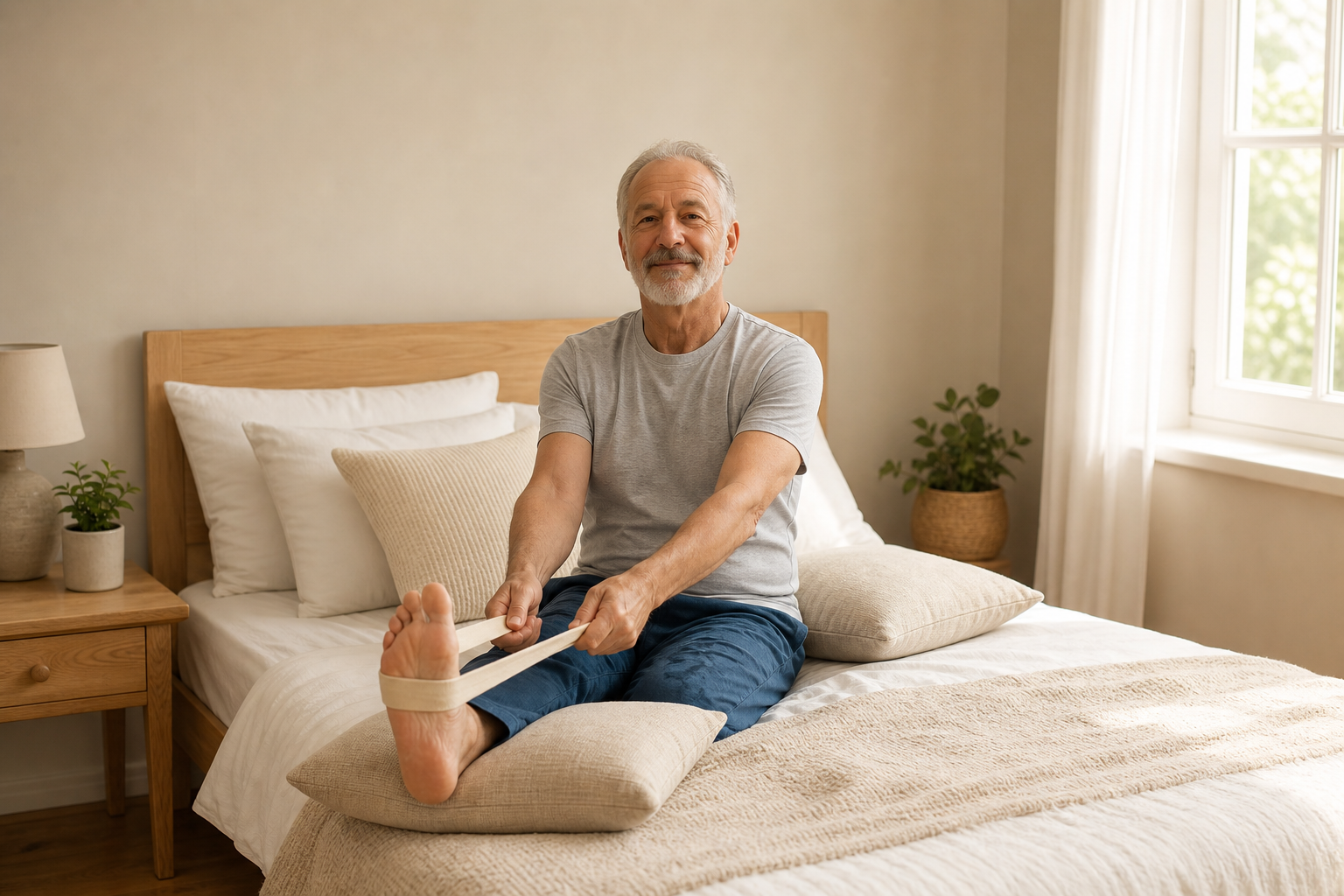
This is the part most articles skip. I advise my patients—especially those with moderate to severe arthritis—to gently move their legs before getting up. A few ankle pumps, gentle knee bends, or even light quad sets can get synovial fluid moving. The difference between “robot shuffle” and “normal morning walk” is often just a few minutes of gentle pre-rise movement.
Putting It All Together—My Best Sleep Strategies for Hip and Knee Pain
- Start with a side-sleeping position, knees and ankles stacked, with a medium-firm pillow in between. (If you have a contoured knee pillow, even better.)
- Consider a second pillow to hug—this offloads the upper shoulder and helps keep you from rolling onto your stomach.
- If you’re a back-sleeper, place a thick pillow under your knees to relax both your hip flexors and knee joints. Don’t force yourself onto your back if it triggers low back pain, though.
- Rotate your pillow or use a fresh one if it starts to flatten. I can’t tell you how many times a “renewed” pillow fixes the support issue.
- If pain wakes you up in the middle of the night, try gentle ankle pumps or knee bends before standing up—never hop out of bed cold.
- Heat therapy before bed (think: heating pad for 15-20 minutes, medium setting) can relax muscles and soothe inflamed joints. My patients love the Pure Enrichment PureRelief XL Heating Pad—the moist heat option provides deeper relief and the size covers both hips and knees at once. Of course, keep safety in mind: never sleep with it on, and check your skin regularly.
How Physical Therapy Exercises Can Help—Even at Night
This is my soapbox. All the sleep tricks in the world are band-aids if you’re not addressing the underlying joint mechanics. Gentle range-of-motion and strengthening are the only evidence-backed ways to actually reduce arthritis pain over time. If you’re not sure what to start with, or you want a simple plan to follow at home, I often point patients to Treat Your Own Knees by Jim Johnson. It’s research-backed, easy to follow, and—honestly—has helped dozens of folks in my own circle. (My own mother-in-law swears by Johnson’s ‘responsiveness’ routine.)
Of course, always check with your doctor or PT before starting a new exercise program, especially if you’ve had a recent flare-up or surgery. Your body, your rules.
Comparing Real-World Relief Options: What Actually Works?
I get a surprising number of emails about topical pain relievers. Some swear by them, others say “meh.” The evidence is solid for certain products: for example, Voltaren Arthritis Pain Gel (diclofenac sodium) is FDA-approved and supported by decades of clinical data—2018’s Annals of Internal Medicine meta-analysis pegged its efficacy at 60-70% pain reduction in knee osteoarthritis, with fewer systemic side effects than oral NSAIDs. It’s not a miracle, but as a bedtime ritual? Many of my patients say it takes the edge off just enough to fall asleep easier.
Of course, not every product is right for every person, and you should talk with your doctor or pharmacist before starting a new topical (especially if you’re taking other NSAIDs or have skin sensitivities).
What I Wish More People Knew
Here’s what textbooks and glossy magazine articles rarely mention: there’s no “perfect” sleep position that fits every body. Your age, weight, joint history, mattress, even the way your pelvis tilts—all these play a role. Some trial and error is normal. Document what helps and what hurts. Adjust as needed, season by season (your sleep needs can shift with arthritis flares, weight changes, or even weather).
And if you’re ever tempted to just “tough it out” through another painful night? Don’t. Chronic poor sleep is linked to increased pain sensitivity, mood problems, and even faster arthritis progression (see that 2020 Arthritis & Rheumatology study—sobering reading, but worth a look if you need motivation to prioritize sleep as part of your pain management toolkit).
Your Personalized Hip and Knee Sleep Setup: A Quick Recap
- Side-sleepers: knees and ankles supported, firm but forgiving pillow, consider hugging a second pillow for stability.
- Back-sleepers: thick pillow under knees, flat on back. Try a towel roll under knees if full extension hurts.
- Problem-sleepers: try alternating positions mid-night (sometimes your joints just need a break from one angle).
- Pre-bed ritual: gentle stretching, heat therapy, topical pain gel. Small shifts, big results.
- Track your sleep and pain level for a week after making any changes—it’s the only way to know if a new setup is helping or not.
If you’re feeling overwhelmed, start small. Pick one tweak—maybe a pillow between the knees, or five minutes with a heating pad before bed—and see how your body responds. You deserve a night’s rest that doesn’t feel like a wrestling match with your mattress.
Final Thoughts from Your PT
Is one pillow, one product, or one position going to erase hip and knee pain overnight? Nope. But dialing in your sleep strategy—bit by bit—can absolutely tip the odds in your favor for better, less painful nights. And small improvements add up.
If you have a question, or if you’ve found a quirky sleep trick that works, I’d love to hear from you. You’re not alone in this. Take it one night at a time—and if you need help, reach out to a PT who knows joint pain inside and out.
Wishing you easier nights and easier mornings,
Dr. Sarah Mitchell, DPT
Senior Health Editor, JointReliefReviews.com