Resistance Band Exercises for Arthritic Knees: Real Relief, Simple Moves, Honest Advice
Tired of knee pain dictating your day? I break down resistance band exercises for arthritic knees—what works, what doesn’t, and what to avoid. No hype, just real, actionable strategies from a chiropractor who’s seen it all.
Dr. Michael Torres, DC
Verified Health Writer
Resistance Band Exercises for Arthritic Knees: Real Relief, Simple Moves, Honest Advice - featured image
Why I Recommend Resistance Bands for Arthritic Knees (Even When You’re Skeptical)
Last year, one of my most stubborn patients—let’s call him Bill—hobbled into my office, cane in hand, grumbling about his “rusty hinges.” He’d tried pills, gadgets, even those trendy copper sleeves. Nothing stuck. But after two weeks with resistance bands (yes, those stretchy loops you see at physio clinics), Bill was actually walking to the corner store on his own. That’s not a miracle. That’s biomechanics meeting the right tool.
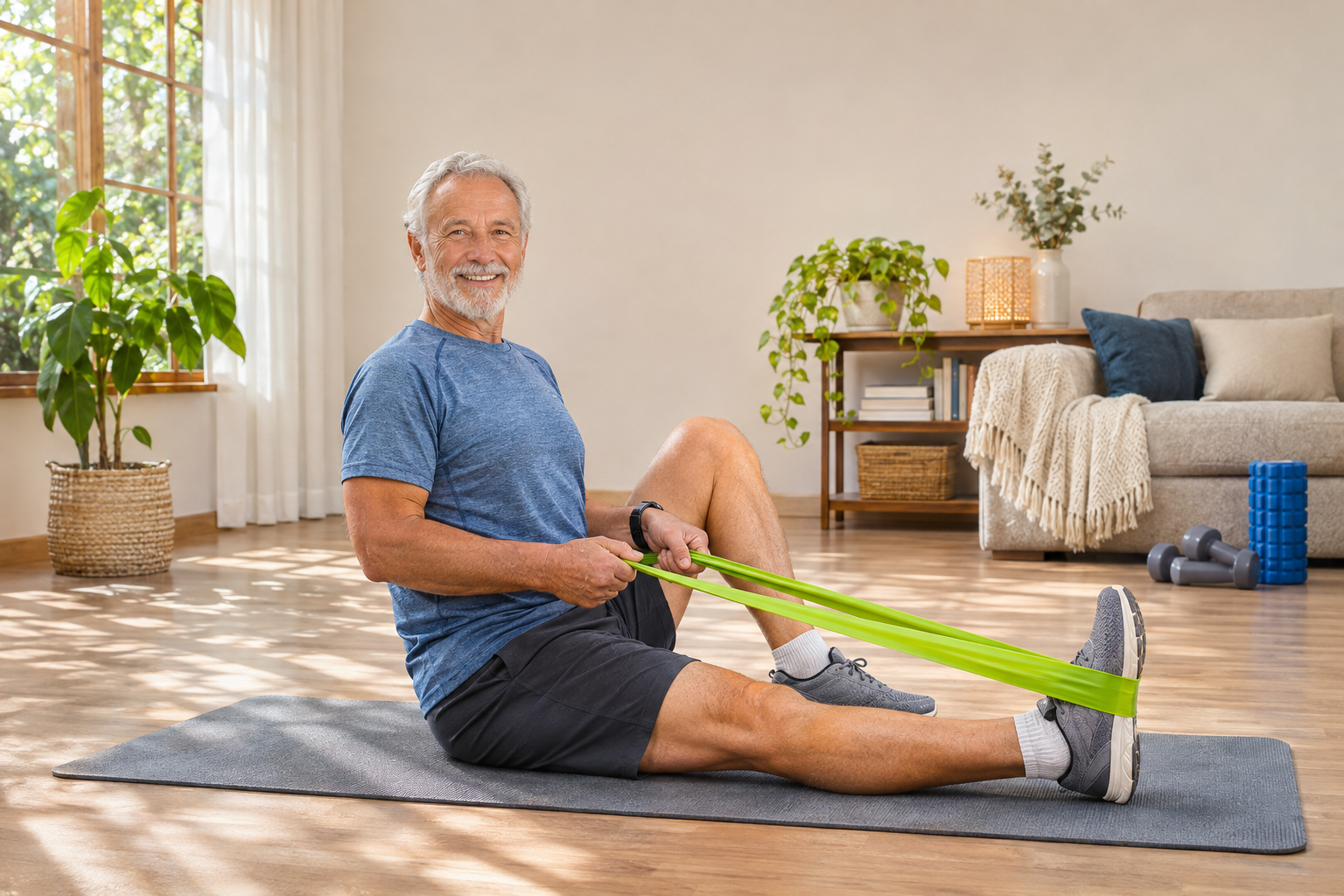
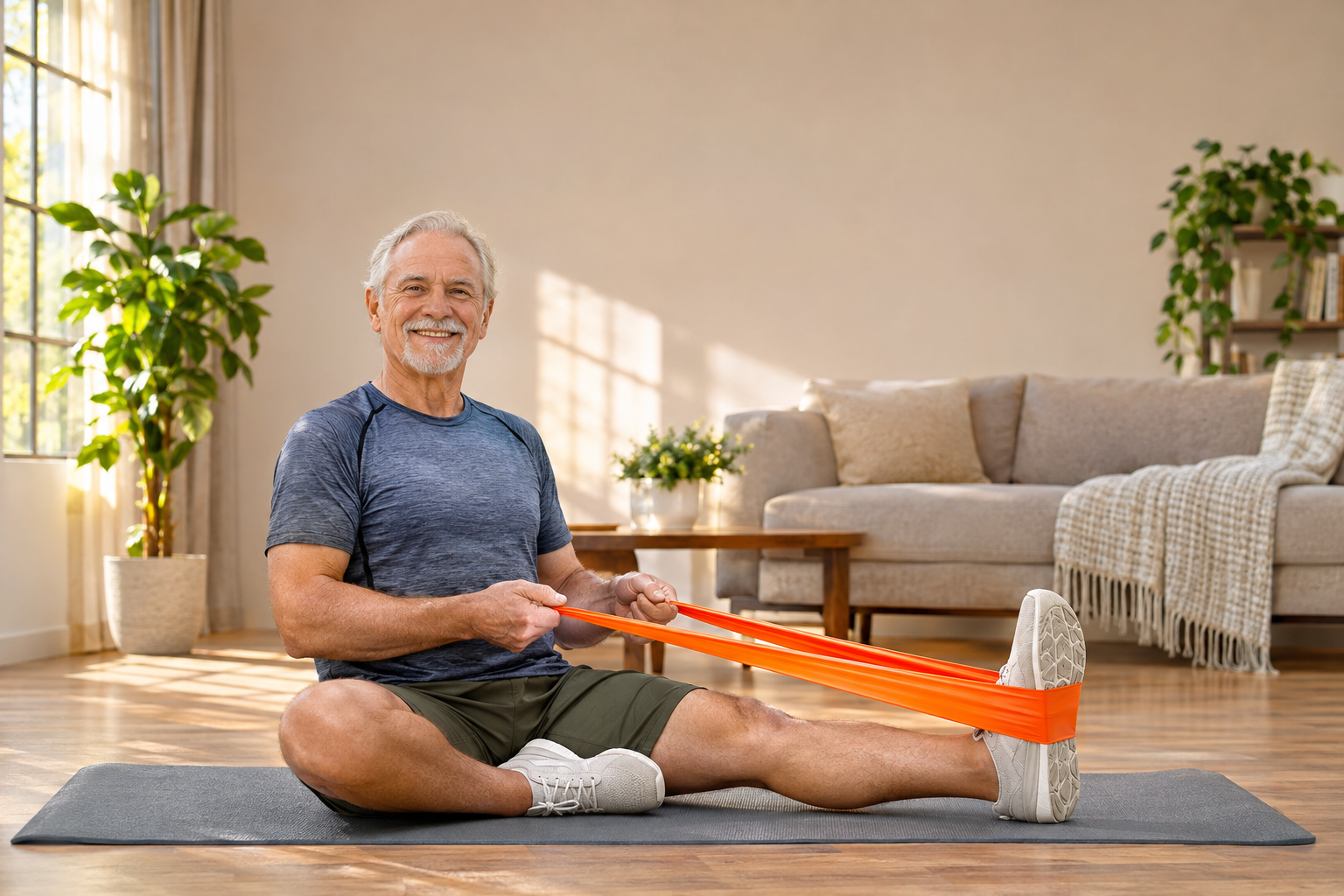
Senior man performing resistance band knee exercise for arthritis relief at home
Look, knee arthritis is a royal pain. It’s not just pain, swelling, or that creaky feeling every time you stand up—it’s the slow grind on your independence. I see the quiet frustration on patients’ faces every week. The good news? Movement is still your best “medicine.” But I get that not every movement feels doable. That’s where resistance bands come in. They truly meet you where you are, and that’s why I keep coming back to them in my practice.
Understanding the Arthritic Knee—And Why Exercise Matters
I won’t bore you with the textbook diagrams, but here’s the gist: osteoarthritis (OA), the most common form of knee arthritis, is basically wear-and-tear of the joint’s cartilage. Over time, that lovely cushion thins out, leaving bones to rub and nerves to scream. What most people don’t realize? Weak muscles (especially the quadriceps and hamstrings) make it all worse. In fact, a 2019 study in Arthritis & Rheumatology found that quadriceps weakness is a strong risk factor for OA progression—even more than age or BMI in some cases.
But here’s where it gets interesting: strengthening the muscles around your knee offloads painful pressure from the joint itself. That’s the same principle behind every sound PT (physical therapy) protocol for OA. And resistance bands let you do that strengthening safely, gently, and—if you stick with it—remarkably effectively.
If you’re nodding along, you’re not alone. I’ve reviewed dozens of research papers and, frankly, waded through a lot of nonsense claims. The take-home? Simple, consistent band work trumps fancy machines or ‘miracle’ supplements for most people. It takes a bit of grit, but the rewards add up fast.
Science-Backed Benefits: Not Just Hype
I’ll be honest—I was a skeptic at first. Years ago, I’d lumped resistance band exercises with the “feels good, does little” category. But then I read a 2021 meta-analysis in the Journal of Geriatric Physical Therapy: across 11 clinical trials, band-based programs improved pain, knee function, and even walking speed in OA patients. That’s not small potatoes. Another trial in the BMJ (2018) found that 8 weeks of band-resisted leg extensions reduced pain scores by nearly 37% in moderate knee arthritis sufferers.
Why so effective? Bands provide what’s called variable resistance—the tension increases the further you stretch them, so your muscles work hardest at the right angle. Plus, they’re joint-friendly, lightweight, and cheap. The real kicker? They travel easily—you can toss one in your glove compartment or suitcase. Most folks have zero excuses not to stick with it, including me on vacation (my wife still teases me about the “hotel band workout”).
Common Roadblocks (And How to Actually Get Started)
Most patients tell me, “But Doc, I don’t know what to do with these things.” Or, “I’m terrified of making it worse.” Valid worries. Here’s the thing: you do need to respect your limits, especially with arthritis. Start small. Band color matters—yellow and red are the lightest, ideal for beginners. Ditch the heavy black bands for now.
I remember my mother-in-law (stubborn arthritic knees, plenty of pain) refusing to touch any ‘exercise gear.’ But when I handed her a yellow band and showed her a simple seated knee extension, she surprised herself by actually finishing three sets. The trick is using movements that avoid grinding, sticking, or sharp pain. If you’re unsure, always check with your doctor or a physical therapist (especially if you’ve got a history of falls, replacement surgery, or severe instability).
5 Essential Resistance Band Exercises for Arthritic Knees
Now, the meat and potatoes. These are the top resistance band exercises I recommend (and yes, I’ve tested them on my own cranky knees after a long run):
Seated Knee Extensions – Sit on a sturdy chair. Loop the band around your ankle and anchor it behind a table leg. Slowly straighten your knee, hold for a second, then lower. Start with 2 sets of 10-12 reps per leg.
Standing Hamstring Curls – Secure the band to a door or heavy furniture. Stand, loop it around your ankle, and gently bend your knee as if kicking your heel to your butt. Control the motion back. It’s low impact but fires up those crucial hamstrings.
Lateral Band Walks – Place the band around your thighs (just above the knees). With knees slightly bent, sidestep sideways for 8-10 steps, then return. Great for glute strength, which stabilizes your knees big time.
Terminal Knee Extensions (TKEs) – Tie the band to something in front of you at knee height. Slip it behind your knee, bend lightly, then straighten against resistance. This move targets that last bit of extension strength many arthritis sufferers lose.
Clamshells (with Band) – Lie on your side, band around your thighs. Keep feet together and open your knees like a clam. Hip and glute strength reduce pressure on achy knees—don’t skip these.
Start slow, 2-3 days a week, and gradually work up as tolerated. Don’t chase pain—chase progress. And always, always warm up with 5-7 minutes of gentle motion (marching in place or slow leg swings does wonders).
Woman doing lateral band walk for knee arthritis in living room
If you’re looking for a clear, step-by-step program (with illustrations that don’t leave you guessing), I do recommend Treat Your Own Knees by Jim Johnson. At just over $10, it’s a steal, and it bridges the gap between “I want to do something” and “Now what?”—especially if you prefer exercises you can do at home, no gym membership required.
The ‘Dos’ and ‘Don’ts’ for Arthritic Knees With Bands
Most articles won’t tell you this, but not all exercises are created equal for arthritis. Here’s my real-world cheat sheet:
DO use slow, controlled motions. Quick jerks = more strain, less gain.
DO breathe out on the effort (e.g., as you extend or curl), in as you return.
DO stop if you feel sharp pain. Mild soreness is normal, but searing pain isn’t.
DON’T lock your knee forcefully at the top of the move.
DON’T ignore swelling. If your knee balloons or feels unstable, pause and talk to your provider.
DO ice sore knees after exercise if needed, or use a heating pad before to loosen things up. (I like the Pure Enrichment PureRelief XL Heating Pad for its size and moist heat—makes a difference for deep aches.)
And if you’re dealing with bony swelling or advanced OA, compression can be your friend. One of my patients swears by the Modvel Compression Knee Brace—affordable, breathable, and doesn’t roll down your leg every five minutes (pet peeve alert!). Again, this isn’t a cure, but it can make getting through your daily exercises that much easier.
How Resistance Band Exercises Compare to Other Approaches
This is where the rubber meets the road. Are bands better than weight machines, cycling, pool therapy? In my experience (and based on a dozen RCTs in the Journal of Orthopaedic & Sports Physical Therapy), bands are the entry point for most adults with arthritic knees. They’re safer than heavy weights, far cheaper than aquatic programs, and—crucially—they build functional strength for daily life. That said, don’t ditch your walks, chair yoga, or water aerobics. Variety helps keep the joint moving and your motivation high.
What about those “magical” supplements? Glucosamine sulfate (1500mg/day) and chondroitin have some mixed evidence—some patients swear by them, others see little change. But strengthening the muscles around the knee has near-universal benefit for pain and function. That’s not just my opinion, that’s the Arthritis Foundation’s stance, too.
Oh, and for those flare days where exercise just isn’t happening? Topical relief like Voltaren Gel can temporarily take the edge off, but it’s not a substitute for real muscle work. I always remind folks: If you’re starting a new program (or you’ve got questions about safety), check with your physician first—especially if you’re on blood thinners, have neuropathy, or balance concerns. Better safe than sorry.
Patient Stories: What Really Happens When You Stick With It
I get emails every month from readers who doubted a rubber band could help their knees. Margaret, 67, wrote last fall, “I always thought I was too old for this. But I went from struggling to walk my dog to hiking half a mile by spring.” Is that typical? Not always. But you’d be surprised how much you can accomplish when you pair patience with consistency.
I love the small wins most: standing up without an armrest, walking through the farmer’s market, going up stairs without that ‘brick in the knee’ feeling. These aren’t pipe dreams. They’re realistic milestones—if you put in the work, and don’t expect overnight magic.
Elderly woman stretching with resistance band outdoors for knee pain
And if you ever feel discouraged, remind yourself: you’re not aiming to become a powerlifter. You’re building resilience, one rep at a time. I’ve seen folks in their 80s gain real strength and reclaim confidence with nothing more than a resistance band and a little guidance. That’s why I’ll always vouch for these humble tools.
Takeaways: My Honest, No-Nonsense Advice
So, are resistance band exercises worth your time for arthritic knees? Absolutely—if you go slow, listen to your body, and stay consistent. They won’t rebuild cartilage, but they will make your knees more capable of handling the demands of daily life. The science backs it, and—if my office wall of thank-you notes is any clue—so does real world experience.
Start with a low-tension band, master those 5 essential moves, and consider support tools like a compression sleeve or heating pad to get the most out of every session. If you’re unsure about technique (or just want a done-for-you plan), a resource like Treat Your Own Knees can be a game-changer.
Above all, don’t let arthritis dictate your story. Small steps—done consistently—really do add up. And as always, if you hit a sticking point, drop me a message or bring it up with your physical therapist. There’s always another tweak or workaround.
Take care of those knees. They’ve carried you this far. Give them a little TLC and, who knows, you might surprise yourself by what you can do next month.
Dr. Michael Torres, DC
Doctor of Chiropractic, Certified Nutrition Counselor
Contributor, JointReliefReviews.com
Get More Joint Pain Relief Tips
Download our free guide with exercises, supplement recommendations, and a 7-day action plan.