
Why I Recommend Resistance Band Exercises for Knees with Arthritis
I’ll be honest — I used to be skeptical about resistance bands. In my early days as a chiropractor, I stuck to more conventional knee rehab routines. But about ten years ago, a patient named Linda changed my mind. She had stubborn osteoarthritis and, frankly, hated every exercise I suggested — until we tried simple banded moves. Fast forward: Linda was hiking again by spring.

Here’s where it gets interesting: a 2020 review in Arthritis Care & Research found resistance training (including bands) significantly improved knee pain and function in people with osteoarthritis. And the kicker? The best results came from low-impact, controlled movements — exactly what bands provide.
Knee Pain Isn’t Just Physical — and I Get It
If you’re nodding along, you know: arthritic knees aren’t just about the grind and ache. They steal your confidence, your energy, and sometimes, your willingness to even get out of a chair. I’ve seen patients hesitate on stairs, shy away from walks with grandkids, or even avoid favorite hobbies because of that relentless pain.
Arthritis can feel like a thief, plain and simple. But the right exercise — gentle, doable, and safe — can help you reclaim what you’ve lost. That’s why resistance bands have become my go-to tool for so many of my clients. They’re accessible, inexpensive, and surprisingly powerful for rebuilding strength without punishing your joints.
What Makes Resistance Band Exercises So Good for Arthritic Knees?
Two things, really: control and versatility. You control the resistance. If a move is too tough, you lighten up — just pick a band with less tension or adjust your grip. Conversely, when you get stronger (and trust me, you will), you can gradually move up to a firmer band. No heavy weights, no fancy gym required.
Another reason? Bands allow for closed-chain exercises — moves where your foot stays put, like side steps or squats. These are generally better tolerated by arthritic knees than open-chain moves (like leg extensions), a fact backed up by a 2019 clinical trial in BMJ Open Sport & Exercise Medicine.
Here’s the thing: well-designed band routines build not just muscle strength, but also flexibility and what we call proprioception — your body’s sense of joint position. That means fewer stumbles and more confidence.
My Top Resistance Band Exercises for Arthritic Knees (and How to Make Them Work for You)
I’m going to walk you through my favorite moves. These are the exact exercises I use in my clinic, with patients ranging from 50-somethings with weekend-warrior aches to folks in their 80s just wanting to stay steady on their feet.
1. Seated Knee Extension
- How: Sit tall on a sturdy chair. Loop the band around your ankle and anchor the other end under the chair leg or your opposite foot. Slowly straighten your knee, then control the return.
- Why it helps: Strengthens the quadriceps without weight-bearing — crucial for knee stability.
- Dosage: 2 sets of 8–12 reps per leg, 3-4 times per week.
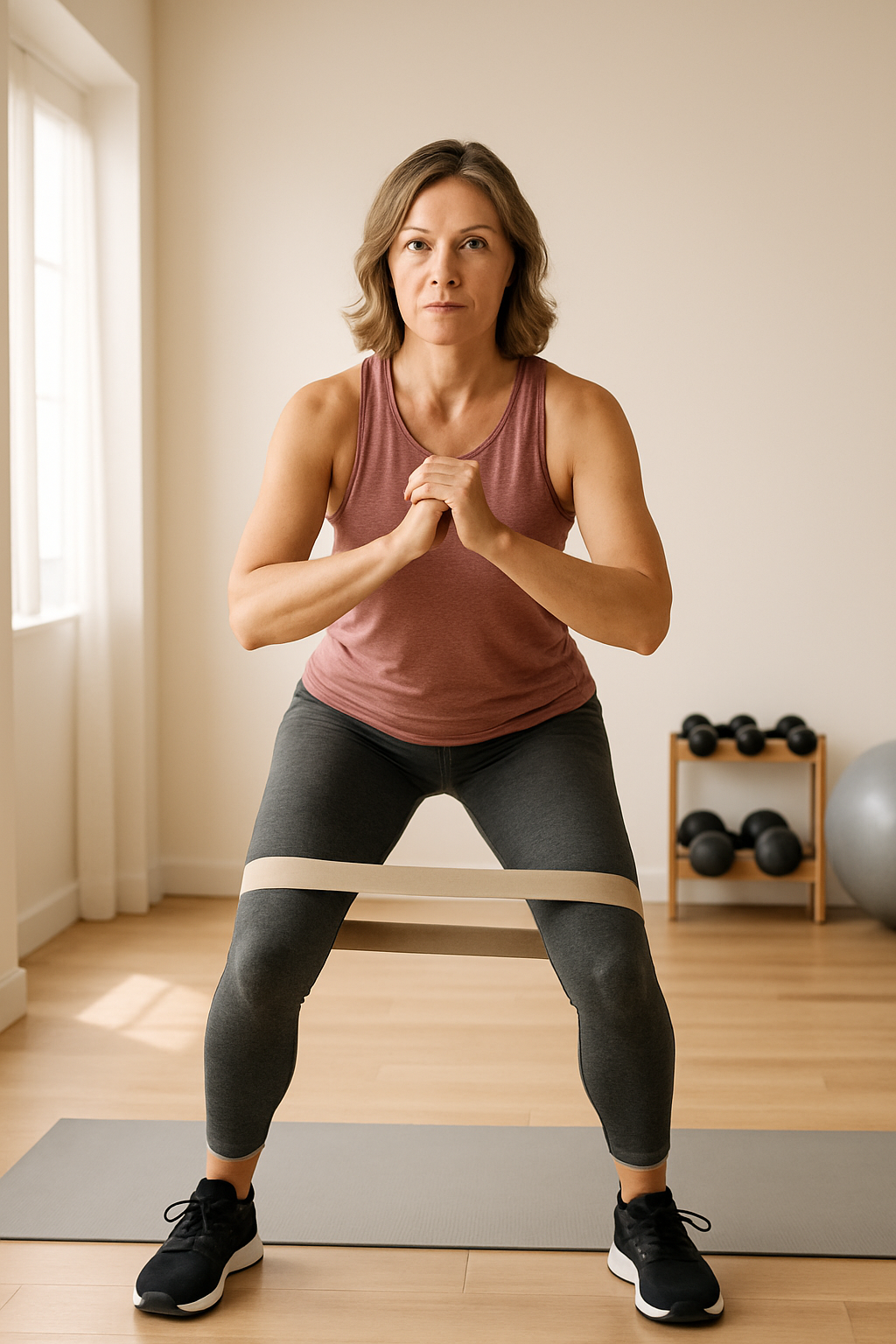
2. Banded Side Steps
- How: Place a loop band just above your knees. Stand with feet hip-width, knees softly bent. Step sideways, keeping tension on the band, then step back.
- Why it helps: Targets hip stabilizers, which often get weak with arthritis — and help take pressure off the knee joint.
- Dosage: 2 sets of 10 steps each direction, as tolerated.
3. Standing Hamstring Curl
- How: Attach a band securely behind you at ankle height. Stand facing the anchor, loop around your ankle, and gently bend your knee, pulling heel toward glutes. Control back down.
- Why it helps: Strengthens hamstrings, which support the knee from behind and can balance out quad dominance.
- Dosage: 2 sets of 8–12 reps per leg.
4. Banded Terminal Knee Extension (TKE)
- How: Anchor a thick band at knee height. Loop behind your knee, step back to create tension, and gently straighten your knee against the band, squeezing the thigh.
- Why it helps: One of the best for activating the VMO (inner quad muscle), which is crucial for patellar tracking and knee stability.
- Dosage: 2 sets of 10–15 reps.
And a quick tip — don’t obsess over hitting every rep. Form beats quantity every time, especially with an arthritic joint.
How to Get Started (and Avoid Common Pitfalls)
If you’re just getting back into movement, start slow. I can’t tell you how many times I’ve seen folks — eager to “fix” their knee — go too hard, too fast. All it does is cause a flare-up. If you notice more pain or swelling the next day, back off. That’s not weakness — that’s wisdom.
Also, vary your routine. Mix in range-of-motion moves like gentle knee bends and stretches alongside the band work. And remember: if you have a flare (more swelling, heat, or sharp pain), give it a rest and talk to your doctor or PT before resuming.
Here’s one thing most articles won’t tell you: consistency matters more than intensity. Three short sessions a week will beat one monster session every Sunday, both for results and for keeping your joint happy.
Can Bands Alone Replace Your Whole Knee Routine?
Short answer: no — and that’s coming from someone who loves simplicity. Bands are a fantastic tool, but not the only one. Knee arthritis responds best to a mix: bands, flexibility work, and (when tolerated) low-impact aerobic exercise like walking, elliptical, or cycling. Realistically, you need a toolkit.
That’s why I often recommend Treat Your Own Knees by Jim Johnson. It’s a book I’ve both used in clinic and handed out to family members — a research-based guide packed with home exercises (many band-based) and clear guidance on what to expect. For under $12, it’s a no-brainer if you want a structured plan that goes beyond just bands.
The Science: What Do Studies Actually Say?
A lot, actually. A randomized controlled trial in Journal of Rheumatology (2017) found that eight weeks of banded exercise improved pain scores by an average of 30% in knee OA patients. What’s more, these improvements held up at six months — but only in those who kept up the home program.
And if you’re wondering whether bands are “as good” as weights, here’s a nugget: a 2019 meta-analysis in Clinical Rehabilitation showed that resistance bands produced similar gains in strength and pain relief as traditional gym equipment for arthritic knees.
Look, you don’t need fancy gear. That’s the beauty of this approach.
Tips for Success: What I Tell Every Patient
- Warm up first. Even a few minutes of gentle marching or bike pedaling can prep your joints and cut down the soreness.
- Listen to your body. A little muscle burn is fine. Sharp, joint pain is not. Adjust as needed.
- Invest in a good pair of compression sleeves if your knees feel unstable during exercise. I like the Modvel Compression Knee Brace — simple, affordable, and the anti-slip bands actually work. Roughly 75,000 reviews on Amazon don’t lie, and I’ve recommended them to dozens of my own clients who say it adds just the right amount of support.
- Track your progress. Even jotting down “pain 6/10 before, 3/10 after two weeks” can keep you motivated and show you the payoff.
- Don’t skip flexibility work. Tight hamstrings and calves can tug at the knee and worsen pain.
- Check with your doctor before starting any new exercise — especially if you have other medical issues, significant swelling, or any history of knee surgery.
What If My Knees Swell Up or Flare?
First off: don’t panic. It happens — sometimes for no clear reason. When it does, switch to gentle range-of-motion, icing, and elevation. For pain, topical options like Voltaren Arthritis Pain Gel (the one with diclofenac sodium) get strong reviews in my clinic, and clinical evidence supports its use for flare-ups without the systemic risks of oral NSAIDs.
Once the swelling calms down, ease back into your routine — lighter bands, lower reps, but keep the habit going if you can.
The Real Payoff: What I’ve Seen in My Practice
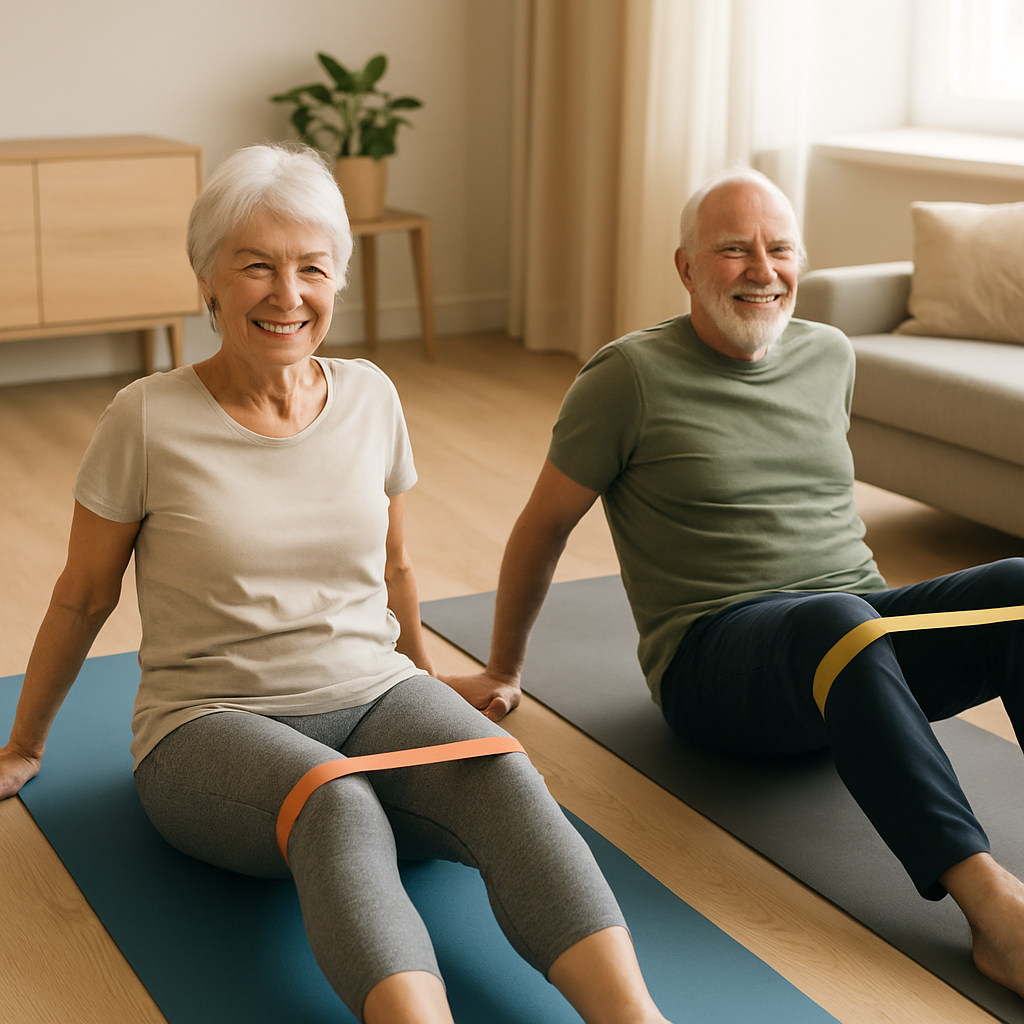
I’ll give you an example. Last year, I worked with a former tennis coach, 74 years old, who’d all but given up on real movement. We started with just two band exercises, twice a week. Three months in, he was gardening again. “My knees still ache,” he told me, “but I trust them now.”
That’s the heart of this — not perfection, but progress. A sense of control. If you can make these exercises a regular part of your week, you’ll notice more than just less pain — you’ll see better balance, confidence, and maybe even a bit of joy sneaking back into your activities.
Key Takeaways (and a Few Words of Caution)
- Resistance bands offer safe, joint-friendly strength training for arthritic knees.
- Consistency trumps intensity — stick to 2-4 short sessions per week.
- Start with lower resistance and build gradually.
- Quality compression sleeves or topical gels can provide extra comfort and support when needed.
- Flare-ups happen — adapt, rest, and get guidance if needed.
- Above all, talk to your healthcare provider — especially if you have recent surgery, severe pain, or other health concerns.
If you’re still here, hats off to you — you’re the type who actually follows through. Not gonna lie, some of this takes patience, but the rewards are worth it. And if you want to go deeper, pick up a guide like Treat Your Own Knees and keep a good compression sleeve handy for those tougher days.
Questions? Drop me a note or ask your physical therapist — and if you find a trick or tip that works, pay it forward. Your knees (and your future self) will thank you.
Dr. Michael Torres, DC is a licensed chiropractor and certified nutrition counselor. He’s spent over a decade helping patients manage joint pain with safe, practical strategies tailored for real life.