
Why Resistance Bands Might Be the Best Thing for Arthritic Knees
Let me tell you about a patient I’ll call Barbara. She’s 68, loves gardening, but her arthritic knees were turning a half-hour in the dirt into a week on the sofa. We’d tried pain gels, ice, even prescription NSAIDs with mixed results. But the real breakthrough came with a strip of bright green latex. A $10 resistance band, paired with the right moves, quite literally got Barbara back on her feet. I’ve seen this time and again in my practice.

The Relentless Grind of Arthritic Knees
If you wake up with knees that screech at every movement, trust me — you aren’t alone. I know the routine: that slow, stiff walk to the bathroom, the dread of stairs, the way you eye every chair before you sit down. Arthritis, especially osteoarthritis, is a daily test. Sometimes it’s the pain, but honestly, it’s the unpredictability that wears people down. Some days you feel almost normal; others, not so much.
Here’s the thing: The old advice used to be avoid pain at all costs. But we now know that gentle, targeted movement is crucial. The right kind of exercise — especially resistance-based — can actually reduce pain, not worsen it. And resistance bands? They’re fast becoming my go-to for knee arthritis in the clinic, and for good reason.
What the Research Says (and What It Doesn’t)
There’s a mountain of data behind resistance training for joint health. A 2018 meta-analysis in Arthritis Care & Research found that strength training, done at least 2-3 times per week, significantly improved pain and function in knee osteoarthritis. But here’s where it gets interesting — resistance bands deliver the benefits of weight training without the risk of overloading fragile joints.
In fact, a 2020 randomized controlled trial in Clinical Rehabilitation compared resistance bands versus traditional weights in adults with knee OA. The band group saw equal (sometimes better) gains in strength and reported less post-exercise soreness. If you’ve ever dreaded the aftermath of a workout, this matters.
Why does this work? When you use bands, your muscles have to stabilize and control the movement through the entire range — there’s no momentum to “cheat.” Plus, the bands are easy to adjust. Bad knee day? Use lighter resistance, shorter sets. Good day? Double up the band or add reps. Flexibility is key — arthritis doesn’t care about your schedule.
How Resistance Bands Help Arthritic Knees
- Low-Impact Strengthening: Bands challenge muscles without pounding the joints. That means less inflammation flare-up — huge for arthritic knees.
- Improved Stability: Strengthening around the knee (especially the quads, hamstrings, and glutes) helps control wobbly joints. I’ve seen falls and stumbles drop by half in patients who stick with it.
- Better Flexibility: Some moves double as gentle stretches, increasing mobility without forcing painful positions.
And let’s not forget — you can do these exercises in your living room, no gym membership required. The barrier to entry is basically “can you sit in a chair?”
My Top Resistance Band Exercises for Arthritic Knees
Now, here’s the crucial part. Not all resistance band exercises are created equal — some can actually aggravate knee pain if you’re not careful. So I’ll run you through my go-to, joint-friendly moves. (Of course, talk to your doctor or physical therapist before starting any new routine — especially if you’ve had knee surgery or suspect more severe cartilage damage.)
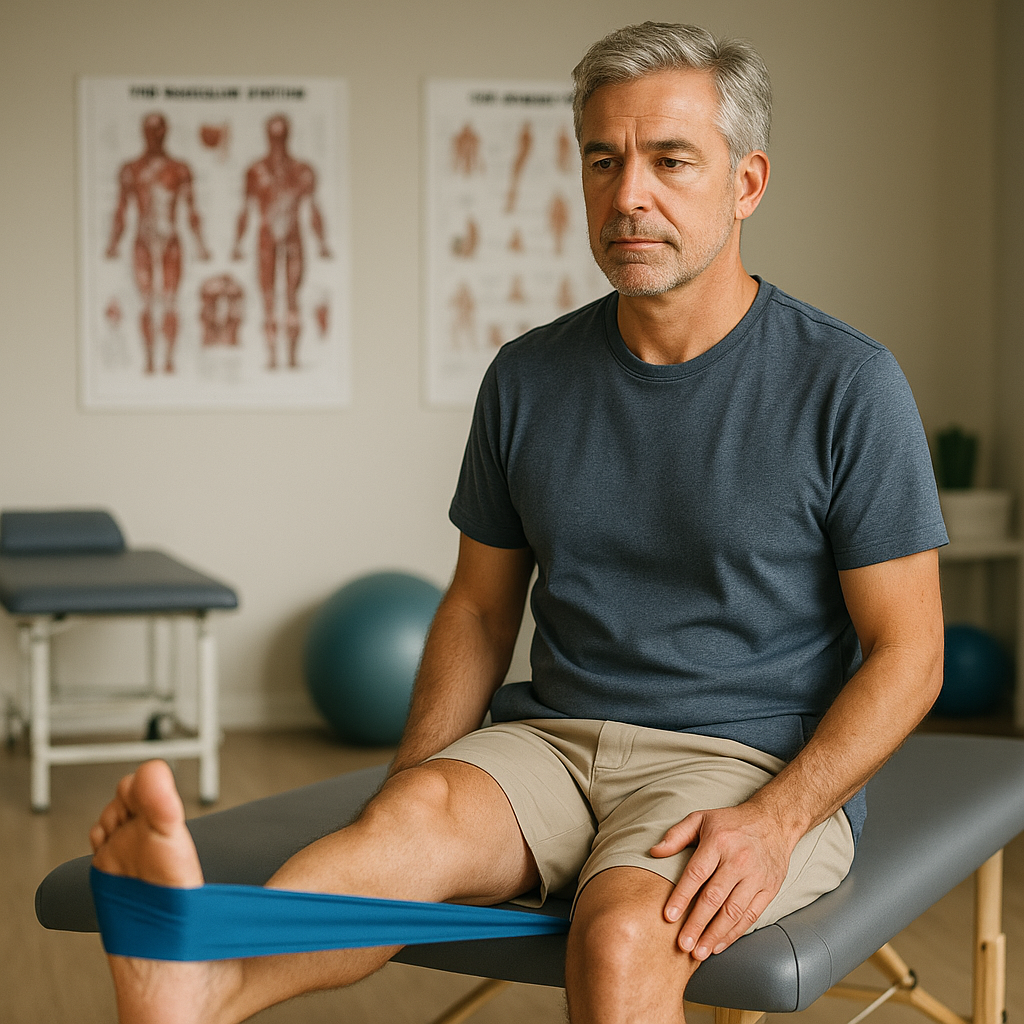
1. Seated Leg Extension with Band
This is the gold standard for quads — the muscle group that stabilizes your knee, and often goes weak with arthritis. Here’s how:
- Loop a resistance band around your ankle and anchor the other end to a sturdy chair leg or table.
- Sit tall, tighten your thigh, and slowly straighten your knee against the band’s resistance.
- Hold for two seconds, then return to start. Repeat 8-12 times, rest, and do a second set.
Go slow — speed defeats the purpose here.
2. Lateral Band Walks
This one targets your hip abductors (think glute medius), which play a huge role in knee alignment. Weak hips, cranky knees — it’s a pattern I see every week. Try this:
- Place a loop band just above your knees.
- Stand with feet shoulder-width apart, knees slightly bent.
- Step sideways, keeping tension on the band, for 8-10 steps in one direction, then back.
Keep those toes forward — if your knees cave in, use a lighter band.
3. Hamstring Curls (Standing or Prone)
People forget about the back of the knee. But strong hamstrings take pressure off the joint with every step.
- Loop the band around your ankle; anchor the other end at floor level (table leg works great).
- Standing tall, slowly bend your knee, bringing your heel toward your butt. (You can also do this lying on your stomach.)
- Hold a beat, return with control. Aim for 10-12 reps per leg.
4. Terminal Knee Extension (TKE)
Not gonna lie, this one’s a clinic classic — and a game-changer if your knees feel "loose" after walking. Here’s how:
- Anchor a band at knee height behind you; loop the other end behind your knee.
- Face away from anchor, knee slightly bent.
- Straighten your leg by tightening the quad, pressing knee back into full extension. Control the return.
- 10-15 reps per leg. Stop if you feel pinching in the front of the knee.
5. Gentle Squat to Chair with Band
Yes, squats. But we do them right — small range, band for feedback, and always with a chair for safety.
- Place a band just above your knees.
- Stand in front of a chair, feet hip-width, knees tracking over toes.
- Sit back until your butt just touches the chair, keeping tension against the band. Return to standing.
- Start with 8 reps, work up as comfort allows.
How Often? How Many Reps? (The Dosage Matters)
Here’s where most people trip up. Consistent, moderate effort beats heroic, one-off workouts every time. Most research points to 2-3 sessions per week as the sweet spot. More than that and your knees might bark; less, and you won’t see changes. Start with one set of each exercise, then progress to two as your strength and confidence build. The real magic happens after 4-6 weeks — I’ve seen folks who could barely climb stairs do a flight with a grocery bag by week eight.
And don’t be afraid to tweak. Some days, just doing a warm-up and a couple of band moves is plenty. Listen to your body — but don’t let it talk you out of moving entirely.
Extra Tools That Make a Difference (and When to Use Them)
I’ll get emails every week: “Doc, should I use a brace?” Or, “Does Voltaren actually help?” Look, resistance bands are fantastic — but sometimes, you need a little extra help. Here are a few tools I’d actually recommend to my own family:
- Modvel Compression Knee Brace – For days when swelling or instability spikes, a well-designed compression sleeve can provide subtle support and confidence. I wouldn’t live in these 24/7, but for walks or longer outings, they’re a lifesaver. The Modvel is budget-friendly, breathable, and comes as a pair (most folks end up needing both eventually).
- Voltaren Arthritis Pain Gel – This stuff is the real deal for OA pain. Diclofenac sodium (the active ingredient) is actually prescription-grade in much of the world. I’ve seen patient after patient get a solid few hours of relief, especially when paired with exercises. But a heads up — don’t use it right before band work, as your skin will be slick.
- Treat Your Own Knees by Jim Johnson, PT – Not a gizmo, but a research-backed mini book packed with simple, at-home exercises (many with bands) that echo the routines I use in clinic. Super affordable, surprisingly readable, and the illustrations actually make sense — a rarity in most exercise guides.
I know you’ll see ads for heating pads, massagers, joint supplements, the works. Some help, some don’t, most won’t replace focused movement. Save your pennies for good bands, a sleeve, and a clear plan.
Realistic Expectations (and the Hidden Benefit)
Here’s what your orthopedist might forget to tell you: Your first week will feel weird. Some mild muscle soreness (never sharp pain) is normal — this is your body waking up old, neglected fibers. Real improvements in pain and function? Count on 3-6 weeks of steady effort. I’ve tracked dozens of patients over the years, and while a few see magic early, most see a gentle “uphill” climb rather than a sudden leap.
But here’s the real kicker: It’s not just about pain levels. After a month or two, people tell me they stand taller, walk steadier, and feel less anxious about their knees “giving out.” That confidence pays dividends, both physically and mentally. I remember one reader — a retired bus driver — who emailed me after her first month of band work: “My husband doesn’t have to help me out of the car anymore.” That’s the stuff that matters.
What Most Articles Won’t Tell You
Look, I know the internet is full of miracle cures and Instagram-perfect workout routines. But the truth is, arthritis — especially in the knees — is a stubborn, lifelong companion. There are good days and bad. Resistance band training won’t erase arthritis, but it will help you manage it, maintain greater independence, and maybe even skip that next cortisone shot.
And be wary of “no pain, no gain” thinking. Joint pain is not a badge of honor. Gentle, persistent effort trumps hero moves every single time — trust me, I’ve seen hundreds try the hard way, only to land right back at square one.

Takeaways: Your Knee-Friendly, Band-Based Action Plan
- Invest in a good set of resistance bands (I recommend starting with light and medium).
- Stick with the big five exercises above; focus on slow, controlled movement.
- Start small — especially if it’s been a while since you moved regularly.
- Use a compression sleeve or pain gel as needed, but don’t lean on them forever.
- Consistency matters more than intensity. Two or three short sessions per week beats one marathon.
- If you have swelling, severe instability, or a recent knee injury, check with your doctor or physical therapist first.
One Last Word (From Someone Who’s Been There)
I’ll be honest — I was skeptical about bands at first. In grad school, we obsessed over fancy gym equipment and high-tech interventions. But in the real world? The patients who thrive are the ones who find a movement they can do, at home, safely and consistently. Resistance bands make that possible for arthritic knees. If you’re nodding along, try it. You might just surprise yourself. If you do (or if you have questions), send me an email. I read every one.
Stay strong. Your knees (and that inner gardener, hiker, or grandparent) will thank you.
Dr. Michael Torres, DC
Chiropractor, Certified Nutrition Counselor
15+ years helping people move better, with less pain