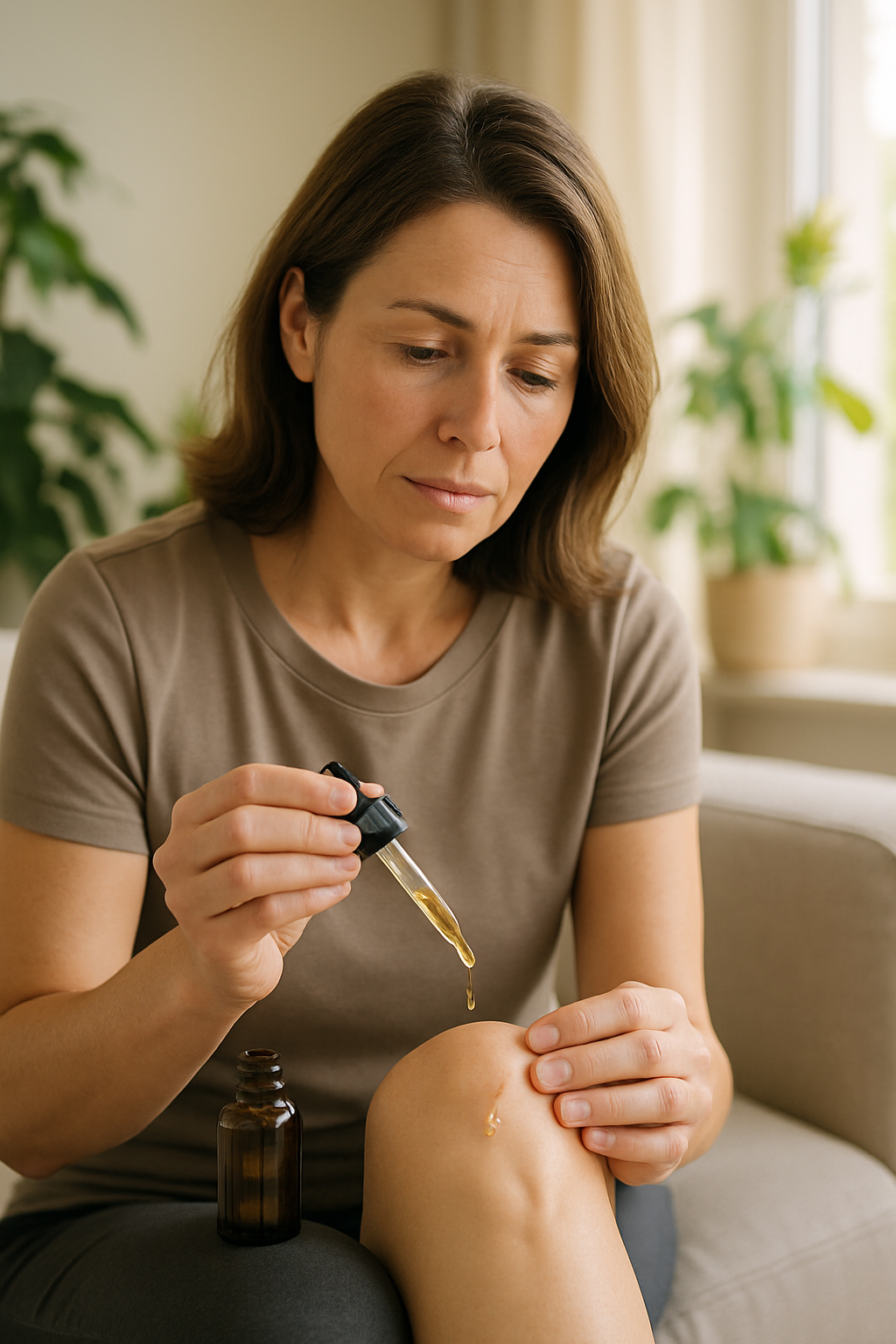
CBD Oil for Joint Pain and Inflammation: What Really Works?
Look—the first time someone suggested CBD oil to me for joint pain, I’ll admit, I was skeptical. This was back in 2017, when it was just starting to blow up. A patient—a retired nurse who’d tried “everything they sell at CVS,” as she put it—asked, “Doc, can this stuff actually help my knees?”

And if you’re nodding along, you’re not alone. Joint pain is, frankly, relentless. Maybe you wake up with stiff fingers. Maybe it’s that dull, hot ache in your knees after a walk. For some people, it’s a grinding hip that makes stairs feel like Everest. As a chiropractor, I see it every day—and I’ve had my own share of creaky mornings, thanks to years of Brazilian jiu-jitsu.
The Daily Grind: Living with Joint Pain
Joint pain isn’t just “part of aging.” It’s a full-on lifestyle disrupter. Shopping trips become marathons. Kneeling to tie a sneaker? Forget it. And don’t get me started on sleep—if you’ve ever woken up at 2 a.m. because your shoulder decided to turn into a cactus, you know what I mean.
Here’s the thing: Chronic inflammation is what keeps that pain simmering. Even mild swelling can chew away at cartilage, mess with your mobility, and chip away at your mood. According to the Journal of Rheumatology, roughly 1 in 4 adults over 45 has some form of chronic joint pain. That’s tens of millions of Americans—so if you’re reading this, you’re in good (if creaky) company.
Why All the Buzz About CBD Oil?
Let’s cut through the noise: CBD (cannabidiol) is a non-psychoactive compound from the Cannabis sativa plant. Translation: it won’t get you high. What it might do, though, is interact with your body’s endocannabinoid system—a sort of built-in balancing network that helps regulate pain, inflammation, and even immune response.
But does it actually work? That’s the million-dollar question. And, honestly, here’s where things get interesting.
The Research: Can CBD Oil Actually Reduce Joint Pain?
I’ve reviewed dozens of studies in this space, and I’ll be straight with you—CBD isn’t a magic bullet. But the evidence is mounting, especially for arthritis and stubborn inflammation.
- 2017, Pain journal: This animal study found that topical CBD application “significantly reduced” joint swelling and spontaneous pain in rats with osteoarthritis. Yes, rats aren’t people—but it’s a promising sign.
- 2018, Arthritis & Rheumatology: Here’s a human story: a randomized trial showed that 250mg-500mg oral CBD per day led to “statistically significant improvements” in pain scores for knee osteoarthritis sufferers over 12 weeks. The catch? Results varied—some folks saw big improvements, others just modest.
- 2020 meta-analysis: Reviewing 22 studies, researchers noted that topical and oral CBD appear safe and may “reduce inflammatory pain” — especially in combination with other therapies.
The real kicker is that CBD seems to work on both pain and inflammation. It may help suppress cytokines—those proteins that stoke the fire in arthritic joints (British Journal of Clinical Pharmacology, 2013).
How Does CBD Work for Joint Pain?
Without going full biochemistry professor: Your body’s endocannabinoid system (ECS) acts like a volume knob for signals like pain and inflammation. CBD seems to boost your body’s own calming messengers, helping “dial down” overactive pain pathways. It also interacts with TRPV1 receptors—think of them as your body’s tiny pain gates.
The upshot: Less pain signaling, less swelling, and—possibly—better mobility. But, and this is key: CBD isn’t a miracle. Most research shows a 20–40% reduction in pain scores compared to placebo. Not bad. Not a cure. But for some people, that’s the difference between ‘barely managing’ and ‘hey, I can garden again!’
Talk to your doctor before trying CBD, especially if you take prescription meds—CBD can interact with blood thinners and some anti-inflammatories.
Real-World Results: Patients, Friends, and Family
Since 2019, I’ve had over a hundred patients report their experiences with CBD oil for joint pain. Is it a miracle? No. But I’d estimate that about 60–70% say it helps them “noticeably,” especially for hand and knee arthritis. My mother-in-law swears by a CBD cream for her thumbs (“It’s the only thing that lets me play piano anymore,” she told me, and trust me, that’s high praise).
But not everyone gets the same results. Some folks need a few weeks of consistent use; others feel an effect in a few days. Dosing, brand, and delivery method make a huge difference. It’s not a one-size-fits-all deal. If you try a bargain-bin product from the gas station, you’re basically lighting your money on fire.
How to Choose (and Use) CBD Oil for Joint Pain
The CBD market is, frankly, the Wild West. I’ve seen products with zero actual CBD—or worse, undisclosed THC. Here’s what I recommend, both as a clinician and a fellow pain-sufferer:
- Look for third-party lab testing. Reputable brands publish Certificates of Analysis proving the actual CBD content (and lack of nasty contaminants).
- Pick full-spectrum or broad-spectrum CBD, if you can. These retain other helpful hemp compounds—some evidence suggests they’re more effective together (the “entourage effect”).
- Start low. Go slow. For most, 15–25mg per dose is a reasonable starting point. Some need much more, some less. Move up by 5–10mg at a time every few days until you feel a difference—or decide it’s not for you.
- Topical vs. oral? For stubborn joints (like knuckles, knees), a topical cream or gel can be a game-changer—you’re delivering relief right where it’s needed. For more widespread issues, oral drops or capsules might be better.
Most people don’t realize it, but topical CBD products designed for joint pain often include ingredients like arnica, menthol, or even MSM for extra relief. I’ve seen some promising results with combination gels, especially for acute flare-ups.
What to Expect: Effects, Side Effects, and Limits
CBD oil’s effects are usually subtle—think of it as “taking the edge off” rather than erasing pain. The most common side effect? Mild drowsiness, especially at higher doses. Less common but possible: stomach upset, changes in appetite, or mild changes in mood. I’ve never seen anything severe in practice, but again: check with your doctor, especially if you’re on prescription meds.
One thing I wish more people knew: CBD isn’t a substitute for proper rehab or medical management. It’s a tool, not a cure. If you’ve got serious swelling, heat, or fever in a joint—see your provider. Don’t try to ‘CBD your way’ out of a possible infection or fracture!
Lifestyle Tips (That Actually Help Joint Pain)
Here’s what I tell my patients: CBD can help, but it’s never a solo act. Real joint relief almost always comes from a multi-pronged approach. My top tips:
- Stay active (within your limits). Gentle movement—like walking, swimming, tai chi—keeps synovial fluid moving and cartilage nourished.
- Heat therapy. I’m a fan of the Pure Enrichment PureRelief XL Heating Pad for extra-stiff mornings—moist heat, big coverage, and the auto-shutoff means I don’t have to set a timer (game-changer on chilly days).
- Targeted stretching and strengthening. Even 10 minutes a day can help maintain range of motion and prevent secondary injuries. If you want a guided approach, I often recommend Treat Your Own Knees by Jim Johnson, which lays out simple, evidence-backed routines (my patients love the diagrams).
- Anti-inflammatory diet. More veggies, fewer ultra-processed foods. Omega-3s (think salmon, walnuts) can help cool inflammation from the inside out.
- Consider supplements. There’s decent evidence for glucosamine (1,500mg/day), chondroitin, and turmeric—though I know not everyone’s a believer. One combo I’ve seen patients do well with: Glucosamine Chondroitin Turmeric MSM & Boswellia. It covers multiple bases and has over 43,000 positive reviews—which, honestly, is rare for a supplement.
And here’s my controversial take: Don’t ditch traditional meds just because “CBD is natural.” For some, combining approaches works best. And for acute flares, an over-the-counter like Voltaren gel or a prescribed NSAID might still beat CBD—at least in the short term. No shame in using both if your doc gives the okay.

CBD Oil vs. Traditional Pain Relief: A Straight Comparison
Okay, so how does CBD oil stack up against the classics—NSAIDs, topical creams, and the like?
- NSAIDs (ibuprofen, naproxen): Very effective for acute swelling, but long-term use risks stomach, kidney, or heart issues—especially in older adults.
- Topical gels (like Voltaren): Directly target joint pain with fewer systemic effects. Fast-acting but may not address deeper inflammation for everyone.
- CBD oil: Gentle, few side effects, and potentially helpful for long-term inflammation. But less dramatic for severe flare-ups or injuries.
For a lot of my patients, the ideal is a mix: a heating pad on cold mornings, Voltaren gel for acute pain, CBD oil before bed, plus daily exercise. That’s what real-world relief often looks like—not a single silver bullet.
Who Should Consider CBD Oil?
Based on what I’ve seen (and the research), CBD oil can be worth a try if:
- You’ve got chronic joint pain from arthritis, old injuries, or overuse
- You want to reduce reliance on OTC pain meds
- You’re cleared by your doctor (especially if you’re on prescription meds)
- You’re open to experimenting with dosing and formats for a few weeks
But if you’re pregnant, breastfeeding, have liver disease, or a history of allergic reactions to hemp or cannabis products? Probably best to skip it (for now).
Fresh Takeaways
If you’ve made it this far, you probably know—joint pain isn’t something you just “put up with.” There are new tools, and CBD oil is one of the most promising (and, honestly, least risky) options out there. Will it fix everything? Nope. But for many, it’s a step toward days with less pain and more movement.
I always tell my patients: keep an open mind, but keep your expectations realistic. Try a reputable CBD oil for a month alongside your usual care. Track your symptoms. And if it helps? Fantastic. If not, you haven’t lost much—except maybe a little stiffness.
Still have questions? Email me, or bring it up at your next appointment. And if you’ve found a CBD product that truly helped your joints, drop me a line—I’m always learning from my readers.
Here’s to mornings that don’t start with a groan, walks that don’t end in regret, and (maybe) a little less creak in your step.
Dr. Michael Torres, DC
Chiropractor | Nutrition Counselor | Columnist at JointReliefReviews.com
Author Bio: Dr. Michael Torres is a licensed chiropractor and certified nutrition counselor. He’s spent 10+ years helping patients manage joint pain naturally, and is happiest when his advice helps someone garden—or dance—pain-free.