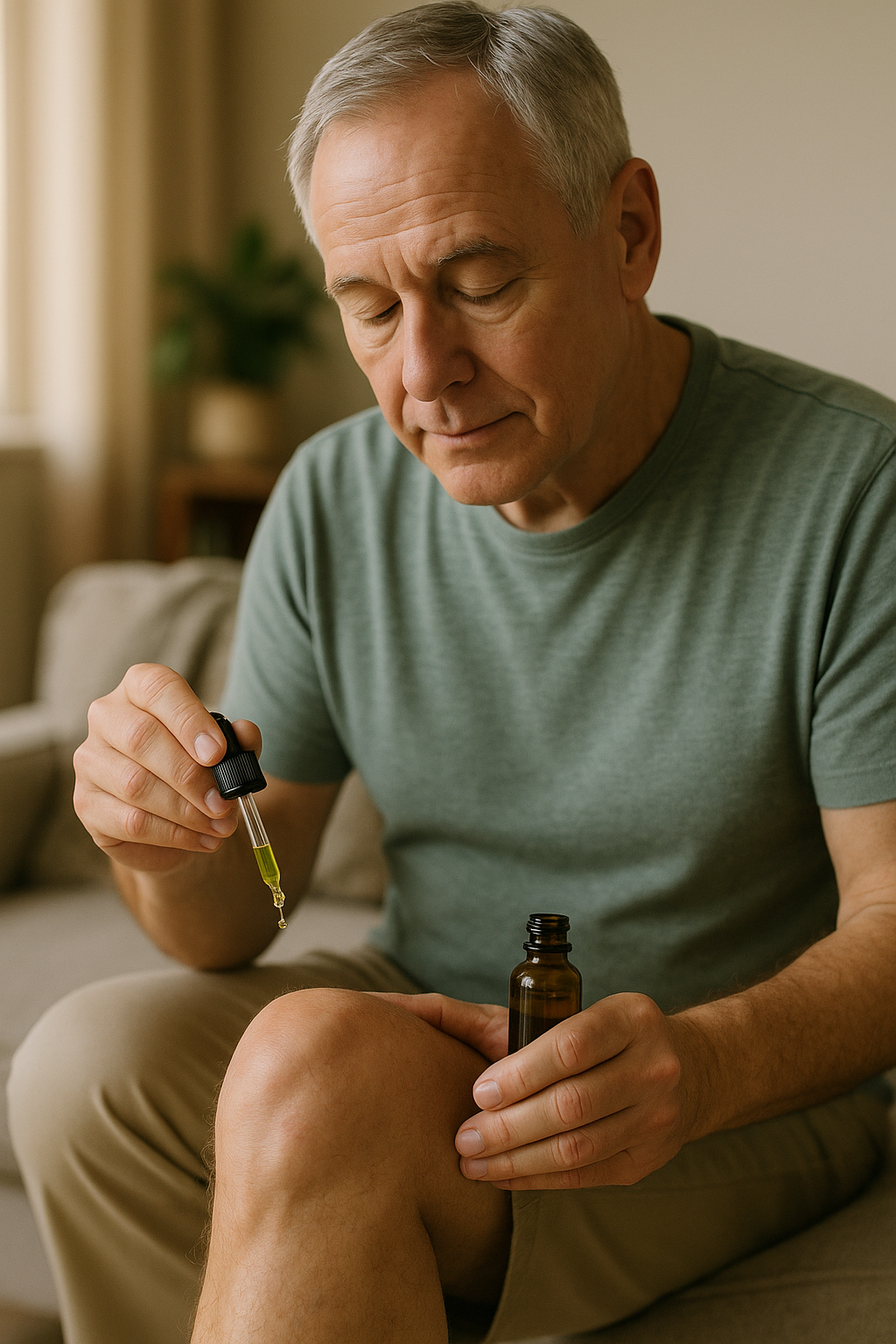
CBD Oil for Joint Pain and Inflammation: What Actually Works? (From a Health Journalist Who Tried It All)
If you'd told me five years ago that my most-asked question from readers would be about hemp extract, I probably would have laughed. But here we are, and these days my inbox is overflowing with variations of: “Does CBD oil help joint pain, or is it just hype?”

Here’s the thing: I get it. Arthritis pain is relentless. Whether you’re dealing with creaky knees, aching hands, or that deep hip ache that wakes you at 3 a.m., it’s easy to feel like you’ve tried everything. Pills, balms, icy gels, elastic sleeves. Sometimes they help… sometimes not so much. So when a “natural” alternative like CBD comes along—well, who wouldn’t be curious?
Why Joint Pain Feels So Hopeless (And Why People Are Turning to CBD)
I’ve spent two decades reporting on arthritis and chronic pain—plus, I’ve watched my own mother-in-law go through the joint pain rollercoaster. So believe me, I understand the frustration. Joint pain isn’t just about discomfort. It’s the stairs you can’t climb, the knitting you put aside, the pickleball game you cancel… again.
Conventional painkillers like NSAIDs (ibuprofen, naproxen), topical gels, and even corticosteroid shots all have their place. But repeat after me: every treatment comes with trade-offs. NSAIDs work, but long-term use ups your risk for ulcers and heart issues. Opioids? Don’t even get me started. Even topical pain relievers—like Voltaren Arthritis Pain Gel—are limited in how much joint inflammation they can tame. (If you haven’t tried Voltaren yet, it’s honestly worth a look, especially for hands and knees. It’s the only FDA-approved topical NSAID in the U.S.—and it helped my neighbor get back to gardening. But I digress…)
So it’s no wonder people are hunting for gentle, daily options—without the scary side effects. Enter: CBD oil.
Wait, What Actually Is CBD Oil?
Okay, let’s clear up the confusion. “CBD” stands for cannabidiol, a non-intoxicating compound extracted from hemp (yes, it’s related to cannabis, but no, it won’t get you high). The 2018 Farm Bill made hemp-derived CBD legal at the federal level—as long as it contains less than 0.3% THC. You’ll see it sold as tinctures, capsules, and even roll-on balms.
Unlike old-school cannabis, CBD oil doesn’t alter your mind. What it does do (potentially, at least) is interact with the body’s endocannabinoid system—a network of receptors involved in pain, inflammation, mood, and immune response. Scientists are still mapping that system out, by the way—which is both exciting and, let’s face it, a little frustrating when you want clear answers.
Here’s What the Research Actually Says
Let’s bust some myths. Is CBD oil a miracle cure? No. Is it snake oil? Also no. The reality is genuinely nuanced—which, if you’ve read my columns before, you’ll know is my favorite kind of story.
Most of the studies so far have been small, short-term, or done with animals rather than people. But don’t tune out yet. There’s a drumbeat of evidence building. A 2020 review published in Current Opinion in Rheumatology found that CBD had anti-inflammatory and pain-reducing effects in lab settings. Another study in European Journal of Pain (2016) using topical CBD in rats showed reduced arthritis inflammation and improved movement—but yes, rats aren’t humans.
But here’s the kicker: a 2022 survey in Arthritis Care & Research found that 1 in 5 people with arthritis had tried CBD for pain. More than half said it improved their symptoms. Now, is that gold-standard double-blind proof? No. But it’s a glimmer of hope—and in a world where Tylenol sometimes feels like a sugar pill, that’s meaningful.
One thing I’m always careful to mention: CBD isn’t a cure for arthritis or other joint diseases. It won’t rebuild cartilage or halt the disease process. But in terms of symptom relief—especially stiffness, discomfort, and sleep quality—there’s enough early evidence to say it’s “worth a try” for many people.

CBD Oil for Inflammation: How Does It Work?
This is where the science gets fascinating. I’ve spoken with Dr. Daniel Clauw, a rheumatologist at the University of Michigan who’s followed cannabinoid research for over a decade. He told me, “CBD appears to act as a modulator of our own endogenous cannabinoids. It can tamp down overzealous immune responses, which are a root cause of inflammatory joint pain.”
Translation: CBD doesn’t “numb” pain like an opioid or NSAID. Instead, it seems to reduce the volume on the body’s pain signals and dial back the inflammatory response. That’s why some people notice it helps with swelling and tenderness—not just the ache itself.
But here’s where it gets tricky. The ideal dose? Still a mystery. Some studies used 20-40 mg per day; others, much higher. And absorption varies wildly—oral drops, capsules, topicals, even gummies all work a bit differently. (I’ve had readers swear by topical CBD rubbed over their knuckles before bed, while others only notice a benefit with oral tinctures.)
What Does It Feel Like? (My Experience & Reader Stories)
I’ll be honest: Like a lot of health journalists, I was skeptical at first. I’ve tried nearly every “arthritis breakthrough”—from copper compression gloves to turmeric shots to those weird magnetic bracelets. So when I first sampled CBD oil for my own recurring runner’s knee, I didn’t expect much.
Surprise—it took a week of daily use before I noticed any difference. But suddenly, standing after a long interview wasn’t an ordeal. My knees didn’t ache after a walk around the block. And maybe the best part? My sleep improved (which, as anyone with joint pain knows, is half the battle). Was it placebo? Possibly. But I’ve since heard from dozens of readers echoing my experience—especially folks dealing with osteoarthritis, rheumatoid arthritis, and post-injury aches.
One caveat: not everyone is a responder. I’ve interviewed people who tried CBD for a month and felt nothing. As always, bodies are strange and wonderful and mysterious. If you’re nodding along, you’re not alone.
Choosing the Right CBD Oil for Joint Pain
Here’s where my editor’s hat comes on. The CBD world is a bit of a wild west—there are hundreds of brands, and quality varies dramatically. Here’s what I look for (and tell my readers to demand):
- Full- or broad-spectrum CBD: These contain a range of cannabinoids and terpenes (not just pure CBD), which may work together for better results—the so-called “entourage effect.”
- Third-party lab testing: Insist on up-to-date lab results for potency and purity. No exceptions. Reputable brands post these on their websites.
- Hemp source: U.S.-grown or EU-grown hemp tends to be safer and better regulated.
- Clear dosing info: You want to know exactly how many milligrams of CBD per serving—and start with a low dose, increasing slowly.
- No weird additives: Watch out for artificial flavors, mystery “herbal blends,” or sketchy carrier oils.
If you want an example of a thoughtfully formulated supplement (though not strictly CBD), I’m a fan of Vimerson Health’s Glucosamine Chondroitin Turmeric MSM & Boswellia. It’s not a substitute for CBD, granted—but it combines several joint-soothing, anti-inflammatory ingredients and earns thousands of glowing reviews. Some people use both CBD and joint supplements as part of a broader toolkit. Just talk to your doctor before adding anything new, especially if you’re on other meds.
How to Use CBD Oil Safely for Joint Pain
First, talk to your healthcare provider—especially if you have liver conditions, take blood thinners (like warfarin), or manage chronic illnesses. CBD can interact with certain medications (the same way grapefruit juice does, oddly enough). And if you’re pregnant, breastfeeding, or immunocompromised, steer clear until research catches up.
Most people start with a low dose—typically 5–10 mg at bedtime—and increase slowly, watching for benefits, side effects (like drowsiness or dry mouth), or mild digestive issues. With topicals, apply a pea-sized amount directly to sore joints 1-3 times a day. I always recommend keeping a journal: how’s your pain on waking, at noon, at bedtime? This makes it easier to spot whether CBD is actually helping—or if it’s time to tweak your approach.
A lot of my readers combine CBD oil with other pain relief routines. For example, using a Modvel Compression Knee Brace during activity, then massaging CBD balm into the joint after exercise. That “layered” strategy often brings the best results.
What About Side Effects and Safety?
Here’s some good news: for most people, CBD is extremely well tolerated. The World Health Organization says it has a “good safety profile.” Side effects are usually mild: think sleepiness, dry mouth, or (at higher doses) a bit of nausea. I’ve had a handful of readers mention loose stools or feeling unsteady at very high oral doses (think 100 mg+ a day), but that’s rare.
The bigger risk, honestly, is quality control. Avoid gas station CBD or anything without a certificate of analysis. And if you’re in a state where medical cannabis is legal, you might have access to prescription-strength CBD preparations (which doctors can monitor more closely).

Other Natural Ways to Calm Joint Pain and Inflammation
Look, I know half my job is investigating new remedies. But the other half is reminding people: the basics still matter. CBD may help, but so do time-tested strategies:
- Gentle movement: Regular walking, aquatic exercise, or yoga keeps joints limber and reduces pain flare-ups.
- Heating pads: Applying moist heat (like the Pure Enrichment PureRelief XL Heating Pad) before activity can loosen up stiff mornings. I keep one draped across my knees while writing some afternoons!
- Anti-inflammatory diet: I’ve seen people feel better—sometimes dramatically—just by cutting back on sugar and processed foods, while boosting omega-3s, berries, and leafy greens.
- Mind-body techniques: Meditation, guided imagery, and mindfulness aren’t just “woo”—they have real evidence for pain management, per BMJ 2023.
If you try CBD, consider it one ingredient in your overall “relief recipe”—not a magic bullet. And if you ever notice unusual symptoms, talk to your doc. There’s no shame in experimenting, but it’s smart to do so with eyes open.
The Bottom Line: My Honest Take on CBD for Joint Pain
I know this is unpopular with some wellness gurus, but here’s my honest take: CBD oil isn’t “life-changing” for everyone. But for a meaningful subset of people—especially those dealing with lingering aches, morning stiffness, or anxiety about pain—it’s worth a thoughtful try.
The most promising effects seem to be on daily discomfort, inflammation, and sleep. But there’s still a lot we don’t know about dosing, long-term use, and who’s most likely to benefit. If you try CBD, do your homework, track your results, and steer clear of wild “miracle cure” claims. And don’t forget: old-fashioned empathy, movement, and a supportive doc are still your best tools.
If you have a CBD story—success or flop—I want to hear it. Drop me a line. Because the more we share what actually works, the better off we’ll all be.
About the author: Karen Whitfield is a veteran health journalist who has covered arthritis research and joint health for publications including Everyday Health, Prevention, and Arthritis Today. She brings a patient-first perspective to every article.