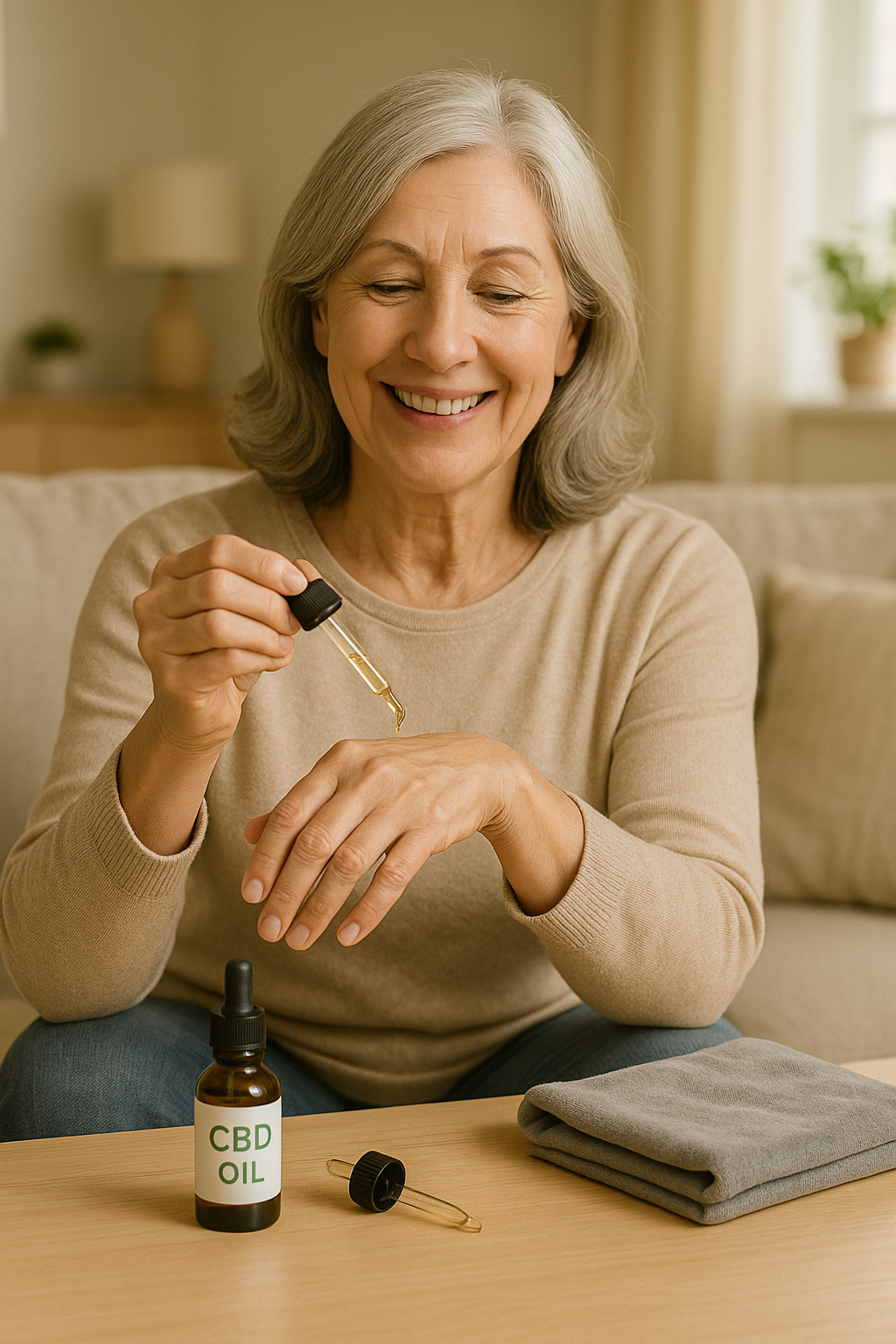
CBD Oil for Joint Pain and Inflammation: Real Relief or Overhyped?
I’ll never forget the first time a client asked me about CBD oil for their knee pain. This was back in 2017, before CBD was being sold at every corner pharmacy and gas station. Margaret, who’d been hobbling into my clinic with rheumatoid arthritis for years, slid a tiny amber bottle across my desk and said, “Mike, is any of this stuff for real?”

The Daily Struggle with Joint Pain
If you’re reading this, you probably know that joint pain isn’t just a little ache—it’s the kind of nagging, sometimes sharp, sometimes throbbing pain that can steal the joy right out of simple things. Things like opening a jar, taking the stairs, or even playing with your grandkids can suddenly feel like Olympic-level tasks. I see this every week in my practice, and let me tell you: you’re not imagining it, and you’re definitely not alone. According to the CDC, one in four adults in the US reports severe joint pain due to arthritis. That’s over 15 million people grimacing their way through life.
I’m not gonna lie—pain can wear you down. When NSAIDs aren’t enough, or when you can’t (or won’t) take them long-term, things can start to feel a little desperate. That’s where CBD oil started popping up as the “miracle” everyone was whispering about. But here’s where it gets interesting: does the science back it up?
CBD Oil: What Is It (And How Does It Work)?
First, let’s clear up what we’re actually talking about. CBD (cannabidiol) is a compound found in cannabis—yes, the marijuana plant—but it won’t get you high. That’s THC’s job. CBD, by contrast, is prized for its potential anti-inflammatory and analgesic (pain-relieving) effects, without the mind-altering side effects. CBD oil is typically made by extracting CBD from hemp (a low-THC variety of cannabis) and diluting it with a carrier oil like MCT or hemp seed oil.
Here’s the thing: your body actually has a system—the endocannabinoid system (ECS)—designed to interact with cannabinoids like CBD. The ECS is involved in regulating pain, inflammation, sleep, and even immune function. When you take CBD, it may bind to (or influence) certain ECS receptors, leading to possible changes in how you perceive pain and inflammatory signals. That’s the basic theory, anyway.
What Does the Science Say?
If you’re nodding along so far, you might be waiting for the real kicker: does it actually work? Honestly, the research isn’t black and white, but it’s more promising than most people think. Here are a few studies that made me sit up and take notice:
- 2016, European Journal of Pain: Researchers applied topical CBD to rats with arthritis. The result? Significant reduction in joint swelling and pain scores, without side effects. Obviously, rats aren’t people, but that’s still a hopeful start.
- 2020, Current Opinion in Rheumatology: This review highlighted that CBD appears to reduce pain and inflammation in animal models, but called for more high-quality human studies.
- 2018, Arthritis Foundation Survey: 79% of respondents with arthritis had tried or considered CBD; of those who tried it, more than half reported improved symptoms. (Anecdotal, yes, but meaningful.)
- 2022, Pain Journal: A small double-blind trial found that oral CBD significantly reduced pain intensity in patients with knee osteoarthritis compared to placebo—but effects varied, and not everyone was a "responder."
Look, the gold-standard, large, long-term randomized human trials are still a bit thin on the ground. But that doesn’t mean the real-world results are imaginary. I’ve had plenty of patients—especially those who can’t tolerate ibuprofen—who tell me topical or sublingual CBD has been a game-changer for their daily aches.
How Does CBD Oil Help with Joint Pain and Inflammation?
Let’s break it down. CBD appears to work via several mechanisms:
- Anti-inflammatory effects: CBD can reduce the production of pro-inflammatory cytokines and block some of the pain signals sent to your brain. That’s why it’s being studied for autoimmune conditions like rheumatoid arthritis.
- Pain modulation: In the Journal of Experimental Medicine (2012), CBD was shown to impact pain perception by activating glycine receptors and vanilloid receptors—basically, the pathways your body uses to register and process pain.
- Immune system balance: CBD may help calm an overactive immune response, which is a big deal for those with chronic inflammation or autoimmune joint diseases.
- Anxiety and sleep support: Chronic pain is a vicious cycle. Sleep-deprived folks feel more pain, and pain causes worse sleep. CBD oil, especially at higher doses (often 25-50mg oral), has demonstrated mild anxiolytic and sleep-promoting effects.
I’ve seen some people swear by a few drops under the tongue morning and night, others by topical balms massaged directly into the sore joint. My brother-in-law, who has a cranky shoulder from his construction days, swears by a full-spectrum CBD oil plus a little icy hot (I think the ritual helps, too).
Is CBD Oil Safe?
Generally, yes—especially compared to long-term NSAID or opioid use. Side effects are usually mild: dry mouth, fatigue, or digestive issues if you take too much. But here’s my professional disclaimer: if you’re on blood thinners or have liver disease, talk to your doctor before trying CBD. It can interact with some meds (think: warfarin, some antidepressants, anti-seizure drugs).
And—this is important—always choose brands that use third-party lab testing. In the CBD world, quality and purity aren’t always guaranteed. I recommend looking for "COA" (Certificate of Analysis) on any brand’s website. If they can’t provide it, walk away.

How to Use CBD Oil for Joint Pain: Dosage, Formats, and What to Expect
Here’s where most people get tripped up. There’s no FDA-approved dosage for CBD oil for joint pain. That means it’s a bit of trial and error. Still, I’ve seen some patterns over the years:
- Sublingual oils/tinctures: Start with 10-20mg under the tongue twice daily. Hold under your tongue for 30-60 seconds so it absorbs before swallowing. Many people eventually settle between 20-50mg per day, depending on severity.
- Topical creams and balms: Rub directly onto the sore joint, 2-3 times a day. Look for products that list at least 200-500mg CBD per container for meaningful relief.
- Capsules/gummies: These can be more convenient but take longer to kick in (1-2 hours). Again, start low—usually 15-25mg per dose—and adjust as needed.
Here’s a tip I give every patient: keep a pain journal. Rate your pain before and after. Track how long relief lasts. It’s the only way to know what’s actually helping versus what’s just wishful thinking.
What About Full-Spectrum vs. Isolate?
Ah, the great cannabis debate! I’ll risk a little controversy: I think full-spectrum CBD oil—meaning it contains a range of cannabinoids and terpenes, not just pure CBD—often works better for joint pain. The “entourage effect” is real; minor cannabinoids and even trace THC (under 0.3%) seem to boost CBD’s anti-inflammatory mojo. A 2020 review in Frontiers in Pharmacology backed this up, showing greater pain relief with full-spectrum over isolate in several studies.
That said, if you’re subject to drug testing for work, stick with THC-free broad-spectrum or isolate. Don’t risk your job for a few extra degrees of relief.
Other Ways to Manage Joint Pain (With Some CBD-Friendly Strategies)
Look, as a chiropractor and nutrition counselor, I can't shout this loud enough: CBD oil is not a miracle cure. It can be part of a great joint pain management plan, but it shouldn’t be the whole plan. Here are some strategies my chronic pain patients rely on—most of which play nicely with CBD:
- Low-impact exercise: Gentle movement is medicine for joints. Swimming, biking, or even a daily walk help lubricate joints and reduce stiffness. If you want a structured approach, check out Treat Your Own Knees—a practical little book I’ve recommended to dozens of clients who hate complicated routines.
- Topical rubs and heating pads: Sometimes, combining CBD topicals with a trusted heating pad (like the PureRelief XL Heating Pad) brings faster, deeper relief. I often suggest this to folks who want to avoid pills, and I’ve even used this combo myself after a weekend of overzealous gardening.
- Anti-inflammatory diet: Omega-3s (think salmon, walnuts), leafy greens, turmeric, and plenty of water all support healthy, pain-resistant joints. I’m a broken record on this—but it matters.
- Targeted supplements: If you want to take joint support up a notch, look for formulas with glucosamine, chondroitin, MSM, turmeric, and boswellia (the classics). My current favorite, for those who want to combine science-backed ingredients, is Glucosamine Chondroitin Turmeric MSM & Boswellia. I actually take this myself during ski season! It’s not a magic bullet, but stacked with lifestyle changes and, for some, CBD, it can be a real asset.
And, not for nothing: don’t skip your regular checkups. If your joint swelling is increasing, your mobility is dropping, or pain is waking you up at night—get it checked. Sometimes what feels like “just arthritis” is something more serious.
CBD Oil for Joint Pain and Inflammation: The Bottom Line
If you made it this far, you already know the punchline: CBD oil isn’t a miracle, but for some—especially those with mild to moderate chronic joint pain—it’s definitely worth trying. The best results usually come when it’s used as part of a holistic plan: smart movement, nutrition, maybe a little physical therapy, plus the right topical or oral CBD product for your body.
Is it overhyped? Sometimes. But is it all snake oil? Not in my experience—especially when you look for quality, track your results, and stay realistic about what it can (and can’t) do. And if you’re feeling overwhelmed by the options, ask your doctor or a health professional who actually understands cannabinoids. There’s no shame in asking for help.

Takeaways—From My Desk to Your Home
- CBD oil may help with joint pain and inflammation, especially in combo with other healthy habits.
- Look for third-party tested, full-spectrum oils for maximum benefit—but THC-free brands if you’re drug tested.
- Start low, go slow, and (please!) keep a pain journal so you actually know what’s working.
- Use CBD as part of a comprehensive approach—not a replacement for doctor visits or proven therapies.
And if you see me at the grocery store, don’t hesitate to ask. I promise, after 15 years in the trenches, nothing surprises me anymore. Stay curious—and take good care of those joints.
Dr. Michael Torres, DC
Licensed chiropractor & certified nutrition counselor. Writing about joint health, pain management, and mobility since 2012. Contributor at JointReliefReviews.com.