CBD Oil for Joint Pain and Inflammation: What Actually Works?
If you’ve caught yourself eyeing a bottle of CBD oil, wondering if it could actually help with that nagging knee or aching thumb, I get it. A couple of years ago, my mother-in-law cornered me at Thanksgiving with the same question (right as I was reaching for the mashed potatoes, naturally). She’s stubborn as a mule, but also not the type to get excited about fads. That day, she’d read about a neighbor who swore CBD changed her life, and wanted to know if there was anything to it…or if it was just another snake oil.
The Problem: The Pains No One Else Sees
Let’s be honest: Joint pain is lonely. Sure, your spouse or friends will nod sympathetically when you complain about your hands stiffening up each morning. But unless you’ve actually felt that dull ache that makes opening a jar feel like a Herculean task—or the bone-deep throbbing after a walk—they don’t really get it.
If you’re nodding along, you’re not alone. According to Arthritis & Rheumatology (2017), over 54 million U.S. adults deal with some kind of doctor-diagnosed arthritis. And that’s not including the countless others with ‘undiagnosed’ creaky knees or post-injury flare-ups that don’t yet warrant a fancy Latin name. It’s frustrating, often invisible, and—if you’re like many of my readers—painkillers are starting to feel like a less-than-ideal answer. It makes sense that people are searching for something new.
Here’s the Thing: The CBD Buzz is Real, But So is the Confusion
I’ll be blunt: The hype around CBD is louder than a spin class at 7am. Instagram ads, new brands every week, and more gummies than a Halloween candy aisle. But what does the research actually say about CBD oil for joint pain and inflammation—especially for people over 50?
Let’s cut through the noise with real data, honest cautions, and, yes, a couple of product recommendations (I’m picky—I only mention what I’d tell my own family to try).
How Does CBD Work for Joint Pain? (If It Works at All)
First, a quick science refresher. CBD (cannabidiol) is a non-intoxicating compound found in hemp and cannabis plants. It won’t get you high. What it might do: interact with your body’s endocannabinoid system. That’s a fancy way of saying it helps regulate inflammation, pain perception, and immune response—at least in theory.
If your joints are achy due to inflammation (think osteoarthritis, rheumatoid arthritis, or that mystery swelling after gardening), the idea is that CBD might reduce the volume on those pain signals and calm the underlying inflammation.
But—here’s where things get sticky. Most of the solid research comes from animal studies (mice, mostly). In a pivotal 2017 study in European Journal of Pain, topical CBD gel reduced joint swelling and pain behaviors in rats with osteoarthritis. Sounds promising, right? But translating rat knees to human hips isn’t always straightforward.
When it comes to human studies, the evidence is still, honestly, a mixed bag. A few small clinical trials (see: Clinical Therapeutics, 2020; Current Rheumatology Reports, 2021) found improvements in pain scores and sleep among arthritis patients using CBD, but many didn’t reach statistical significance, or used CBD alongside other cannabis compounds (making it hard to tease out what’s doing what).
That said, some of my patients and readers have reported real, tangible benefits—especially with topical CBD balms for knees and hands. Placebo effect or not, if it helps you get through your day with less pain, I tend to be supportive (as long as you’re not skipping proven treatments or putting yourself at risk).
CBD Oil: Oral vs. Topical – What Should You Actually Try?
Here’s where the rubber meets the road. You’ve probably seen CBD oil sold as drops under the tongue (sublingual), capsules, gummies, and all kinds of creams or balms. Is one better for joint pain?
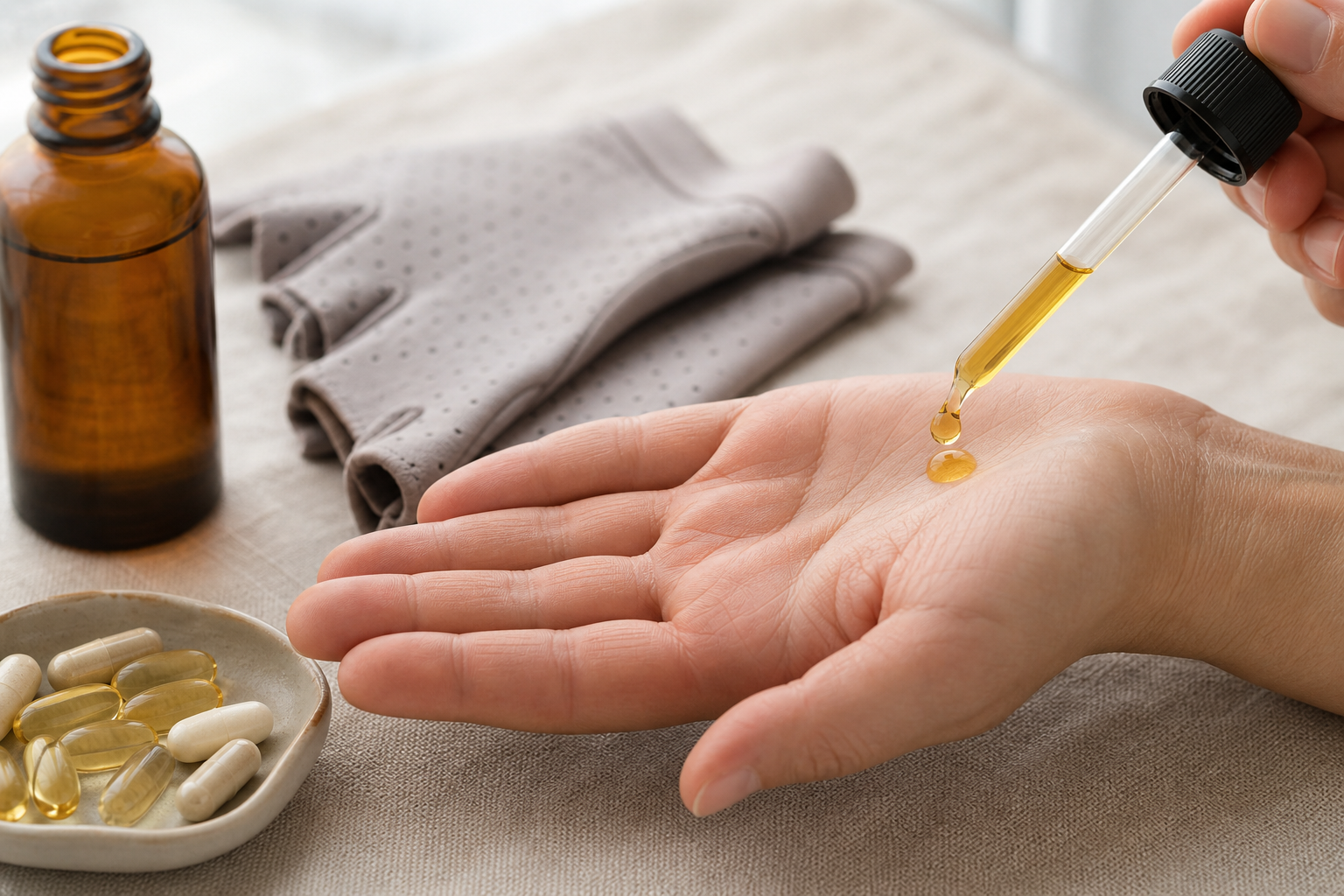
- Oral CBD Oil: This is the stuff you drop under your tongue or swallow in a capsule. It enters your bloodstream, travels throughout the body, and may have a general anti-inflammatory effect. The downside? It takes longer to kick in (30-60 minutes, sometimes more) and may interact with other meds. Typical starting dose: 10-25mg per day (work up slowly).
- Topical CBD: Creams, lotions, or balms you apply directly to sore spots. The idea is to deliver CBD (plus other soothing ingredients) right where it hurts. No high, very minimal systemic absorption—so less risk of drug interactions. In studies, a 250-500mg CBD balm applied 2-3x/day showed modest pain relief in mild-to-moderate osteoarthritis (see JAMA Network Open, 2022).
I’ll be honest—I’m a pragmatist. If you want targeted relief for hands, knees, or elbows, topical is a great place to start. For full-body aches, oral might be worth a try. Just double-check with your doctor, especially if you’re on blood thinners or meds that impact the liver.
What Does the Research Really Say?
Real talk? For all the marketing, the FDA hasn’t approved any CBD product for arthritis or joint pain. That means everything you read—good or bad—needs a grain of salt. But there is a growing pile of promising data:
- Animal studies show reduced inflammation and joint damage with consistent CBD use. (Check Frontiers in Pharmacology, 2018 for an overview.)
- Human data is thinner. One 2021 survey in Arthritis Care & Research found over 79% of surveyed arthritis patients had tried CBD, and 37% reported symptom improvement. Not a clinical trial, but still striking that so many are experimenting.
- Anecdotal reports abound—pain relief, better sleep, less anxiety. But as a stickler for science, I have to remind folks: Anecdotes don’t guarantee results for everyone.
Still, the safety profile of CBD (in moderate doses) is reassuring for most people. Fatigue and GI upset are the most common side effects. And while drug interactions are possible, they’re pretty rare at lower doses. But as always: talk to your doctor before starting anything new, especially if you take prescription meds.
How to Choose a CBD Oil That Isn’t a Dumpster Fire
Here’s the real kicker. The CBD market is about as regulated as a lemonade stand on a cul-de-sac. Lab tests? Sometimes. Consistent potency? Not always. The FDA has cracked down on a handful of shady brands, but there are still a lot of duds out there. I’ve personally reviewed dozens of these products, and trust me—it’s wild how much the quality varies.
- Look for third-party lab results (often called a “COA” or Certificate of Analysis). If a company won’t show you test results for heavy metals, pesticides, and actual CBD content, run the other way.
- Full-spectrum or broad-spectrum CBD products may offer a slight edge for pain, thanks to the “entourage effect” (think: CBD + trace cannabinoids + terpenes working together). But if you’re drug tested for work, stick to “CBD isolate.”
- Start low, go slow. You can always take more, but you can’t untake a giant dose that leaves you groggy for half the day. Most people in studies start with 10-20mg CBD daily and adjust every few days.
And please—ignore anything promising “miracle cures.” If it sounds too good to be true, you know the rest.
CBD Oil vs. Other Joint Pain Relief Options
I know what you’re thinking: “James, is CBD better than glucosamine, Voltaren gel, or compression sleeves?” Here’s my honest answer—sometimes yes, sometimes no. They’re really apples and oranges.
- Voltaren Arthritis Pain Gel (diclofenac sodium): This topical NSAID is FDA-approved and has strong data for knee, hand, and elbow osteoarthritis. If you want consistent, clinically proven relief, Voltaren Arthritis Pain Gel is a favorite among my patients—non-greasy, targeted, and less risk than oral NSAIDs. I know a lot of folks who use Voltaren in the morning and a topical CBD balm at night, just to mix things up.
- Supplements like glucosamine/chondroitin: The research is, frankly, more robust for joint structure support than for immediate pain. Many readers swear by products like Glucosamine Chondroitin Turmeric MSM & Boswellia (Vimerson Health) for long-term joint health, but don’t expect overnight relief.
- Compression sleeves and topical heat: Simple, safe, and—honestly—often overlooked. On tough days, I’ll reach for a breathable sleeve or a heating pad (my recommendation: Pure Enrichment PureRelief XL Heating Pad) before adding anything new to my supplement shelf.
Most articles won’t tell you this, but the real “secret” is layering your tools. CBD oil could be one helpful piece—especially for flare-ups or trouble sleeping. But for daily function, don’t ignore the basics: stretching, gentle strength training, and those tried-and-true pain relief standbys.
Quick Tips for Getting the Most from CBD for Joint Pain
- Keep a symptom journal. Track dosages, timing, and how your joints feel each day. Patterns matter more than one-off impressions.
- Don’t skip the basics. Hydration, light movement, and sleep hygiene all make a difference (no matter what supplement you try).
- Watch for side effects—fatigue, dry mouth, or loose stools are most common. Rare, but worth monitoring.
- Talk to your doctor or pharmacist—especially if you’re taking blood thinners, anticonvulsants, or liver medications. Safety first.
- Set realistic expectations. Most people notice subtle improvements over 2-4 weeks, not overnight magic.
One thing I always tell my clients: Don’t judge a supplement by a single day’s experience. Your body may need time to adjust, and—let’s be honest—pain is influenced by a whole constellation of factors.
What I Tell My Own Family About CBD for Joint Pain
I know this is unpopular with the “CBD fixes everything” crowd, but here’s my deal: I don’t believe in miracle cures. I do believe in finding safe, sensible options that make life a little easier. CBD oil absolutely fits that bill for some folks. I’ve seen it help with sleep, ease nagging joint aches, and reduce the urge to pop another ibuprofen.
But I’ve also seen others try it and feel nothing. That’s just reality. The best path is an honest, open conversation with your healthcare provider, a willingness to experiment safely, and a healthy dose of patience. If you want to try something, try it for the right reasons—and buy from reputable sources.
Key Takeaways
- CBD oil shows genuine promise for joint pain and inflammation, but human research is still catching up to the hype.
- Topical CBD products are best for targeting specific joints; oral CBD may help if you have widespread aches.
- Always check for third-party lab testing, start low and go slow, and loop your doctor in if you take prescription meds.
- CBD can be a safe addition for many—but it’s not a replacement for movement, smart supplements, or proven pain relief products like Voltaren Gel or a good heating pad.
- Be wary of bold claims. Results vary—and that’s okay.
If you’ve tried CBD (or you’re still on the fence), drop me an email. I love hearing real-world stories and questions. And if you find something that lets you open a stubborn jar or toss a ball with your grandkids pain-free—even better. Here’s to fewer aches, more movement, and tools that actually work.
James Chen, MS, CSCS
Author, JointReliefReviews.com
Certified Strength & Conditioning Specialist | Evidence-based joint health writer