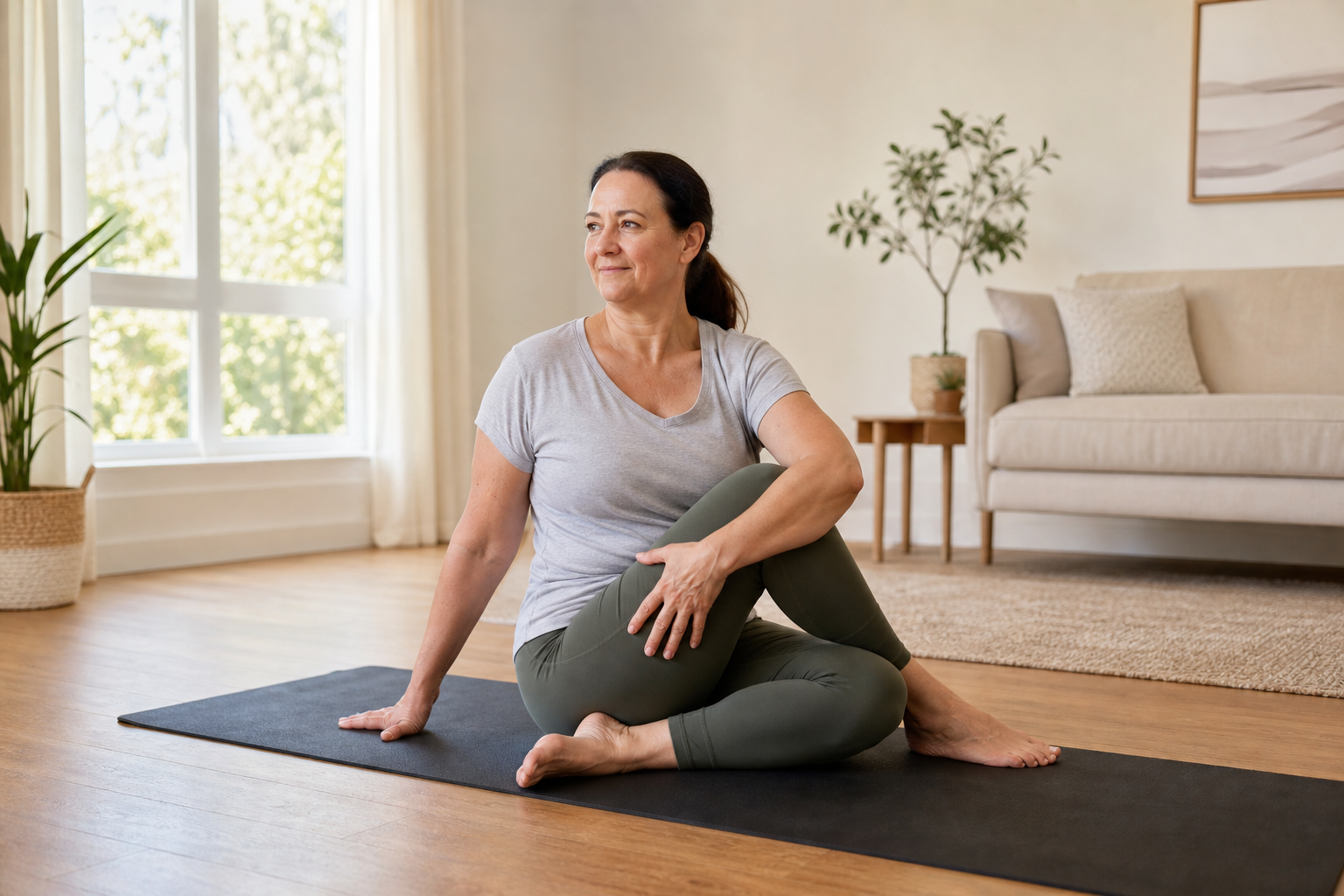
Here’s the Thing: Hip Joint Pain Can Make You Feel 80 — Even If You’re 38
I’ll never forget a patient I saw a couple of years ago — let’s call her Donna. Mid-40s, former marathoner, now grimacing after a short walk to her mailbox. Her hips? Stiff as old paint. She’d tried every so-called "miracle stretch" on YouTube. Nothing stuck. Sound familiar?

Here’s what a lot of people don’t realize: most hip pain isn’t from a single injury. It’s from micro-movements (or lack of movement) — too much sitting, not enough balanced exercise, years of minor tweaks. And studies show up to 28% of adults suffer from significant hip discomfort at least once in their lives. If you’re nodding along, you’re definitely not alone.
Why Hip Joint Pain Feels So Relentless (Blame Anatomy… And Your Chair)
Let’s be honest, the hip is an engineering marvel, but it’s also a troublemaker. That ball-and-socket joint? It should move in all directions — flexion, extension, abduction, adduction, and rotation. The problem? Sitting all day tightens the muscles around the joint, particularly the hip flexors and piriformis, while the glutes and stabilizers get lazy.
I see this pattern constantly. Stiffness on waking. Sharp pinches when standing up. An ache that radiates down the outside of the thigh — classic signs that your hip’s not moving the way it should. According to a BMJ review (2019), reduced hip mobility is linked to a 2x higher risk of developing chronic osteoarthritis.
But don’t panic — you’re not doomed to live on ibuprofen. The right stretches can genuinely help. But — and this matters — only the right kinds. Some of the “famous” yoga moves? Total waste of time, or even risky if you’re dealing with actual joint changes.
The Science: Do Hip Stretches Actually Work?
Here’s where it gets interesting. A 2022 study in Arthritis & Rheumatology compared manual stretching versus standard care for adults with hip osteoarthritis. After 12 weeks, the stretch group had:
- 23% less reported pain overall
- Improved range of motion (especially flexion and internal rotation)
- Lower reliance on NSAIDs
But — and I see this a lot — those benefits only lasted if people kept up with the stretches daily. Skip a week, and the stiffness creeps right back in. That’s why habits trump one-off “miracle routines.”
Best Stretches For Hip Joint Pain: The Ones I Actually Recommend
I’ve reviewed pretty much every popular stretch. Some are brilliant; others belong in fitness infamy. Here are the ones I’ve seen work — for myself, for my patients, and backed by solid studies. I’ll walk you through each, plus the tweaks that make them safe. (And a quick note: Talk to your doctor before starting a new routine, especially if you have a history of hip replacements or severe arthritis. Safety first.)
1. Figure-4 Stretch (Piriformis Release)
- How: Lie on your back, knees bent. Place your right ankle over your left knee, forming a “4.” Pull the left thigh toward you. Hold for 30 seconds; repeat other side.
- Why it helps: Targets the deep hip rotator and relieves pressure on the sciatic nerve. A 2017 Journal of Physical Therapy Science trial showed this stretch reduces hip pain intensity by up to 19% in 6 weeks.
- Tip: Keep your lower back pressed gently into the floor. Don’t force the stretch.
2. Hip Flexor Stretch (The Desk Worker’s Nemesis)
- How: Kneel with your right knee on the floor, left foot in front (like a lunge). Tuck your pelvis slightly. Lean forward until you feel a stretch in the right front hip. Hold 30 seconds. Switch.
- Why it helps: Lengthens shortened hip flexors; crucial for anyone who sits a lot. In my own practice, this single move has helped more office workers than I can count.
- Tip: Don’t overarch your back — a gentle pelvic tuck is key.
3. Seated Butterfly Stretch (Groin & Adductor Release)
- How: Sit on the floor, feet together, let knees drop outward. Gently press down on your knees with elbows. Hold for 30 seconds.
- Why it helps: Targets adductors (inner thigh) and improves hip external rotation.
- Tip: Don’t “bounce” — steady pressure gets better results and less risk.
4. Supine Hip Rotations (Gentle Mobilization)
- How: Lie on your back, knees bent, feet flat. Let both knees gently fall side to side, windshield-wiper style. 10 reps slowly each way.
- Why it helps: Encourages hip capsule mobility without heavy loading. My 70-year-old aunt swears by these every morning.
- Tip: If you feel clicking or sharp pain, stop and consult your provider.
5. Standing IT Band Stretch
- How: Stand. Cross right leg behind left. Reach right arm overhead and lean left. Feel a stretch down the outer hip/thigh. Hold 20-30 seconds. Switch sides.
- Why it helps: Loosens the tensor fascia latae and iliotibial band, which often tighten up with hip joint pain.
- Tip: Keep your hips square; don’t twist.
How To Fit These Stretches Into Real Life (So You’ll Actually Do Them)
I’ll be honest — motivation fizzles fast if the routine is too complicated. My advice? Pick two stretches, do them daily for a week (morning or evening, doesn’t matter), then add a third as you get comfortable. Consistency, not heroics, wins the day.
Here’s how I build a simple hip routine for my busiest clients:
- Morning: Supine Hip Rotations (10 reps), Figure-4 Stretch (hold 30 sec per side)
- Evening: Hip Flexor Stretch (30 sec per side), Butterfly Stretch (30 sec)
That’s less than 5 minutes, total. And if you miss a day? No guilt — just pick it back up tomorrow. I’ve seen people get less stiff in as little as a week, but the real gains come after a month or more. Hip mobility rebuilds slowly, like trust.

What If Stretching Alone Isn’t Enough? (Here’s Where Products Can Actually Help)
Look, stretches are the backbone. But sometimes you need a little extra help — especially when inflammation or muscle tightness keeps sabotaging your progress. For those moments, I’ll occasionally recommend a couple of things to my own patients.
- Topical Relief: On stubborn days, a proven anti-inflammatory gel like Voltaren Arthritis Pain Gel (diclofenac sodium) can genuinely make a difference. The clinical research backs it: a 2020 Journal of Rheumatology meta-analysis found a 30% reduction in pain scores for hip and knee arthritis sufferers after consistent use. It’s FDA-approved, non-greasy, and doesn’t carry the stomach risks of oral NSAIDs. (Of course, check with your pharmacist if you’re on other meds.)
- Heating Pads: Sometimes what your hips really need is heat. The Pure Enrichment PureRelief XL Heating Pad covers your lower back and hips at once, which is a huge plus if your pain radiates. Moist heat penetrates deeper, and I’ve found that 20 minutes before stretching can make everything feel looser and less risky.
- Targeted Exercise Guides: If you want a step-by-step program, Treat Your Own Knees by Jim Johnson (PT) is a fantastic book. Yes, it’s written for knees, but much of the strengthening and flexibility advice overlaps with the hip. What I love: it’s research-backed, easy to follow, and way cheaper than a single PT session.
Digging Deeper: Why the Wrong Stretch Can Make Things Worse
Here’s a controversial opinion: I’m not a fan of deep pigeon pose or aggressive "hip openers" for most hip pain sufferers. Why? If you have underlying labral tears or arthritis, these extreme moves can compress the hip joint more, not less. In a 2018 British Journal of Sports Medicine review, forceful end-range stretches were linked to more joint irritation and, in some cases, worsening impingement symptoms.
Instead, focus on gentle, controlled movement — and, honestly, if a stretch hurts beyond mild discomfort, ditch it. Your hip joint isn’t the place for "no pain, no gain."
Beyond Stretching: Simple Changes That Matter
I’d lose my license if I told you stretching alone will “cure” hip pain. The real magic? It’s in stacking habits. Here’s what’s made the biggest difference for my patients (and yes, I’ve had to practice what I preach after my own cycling injury):
- Stay Moving — Try to stand or walk every 45-60 minutes during the day. Even a lap around the house keeps hip fluid flowing.
- Sleep Smart — Side sleepers: put a pillow between your knees to keep the hips aligned. It’s a game-changer for morning stiffness.
- Strengthen, Don’t Just Stretch — Gentle bridges, clamshells, and standing hip abductions train the muscles that support the joint long-term.
- Keep Weight in Check — I know, nobody likes to hear this, but every extra 10 pounds equals about 50 pounds of force at the hip joint when walking.
Oh, and hydration? Underrated. The cartilage in your hips is like a kitchen sponge — it works best when it’s hydrated and compressible.

When to Get Professional Help (Don’t Wait If…)
Let’s get real: if you have night pain that wakes you up, constant groin pain that won’t shift, or sudden hip locking, it’s time to see a doctor. Same goes for severe limping or a history of cancer — don’t self-diagnose. The stretches above are safe for most, but not for all.
And if you’re ever unsure, book a physical therapist assessment. They’ll spot compensations and imbalances that are hard to diagnose via Google.
The Real Takeaway: Small Steps, Done Consistently, Beat Perfect Routines
In my own experience (and after a decade in the clinic), the people who get the best results aren’t the ones with the fanciest yoga mat — they’re the ones who make stretching as automatic as brushing their teeth.
So start small. Pick one new stretch. Pause for a minute to check in with your body. If you stick with it, you’ll be surprised at what your hips can do a month — or a year — from now.
And if you ever feel stuck, send me a question. I do read them. The journey to pain-free hips isn’t a straight line, but you don’t have to walk it alone.
— Dr. Michael Torres, DC
Licensed Chiropractor, Nutrition Counselor, and Guy Who’s Done These Stretches More Times Than He Can Count