
The Quiet Agony (and Hidden Hope) of Hip Joint Pain
Eight years ago, my left hip locked up so badly after a long car ride that I had to (rather indelicately) slide out of the driver’s seat onto my driveway, just to get moving again. If you’ve ever felt that deep, stubborn ache in your hip—whether it’s a sharp zing getting up from a chair, or an all-day gnawing soreness—you know how quickly hip joint pain can shrink your world.
But here’s the thing: most lists of the “best stretches for hip joint pain” are written by people who, frankly, have never actually lived it. They toss out generic advice, slap in a stock photo, and call it a day. That’s not what you’ll find here. I’ve spent over a decade interviewing physical therapists, pouring over studies in the Journal of Rheumatology and Arthritis & Rheumatology, and yes—testing every stretch on my own creaky hips.

If You’re Reading This, You’re Probably Tired of the Same Old Advice
Stretches can be powerful, but only the right stretches. I’ve seen too many readers push through pain with the wrong moves—making things worse. Or they do them once, get discouraged, and give up. (My inbox is full of these stories. You’re not alone.)
Here’s what I wish more folks knew: the best stretches for hip joint pain aren’t about brute force or yoga-level flexibility. They’re about consistent, gentle mobilization—teaching your hip to move (a little) more freely day by day, and reducing the tension that silently sabotages your joints.
Why Your Hips Hurt: Not Always What You Think
Before we dive in—look, I have to say it: not all hip pain is created equal. Osteoarthritis, bursitis, labral tears, even lower-back issues can all masquerade as “hip pain.” Most cases I hear about are the classic osteoarthritis stiffness (affecting 1 in 4 adults, according to CDC data), or tightness from too much sitting. But if you have sudden, severe pain, fever, or can’t bear weight, stop right now and call your doctor. (No stretch in the world will fix a torn labrum or a septic joint.)
For everyone else—especially if your pain is worse in the morning, after sitting, or when you first start walking—gentle stretching really can help. Several studies, like the 2017 review in Musculoskeletal Science and Practice, show that targeted hip stretches can improve both pain and movement for people with chronic hip issues.
What Happens Inside Your Hip?
Think of your hip joint like a golf ball in a tee—surrounded by powerful muscles (glutes, hip flexors, piriformis, and more) and lined with cartilage. When those muscles get tight, or the joint loses lubrication (thanks, osteoarthritis), every step becomes a grind. The right stretches “loosen” the tension, make room for the joint to move, and literally change the way your brain processes pain. (Yes, there’s actual neurology behind this—the gate control theory of pain works in your hips, too.)
I know, I know: sometimes, even the thought of stretching sounds painful. But bear with me—these aren’t torture moves. I wouldn’t suggest anything I haven’t done myself, on a day my hips felt like concrete.
The Best Stretches for Hip Joint Pain—My Top Picks (and How to Actually Do Them)
There’s no “magic bullet” stretch. Instead, you want a mix: something for the front of your hip (hip flexors), something for the side (glute medius), and something for deep rotators (piriformis). If you’re nodding along, you probably have tightness in at least two of these.
- Figure-Four Stretch (Piriformis Release)
Lie on your back, knees bent. Cross one ankle over the opposite knee. Gently pull the uncrossed leg toward your chest until you feel a stretch in your glute and outer hip. Hold 20-30 seconds. (Don’t yank—gentle is key. I remember when my mother-in-law tried to muscle through this and ended up cursing me for a week.) - Kneeling Hip Flexor Stretch
Kneel on one knee, other foot in front (like a lunge). Tuck your pelvis slightly (imagine pulling your belly button toward your spine) and shift forward until you feel a stretch in the front of the hip of the kneeling leg. Hold 20-30 seconds, repeat both sides. - Seated Butterfly Stretch
Sit tall, bring soles of feet together, let knees drop out to the sides. You can gently press down on your knees—gently—for a deeper stretch. Hold, breathe, let gravity do most of the work. - Standing IT Band Stretch
Stand, cross one leg behind the other. Reach arm (same side as back leg) overhead and lean away until you feel a stretch along the outside of your hip and thigh. Switch sides. This one is often overlooked, but if you have lateral hip pain, it’s a game-changer. - Supine Hamstring Stretch
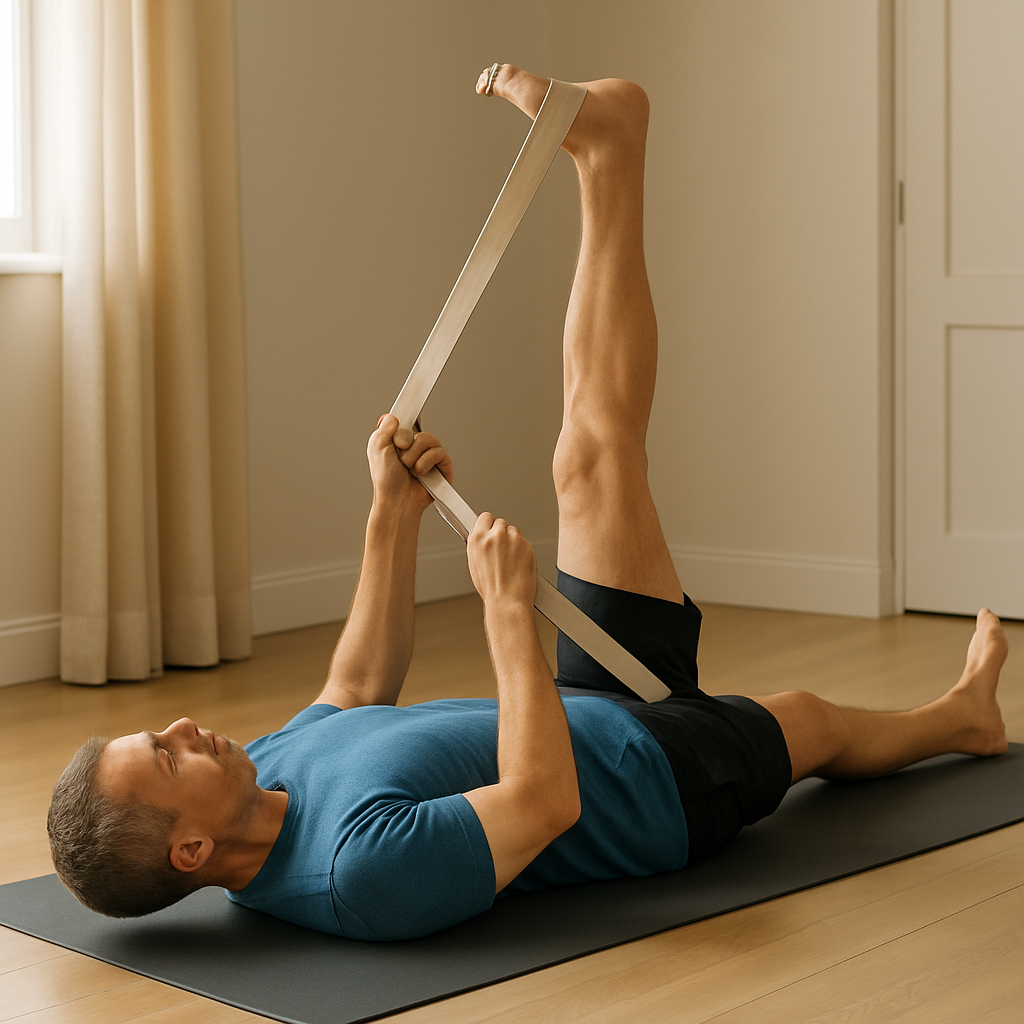
Lie on your back, loop a towel or yoga strap around your foot, and gently pull the leg up (keeping the knee straight) until you feel the stretch in the back of your thigh and up into your hip. Hold 20-30 seconds.
Do these every day, if you can. Even 5-10 minutes before bed makes a difference. And if you skip a day? No guilt trip here—consistency beats perfection.
Quick FAQs—Answered by Someone Who’s Been There
- Should stretching hurt? No. You want discomfort, not pain. If something hurts, stop and talk to your provider.
- How long should I hold each stretch? Most studies suggest 20-30 seconds, 2-3 times per side.
- What if my hip feels "stuck"? Try a heating pad for 10 minutes before stretching. I like the Pure Enrichment PureRelief XL Heating Pad—it’s extra-large, has a moist heat option, and the auto shut-off means I don’t worry about falling asleep on it. (Not gonna lie: the size is a huge bonus if you have pain radiating into your thigh or lower back.)
- Is it safe to stretch every day? Usually, yes—unless your doctor has said otherwise. But always listen to your body.
- Can supplements help? I know this is a hot topic. Some folks swear by joint support supplements. Personally, I’ve tried a few; the only formula I ever noticed a difference with combined glucosamine, chondroitin, turmeric, MSM, and boswellia—something like the Glucosamine Chondroitin Turmeric MSM & Boswellia from Vimerson Health. But—here’s where I ruffle feathers—supplements are an adjunct, not a replacement for daily movement. And talk to your doctor before starting any new supplement, especially if you take other meds.
Hip Stretches vs. Strengthening: Why You Need Both
The most common mistake? People stretch every day and feel a little looser, but their pain comes roaring back the minute they step wrong or trip over the dog. Here’s why: tight hips are almost always weak hips, too.
Recent research (see: Arthritis Care & Research, 2019) shows that strengthening the glutes and hip stabilizers does more for long-term pain than stretching alone. You can pair basic bridge exercises or clamshells with your stretches. If you want a step-by-step plan, I highly recommend Treat Your Own Knees by Jim Johnson, PT. Yes, it says “knees,” but the book covers the kinetic chain—all the muscles that stabilize hips, knees, and everything in between—with drawings so clear my 70-year-old uncle could follow them.
The Real-World Obstacles (And How to Beat Them)
Life gets in the way. You wake up sore; you forget to stretch before your walk; you get frustrated after a “bad hip day.” The trick is building tiny routines. I keep my yoga strap draped over a living room chair as a visual cue. Some readers do their stretches right after brushing their teeth. Find something that fits your routine.
And don’t be afraid to mix things up. If floor stretches are too much, try standing or seated versions. The best routine is the one you’ll actually do.
What the Science Actually Says About Hip Stretching
This is where it gets a little nerdy, but stick with me: Multiple clinical trials (2017, 2019, and 2022 in journals like BMJ Open Sport & Exercise Medicine) confirm that targeted stretching improves pain and function in people with hip osteoarthritis, with improvements ranging from 10-25% in pain scores. Is that a miracle cure? No. But if you’re like me, even a 10% drop in pain can mean the difference between dreading stairs and confidently tackling your day.
But—here’s the kicker—doing the right stretches (in the right way, consistently) trumps any single technique or gadget. You don’t need fancy equipment; a yoga mat, towel, and maybe a heating pad will get you 95% of the way there.

The Unpopular Truth: What Most Articles Won’t Tell You
Most “best stretches” lists act like stretching is a set-it-and-forget-it cure. It isn’t. Stretching is a maintenance plan—you wouldn’t brush your teeth once and expect a lifetime of cavity-free living. Hip joints need regular, gentle encouragement. And if your pain isn’t improving after a few weeks, or it’s interfering with sleep or daily activities, it’s worth getting a PT assessment. (Too many people wait until things are dire. Earlier is better.)
Some folks do amazingly well with soft tissue massage, foam rolling, or aquatic stretching. Others need a combination of stretching, strengthening, heat, and (yes) appropriate pain relievers. There’s no one-size-fits-all.
My Real-World Takeaways
- Start small—one or two stretches daily is all you need to get started.
- Use props like a yoga strap or heating pad for extra comfort, especially on stiff days.
- Combine stretching with gentle strengthening for lasting change.
- Consider adjuncts—like joint supplements or topical pain relievers—as part of your toolkit, not the whole solution.
- If you’re not seeing progress, or your pain changes (or worsens), get it checked out.
Above all: be patient with yourself. Progress is slow but real. I still have days where my hip feels stubborn. But months (and now years) of gentle stretching and strengthening have made those days rare instead of routine.
Final Thoughts—From My Floor to Yours
If you’ve made it this far, I hope you feel a little less alone—and a little more empowered. Hip joint pain is a bear, but it’s not unbeatable. I still keep that PureRelief heating pad within reach, and I pull out Jim Johnson’s book when I need a reminder to get back on track. If you try nothing else, start with the figure-four stretch—just five breaths, every night, before bed. It changed my relationship with my own hips, and maybe it can do the same for you.
I’ll be cheering you on from my living room floor. And if you have a favorite stretch that’s not on this list, I’d love to hear about it—my inbox is always open.
—Karen Whitfield
Health journalist, arthritis advocate, and lifelong stretch experimenter