
Why I Recommend Walking for Joint Health Over 50
It started with an email. A reader named Barbara wrote me last spring, worried that her knees would "never work right again" after her 60th birthday. She'd tried yoga (too slow), HIIT (too tough), and every supplement under the sun. Nothing stuck. But here’s where it gets interesting: with a walking program tailored to her (and a few tweaks I’ll share here), she reported less pain within six weeks — and kept up her walks all year. Not every story ends like Barbara’s, but I’ve seen dozens just like it.
Look, as a physical therapist with a master's in exercise science, I get the skepticism. Exercise is supposed to hurt your joints, right? But walking, when done right, is the single most overlooked medicine for joints over 50. And the real kicker: it’s almost free.
The Reality: Why Joints Get Stiff (and What Actually Helps)
If you wake up with stiff knees or creaky ankles, you’re not broken — you’re normal. After age 50, our cartilage loses water and resilience. That’s the biology. A 2018 BMJ review found that physical inactivity speeds up cartilage thinning and joint degeneration — not the other way around.
And yet, if you search "walking and arthritis" online, you’ll find dozens of forums filled with fear: "Won’t walking make my meniscus tear worse?" "What if my hips flare up again?" Here’s the thing: the right kind of walking lubricates your joints. Movement brings fresh nutrient-rich synovial fluid into your cartilage. It’s like oiling a squeaky hinge.
Not convinced? A 2022 Arthritis & Rheumatology cohort study (over 1,200 adults, average age 60) showed that those who walked at least 10 minutes a day had 40% lower odds of developing new knee pain over four years. And walking wasn’t just safe — it was protective.
How to Build a Walking Program for Joint Health Over 50 (That You’ll Actually Stick With)
I’ve reviewed dozens of cookie-cutter programs, but let’s be honest: most people don’t need a 12-week boot camp. You need something that slides into real life, even when motivation wobbles.
1. Start Small — Even 5 Minutes Counts
I’ve worked with clients who started with a single lap around their living room. That’s fine. The biggest enemy is "all or nothing" thinking. In the Journal of Rheumatology (2017), even 5-minute walking bouts improved joint comfort and mood in older adults. So, if your knees bark after a block — stop. Rest. Try again in a few hours. Consistency > intensity.
2. The Sweet Spot: Frequency and Duration
- 3-5 times per week is ideal, but daily is great if your body allows.
- 10-30 minutes per session works for most. Total weekly target: 150 minutes (just like the CDC recommends for adults over 50).
- If you’re recovering from a setback, start with 2-3 walks/week and build up.
And no, you don’t have to do it all at once. Three 10-minute walks beat one 30-minute slog if it keeps you moving.
3. Surfaces Matter (A Lot)
I’ll be blunt: Concrete is brutal. Whenever possible, choose dirt trails, grassy parks, or cushioned tracks. Even a carpeted indoor mall is better than pounding pavement. One of my clients — Ron, a 67-year-old with two knee surgeries — swears by walking loops at his local rec center. He says it’s a “game-changer.”
4. Shoes and Supportive Gear: Worth the Investment?
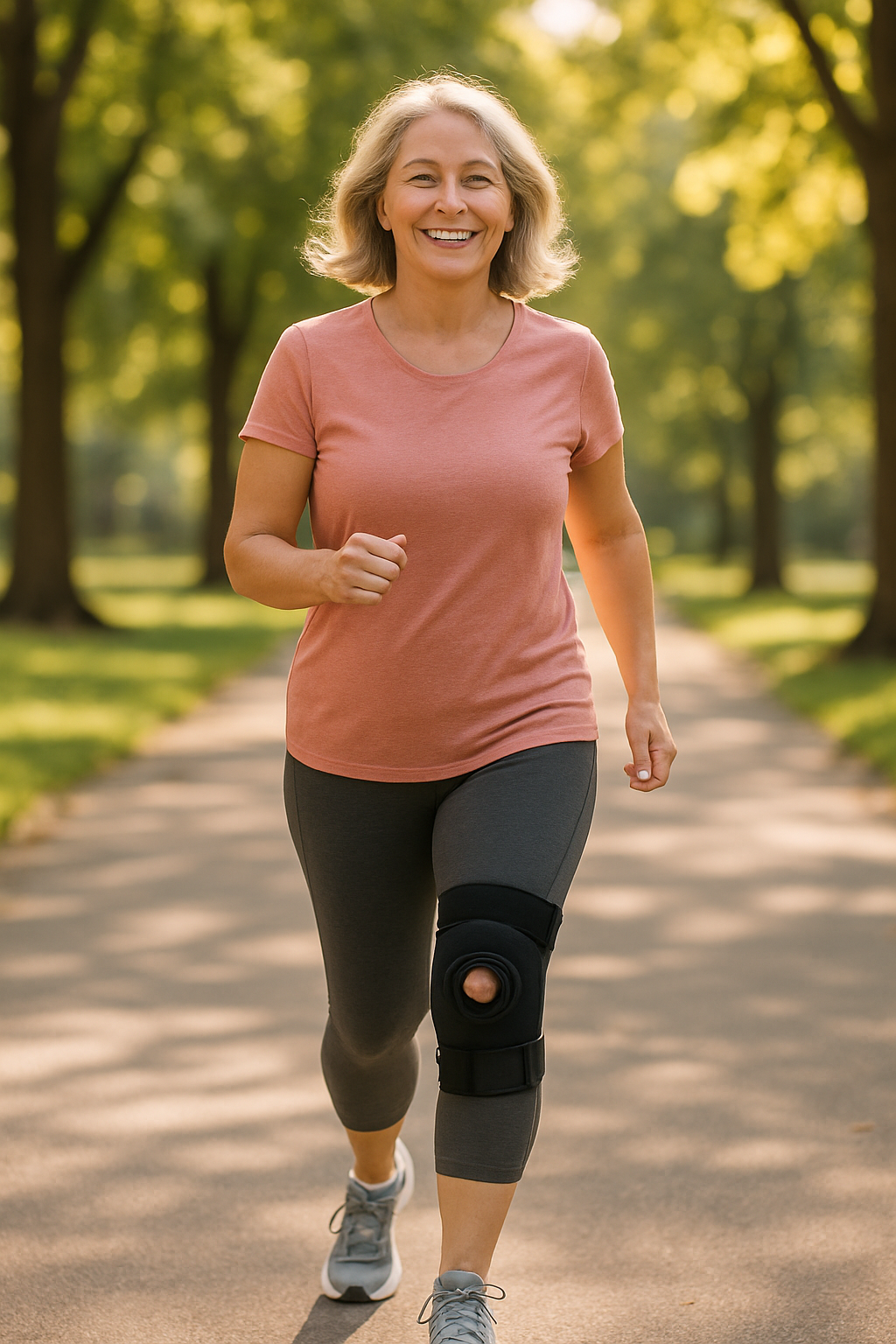
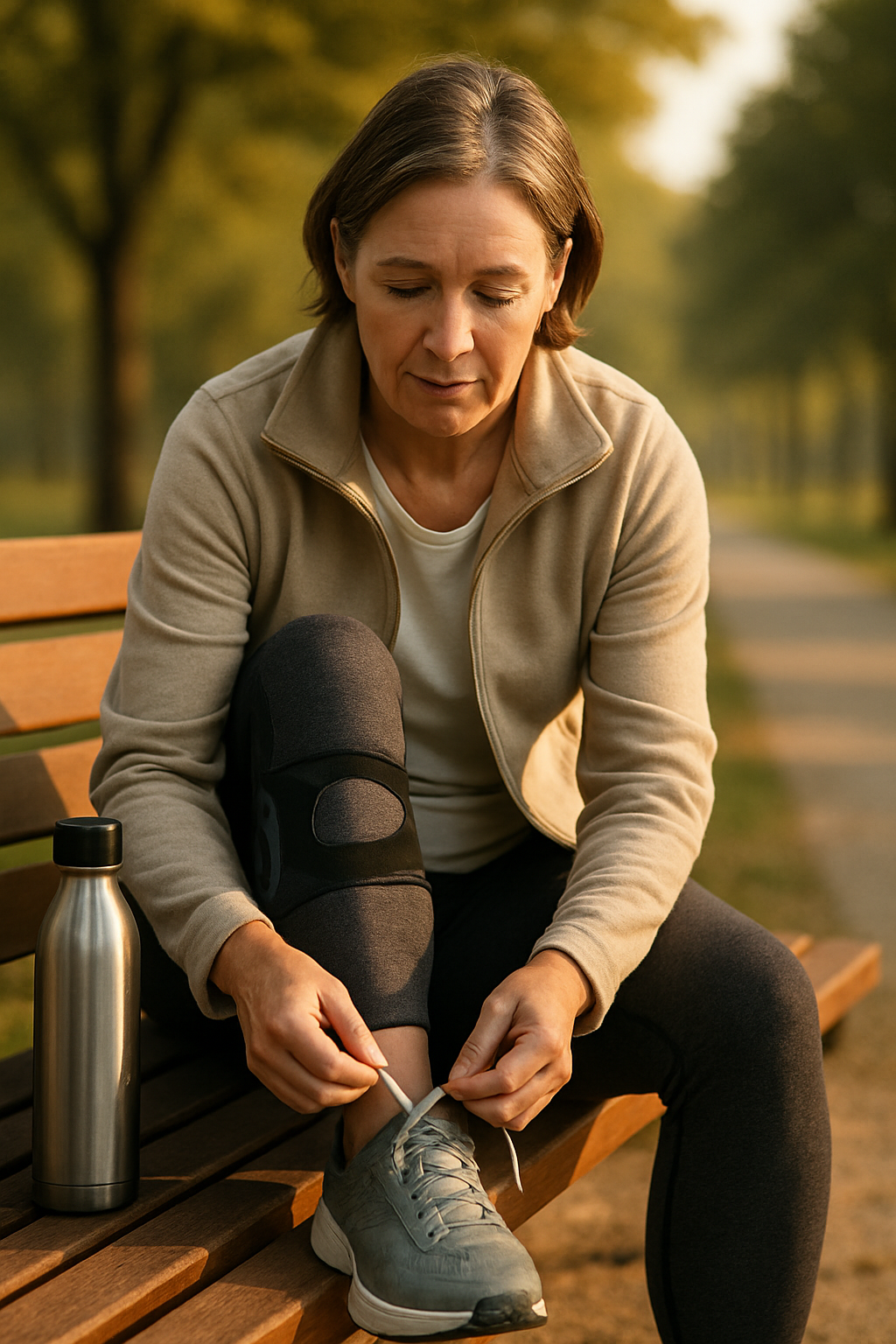
Good shoes are the one "gear splurge" I’ll never argue against. You want a flexible sole, mild rocker, and a wide toe box. If you struggle with knee pain, a light compression brace can sometimes offer the confidence to get started — usually, I recommend the Modvel Compression Knee Brace (affordable, supportive, and not a hassle to put on) for early-stage walkers. Not mandatory, but for some, it’s the difference between "I’ll skip it" and "I’ll try." Always check with your doctor or PT before adding support gear if you have circulation or nerve issues.
5. Pay Attention to Your Body’s "Yellow Lights"
Here’s my unpopular opinion: Moderate discomfort (think "3 out of 10") is okay. Sharp, stabbing pain? Nope. If a joint swells up or you limp for hours after, dial it back. But many people abandon walking programs at the first twinge, not realizing that some mild soreness can be part of adaptation. Always err on the side of caution, and talk to your healthcare provider if pain persists or worsens.
The Science: Walking, Inflammation, and Joint Lubrication
People often ask me, “Can walking really reduce inflammation?” The reality is nuanced. Movement increases blood flow, bathes cartilage in nutrients, and may help modulate inflammatory markers. In a 2020 clinical trial published in Osteoarthritis and Cartilage, older adults with knee OA who walked 30 minutes, five times a week, showed lower C-reactive protein levels (an inflammation marker) after 12 weeks. The participants also reported less morning stiffness and better function. Not a miracle, but measurable progress.
Another mechanism: Synovial fluid. Walking acts like a pump, pulling fresh fluid into cartilage (no blood supply there, so movement is essential). That’s why you often feel less stiff AFTER a walk, even if you creaked at the start.
What About Supplements and Other Relief Tools?
I get questions about joint supplements at least twice a week. Do they actually help, or is it all placebo? The honest answer: Some work for some people — especially when combined with movement.
- Glucosamine & Chondroitin: The data is mixed. But, several meta-analyses from Annals of Internal Medicine and BMJ (2018, 2019) suggest a modest benefit for knee pain, especially with a dose of 1500mg glucosamine sulfate daily. I’ve personally seen a handful of clients swear by the comprehensive formulas that include turmeric and MSM, like Vimerson Health’s Glucosamine Chondroitin Turmeric MSM & Boswellia.
- Heating Pads: Not just for grandma. A high-quality moist heat pad (I like the Pure Enrichment PureRelief XL Heating Pad) can prime stiff joints before a walk. This isn’t required, but on cold mornings, it’s a small luxury that can nudge you out the door.
But remember: Supplements and gadgets aren’t magic. They’re tools to support the core habit — moving more, consistently. Always let your doctor or pharmacist know what you’re adding, especially if you take blood thinners or meds for chronic disease.
Motivation Hacks: How to Make Walking a Habit After 50
We all start strong… and then life intervenes. So, how do you make your walking program stick?
- Accountability Buddy: Works wonders. My own mother-in-law walks every morning with her neighbor. When one wavers, the other nudges.
- Track Progress: Basic pedometers or step-counting apps are motivating — just don’t obsess. Notice how you feel, not just your numbers.
- Mini-Rewards: I’m a sucker for a post-walk cup of coffee or calling a friend. Habit stacking works: walk, then reward. Simple but powerful.
- Embrace the "Zero Day": Missed a day? Shrug it off. The only failure is quitting altogether.
If you’re nodding along, you’re not alone. I’ve been there, too.
Common Mistakes (and How to Avoid Them)
- Too much, too soon: The biggest cause of setback. Progress gradually.
- Ignoring footwear: Old, worn-out shoes = more pain. Replace every 6-12 months if you walk regularly.
- Pushing through sharp pain: Don’t. Discomfort is tolerable; sharp, stabbing pain is a red flag.
- Boredom: New routes, podcasts, or walking with a friend can help keep things fresh.
How Walking Compares to Other Joint-Friendly Exercises
I’ll be honest — walking isn’t the only good option. Cycling and swimming are fantastic for joint health, too. But here’s the tradeoff: walking requires zero equipment (beyond shoes), can be done almost anywhere, and naturally loads bones and cartilage — which is important for maintaining density as we age. In the Journal of Aging and Physical Activity (2019), regular walkers over 60 had better balance and leg strength than their sedentary peers, even compared to some “gym-only” exercisers.
And — bonus — walking outdoors lifts mood, improves vitamin D, and can ease mild anxiety or depressive symptoms. That’s not a side effect I’d ignore.
My Personal Formula for Sustainable Joint Health Past 50
If you’ve made it this far, here’s what I want you to remember. The "secret" is consistency — not intensity, not gadgets, not the latest supplement on TV. Start where you are. Layer in support (the right shoes, maybe a knee brace or heating pad), and if you want to try a supplement, go for a formula with more than just glucosamine — turmeric and MSM can be the missing link for some.
For many (myself included), combining daily walks, basic stretching, and the occasional use of supportive products has kept my knees and hips mobile well into my 50s. No, I’m not pain-free every day — but I move better than most men a decade younger. And my clients who stick with it? They usually do, too.
Key Takeaways (and a Challenge for You)
- Walking is safe, effective, and science-backed for joint health after 50 — as long as you start slow and listen to your body.
- The right shoes, surface, and (when needed) accessories like a compression knee brace or moist heating pad can cut the "friction" that keeps you stuck.
- Supplements like Glucosamine Chondroitin Turmeric MSM & Boswellia are worth considering — but only as an adjunct to regular movement.
- You don’t have to be perfect. Progress > perfection.
If you’re ready, try a walk tomorrow — even two minutes if that’s all you can manage. Your future knees might thank you (and if you see me in the park, give a wave).
Questions? Success stories? Or a favorite walking route you think I should try? Drop me a note — I love hearing from readers (and real-life walkers).
James Chen, MS, CSCS
Writer & Joint Health Expert
JointReliefReviews.com