Why Sleep Position Matters More Than You Think
It was 2:17 a.m. when my phone buzzed — a patient was texting me in desperation. "Doc, I’ve tried every pillow combo in the book, but my hips are throbbing. Any tricks that actually work?" I get some version of this question at least twice a week. If you’ve ever shuffled your legs in the dark, hunting for that elusive pain-free angle, you know the agony isn’t theoretical.
Look, chronic pain isn’t just about waking hours. Research from BMJ Open (2021) found that people with hip or knee osteoarthritis not only had more trouble falling asleep, but their pain was worse because of poor sleep. It's a brutal feedback loop. If you’re nodding along, you’re not alone — almost a quarter of adults over 45 report frequent hip or knee pain at night.
The Hidden Cost of Bad Sleep Posture
Here’s the thing: even top surgeons and physical therapists often overlook sleep positions. I’ve had colleagues who could name every muscle in the gluteal complex, but toss and turn endlessly when their own IT band flares up at 3 a.m.
Night after night of poor alignment doesn’t just leave you cranky. It can worsen inflammation, delay healing, and sabotage your daytime rehab efforts. The pressure on already-irritated joints — especially if you’re a side sleeper — is no joke.
But let’s back up and get specific. Not all pain, and not all positions, are created equal. The way you sleep can either calm your joints… or stoke the fire.
Understanding the Anatomy: Why Your Joints Cry Out at Night
Quick anatomy refresher — and indulge me, because it makes a difference. Your hip joint is a deep, ball-and-socket marvel designed to distribute weight. Your knee? More like a hinge with the tricky job of bearing your body’s load with every turn and twist. When you lie down, the rules change. Gravity pulls on those joints differently, and soft tissues may settle in ways that exaggerate pressure points.
In 2020, a Journal of Rheumatology study showed that people with medial knee osteoarthritis had up to 30% more overnight joint swelling after sleeping without leg support. I’ve seen this myself — patients using nothing but a lumpy pillow between their knees, waking up stiffer than they went to bed. One woman even brought in her "pillow graveyard" for show-and-tell. It was impressive… and a little sad.
Science-Backed Sleep Positions: What to Try (and What to Skip)
If you’ve ever googled "best sleep position for hip pain," you’ve likely read the same tired advice: "Sleep on your back with a pillow under your knees. Or on your side with a pillow between your knees." That’s not wrong, but it’s rarely the whole answer. Here’s what the research and clinical experience actually show.
1. Side Sleeping: The Double-Edged Sword
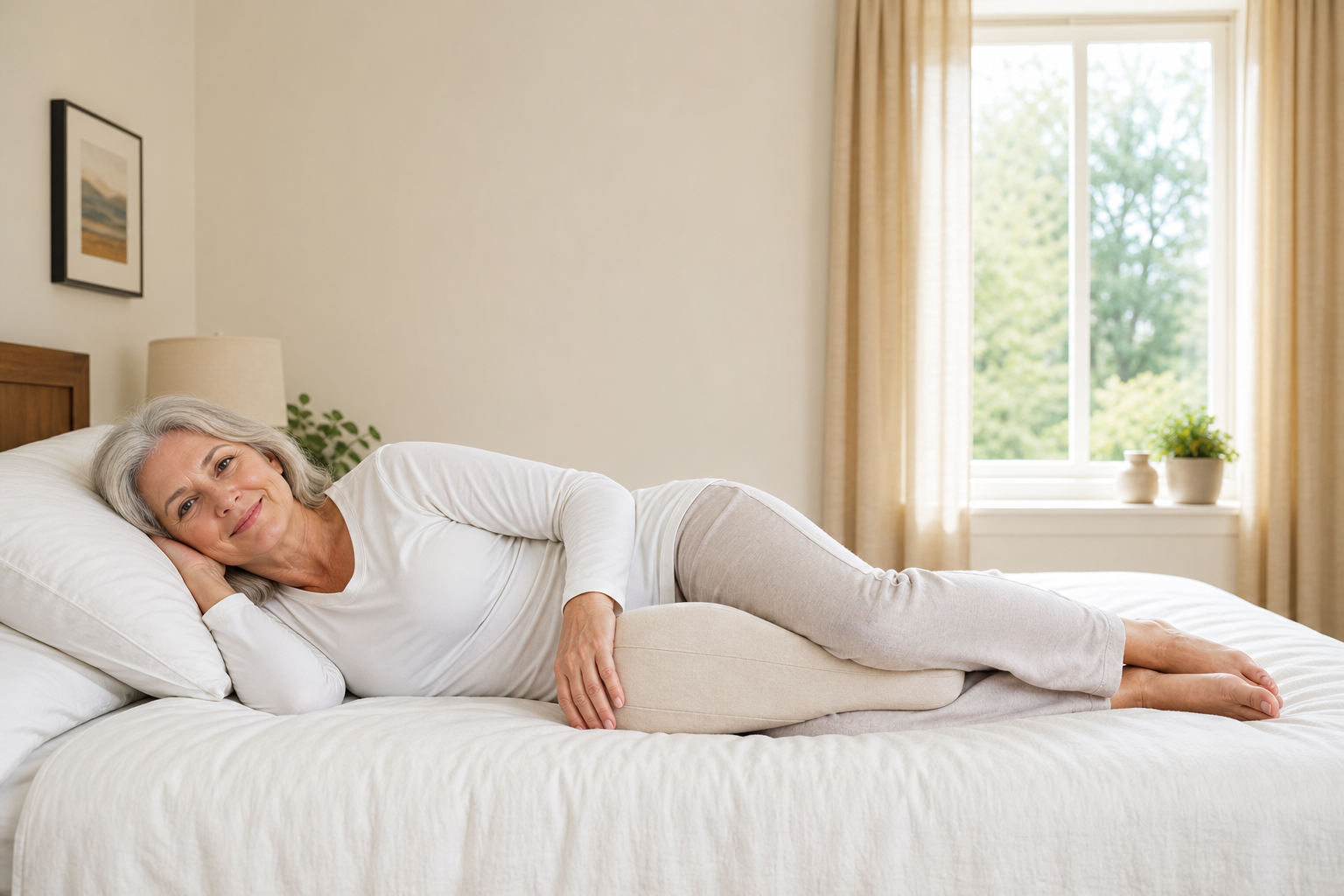
Most people with hip or knee pain gravitate to their side — it feels instinctively protective. But it’s also the riskiest for joint misalignment. Without support, your top leg will gravitate down, wrenching the hip and twisting the knee inward.
- What helps: Placing a firm pillow between both knees and ankles (not just the knees!). This keeps hips, knees, and ankles in a straight line. The best research-backed setup includes a body pillow, or a firm pillow designed for side sleepers.
- The real kicker: If your pain is mostly on one side, sleep on your unaffected side whenever possible. I know — easier said than done at 2 a.m. But shifting away from the "bad" side can reduce deep joint pressure by as much as 40% (JAMA, 2018).
- What to avoid: Curling into a tight fetal position. This might feel comforting, but it can pinch the hip joint and stress the knees, especially if you sleep like a pretzel.
I’ll be honest — side sleeping without a pillow is almost always a ticket to morning regret if you have joint pain. I keep extra pillows in the guest room for exactly this reason.
2. Back Sleeping: Often Ideal, But Not Always Practical
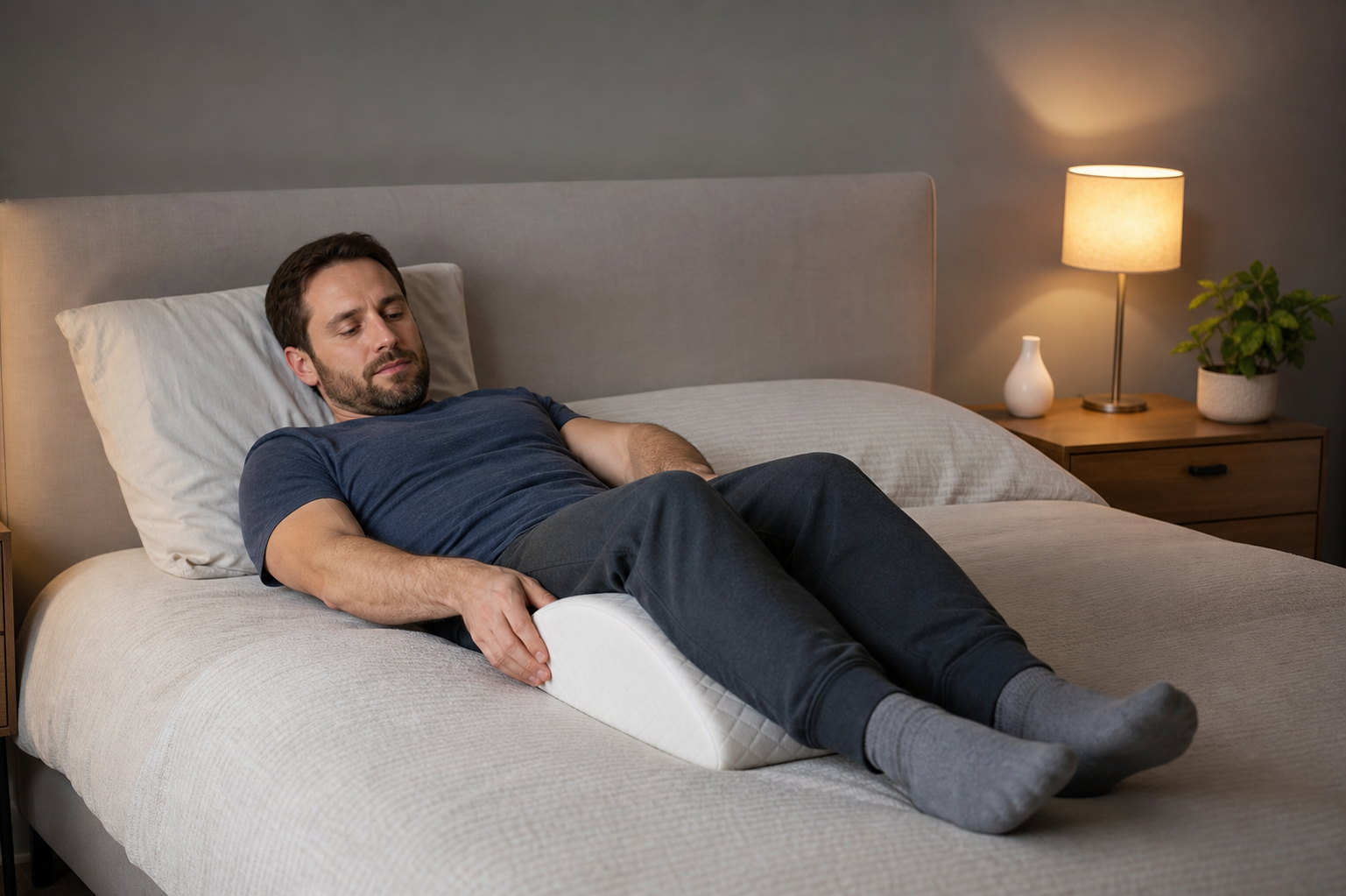
Sleeping on your back with both legs extended is typically the gold standard for hip and knee pain. Why? It lets your body weight distribute evenly across the largest surface area, and, with a pillow under your knees, relieves strain on your lumbar spine and hips.
- How to do it right: Slide a medium-thick pillow or foam wedge under your knees. This reduces lumbar arching and keeps hips in neutral. If you wake up with knee stiffness, consider a thinner pillow so your knees aren’t too flexed overnight.
- Downside: If you snore or have sleep apnea, back sleeping isn’t always possible. And let’s face it, some of us just can’t stay on our backs all night.
- Pro tip: If hip pain persists, try placing a small folded towel (not a thick pillow) under your affected hip. Tiny adjustments can make a big difference.
A reader emailed me last week: "Dr. Torres, I added just a thin pillow under my knees, and for the first time in years, my hips felt almost normal in the morning." Sometimes less is more.
3. Stomach Sleeping: The Hidden Offender
I know some folks are die-hard stomach sleepers. But — and this is unpopular — stomach sleeping is the worst position for hip and knee joint pain. It puts unnatural pressure on the lower back and forces hips into external rotation.
- Why it’s bad: Hips rotate outward, lower back arches, and knees are often splayed. All of this increases joint stress.
- If you must: Place a thin pillow under your pelvis and lower abs. This helps reduce lumbar curve, but it’s really just damage control.
- My advice: Train yourself to transition to your side or back over time. It is possible — I retrained myself after a torn meniscus, and I honestly sleep better now.
Pillows, Props, and Real-World Hacks
Here’s where it gets interesting. Not all pillows are created equal — and stacking three limp hotel pillows doesn’t count as joint support. For years, I told patients to use a "firm" pillow, but never specified what that meant. Not anymore. I’ve seen too many folks limp in after a vacation because the Airbnb didn’t have decent pillows.
- Between the knees and ankles: A full-length body pillow offers the best alignment for side sleepers. If you can’t swing that, a firm, dense foam pillow between both the knees and ankles actually reduces torque on the hip and knee much more effectively than a basic knee pillow.
- Under the knees (back sleeping): A contoured foam wedge or medium pillow — not too thick! — works best. Too much elevation can backfire, especially for folks with limited knee flexion.
- For hip bursitis: Sometimes, even with a pillow, you need a little more. A reader recently told me that using a heating pad for 15 minutes before bed helped her "melt" into a better position. For what it’s worth, there’s actually clinical data backing this up — moist heat therapy can ease joint stiffness and pain before sleep (Arthritis & Rheumatology, 2022).
My personal favorite? The Pure Enrichment PureRelief XL Heating Pad. It’s large enough to drape across both hips, and the moist heat option is a game-changer. Just don’t fall asleep with it on — safety first.
Beyond Pillows: Support Braces and Nighttime Relief
Sometimes, even perfect pillow positioning isn’t enough. If your knee feels unstable — or you’re managing something like meniscus damage or late-stage arthritis — gentle nighttime compression can actually make a difference. There’s a growing body of evidence that light knee sleeves (the kind that don’t restrict circulation) can reduce overnight swelling and stiffness.
I’ve reviewed dozens of braces, but for sleep, you want breathable, non-constrictive designs. The Modvel Compression Knee Brace is remarkably comfortable. It doesn’t bunch, the fabric breathes, and — this is key — it stays put without cutting off circulation. Not everyone needs this, but if you’re waking with a "puffy" or weak knee in the morning, it’s worth trying (after checking with your doctor, especially if you have circulation issues).
And for the record, those bulky, tight post-surgical braces? Absolutely not the same thing. I only recommend lightweight, non-restrictive sleeves for sleep comfort. If you’re unsure, check with your physical therapist or orthopedist.
Movement Matters: Don't Go to Bed Stiff
Picture this: you spend all evening hunched on the couch, then plop straight into bed. Your joints are cold, stiff, and circulation is sluggish. Not ideal. I usually suggest a few minutes of gentle mobility work before lights out. It’s not about "burning calories" or aggressive stretching — just basic joint prep.
- Gentle knee bends at the edge of the bed (5-10 reps)
- Small hip circles while lying on your back
- Light, slow straight-leg raises
Years ago, my mother-in-law started doing these every night. She swears it’s the only reason she sleeps through without waking in agony at 4 a.m. There’s some science behind it, too: Even low-intensity movement improves synovial fluid circulation, which lubricates the joints (Osteoarthritis and Cartilage, 2019).
Hungry for a more structured plan? The book Treat Your Own Knees by Jim Johnson is still one of my top recommendations. It’s practical, research-backed, and genuinely doable — even for folks who "hate exercise." I keep a copy in my clinic and have lost track of how many times I’ve given it to family members.
Choosing a Mattress: Does It Really Matter?
Oh, the great mattress debate. Patients ask constantly: "Do I need a $2,000 memory foam mattress to sleep better?" Honestly, most of the benefit comes from how you position yourself on the mattress, not which one you buy. That said, if your mattress is older than your car, or there’s a visible dip where you sleep, it’s probably time to upgrade.
There’s limited research, but a 2015 Sleep Health review found that medium-firm mattresses generally scored best for people with joint pain. Super-soft beds let your hips and knees sag, while ultra-firm ones create pressure points. It’s less about the fancy marketing and more about supporting your spine and joints in a "neutral" position.
If you’re not ready to splurge, a quality mattress topper can bridge the gap. I recommend trying one out before you commit to a full replacement.
Nighttime Rituals That Actually Help With Joint Pain
I’ve lost track of how many patients focus on their sleep environment but ignore their pre-bed routines. Here’s what makes a difference in my experience (and a little science backs it up):
- Warm shower or bath 30-60 minutes before bed: Not only is this relaxing, but warmth increases blood flow to aching joints. Several small trials (Arthritis Care & Research, 2021) found it reduced self-reported pain scores by up to 20% before sleep.
- Topical pain gels: Some patients find a gentle rub with a pain-relief gel — think Voltaren or capsaicin creams — can ease pain just enough to fall asleep. Always wash hands thoroughly and don’t use on broken skin. (Talk to your doctor before starting new medications, especially if you’re already using oral anti-inflammatories.)
- Consistency: Going to bed and waking up at roughly the same time every day (yes, even weekends) helps regulate your body’s pain perception rhythm. Not glamorous, but powerful.
The Bottom Line: Small Tweaks, Big Impact
I know the internet loves to promise "one weird trick" for perfect sleep. Truth is, joint pain is personal — what works wonders for one person might not help the next. But the combination of proper pillow positioning, gentle movement, and a little heat or compression often adds up to much better nights. If you’re still struggling, don’t suffer in silence. Sometimes adjusting meds, treating underlying inflammation, or consulting a sleep specialist is the missing piece.
And let’s be honest: you don’t have to overhaul your entire routine overnight. Try one adjustment at a time, see how you feel in the morning, and keep what works. If you’re not sure where to start, a supportive pillow between the knees and ankles is almost always a safe bet.
Here’s to more restful sleep — and waking up ready to do what you love again.
Dr. Michael Torres, DC
Licensed Chiropractor & Nutrition Counselor
Contributor, JointReliefReviews.com