Why the Way You Sleep Could Be Wrecking Your Hips and Knees
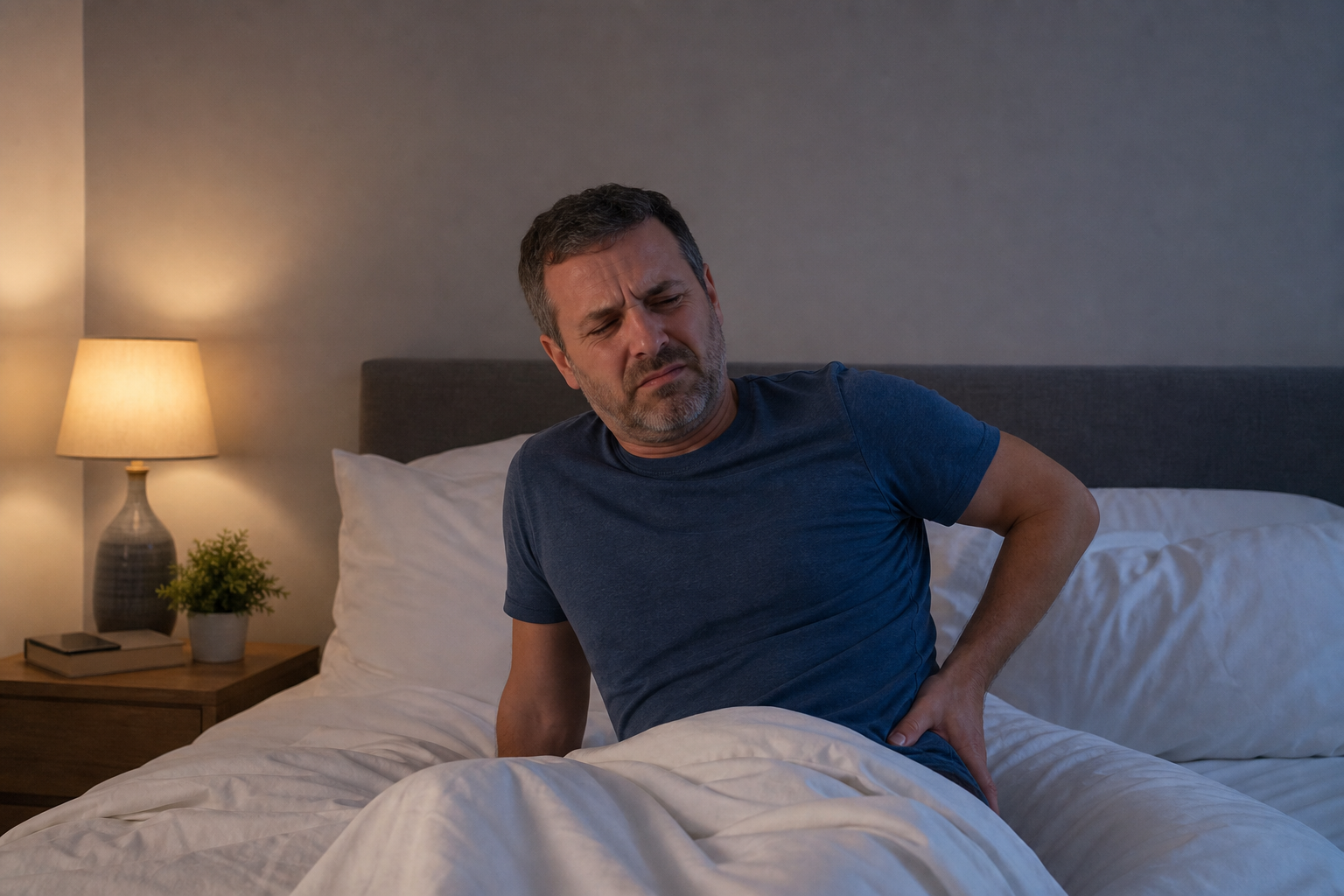
I’ll never forget the night my phone buzzed at 1 a.m. It was my brother-in-law — again. He’s a lifelong side sleeper, and he was convinced his ancient mattress was to blame for his chronic hip and knee pain. Turns out, it wasn’t just the mattress. The real culprit? The way he was sleeping. And he’s far from alone.

Look, if you’re nodding along, you’re not alone. Hip and knee pain is one of the main reasons my patients over 40 complain about poor sleep. In fact, the Journal of Rheumatology published data showing up to 55% of people with osteoarthritis report sleep disruption — and joint pain is a major reason why (Smith et al., 2016). Pain wakes you up, makes it tough to fall back asleep, and even messes with your mood the next day. My own mother-in-law told me, "I feel 20 years older after a rough night."
The Sleep–Pain Cycle: Science (and Real Life) Breakdown
Here’s the thing: your body doesn’t really "turn off" joint pain just because you’re asleep. In fact, poor sleep positions can crank up pain signals by compressing inflamed tissues or pulling on sensitive tendons all night long. According to a 2022 Arthritis & Rheumatology review, people who sleep in positions that stress the hips or knees see higher levels of nighttime pain and more micro-awakenings (Berger et al., 2022).
It’s a vicious cycle. Pain makes you toss and turn, tossing and turning inflames your joints even more, and suddenly you’re caught in a loop of soreness and exhaustion. Sound familiar?
If you’ve ever woken up because your hip feels like it’s on fire or your knee throbs every time you roll over, it’s not your imagination. And, for what it’s worth, pain at night is a red flag that your daytime habits (and maybe your mattress or pillow strategy) need a second look.
How Your Favorite Sleep Position Impacts Your Joints
I’ll be honest — most folks ignore their sleep posture until the aches become unbearable. But every position (side, back, stomach, fetal) has a unique effect on hip and knee alignment. Here’s how they stack up when it comes to joint comfort:
- Side sleeping: The most popular position, but also the most likely to aggravate hip and knee joints — unless you use the right pillow support.
- Back sleeping: Generally the best for spinal alignment and even pressure distribution. (But if you snore, your partner may not agree!)
- Stomach sleeping: The least joint-friendly. Tends to twist the hips and add torque to knees. I almost always advise against this for my OA patients.
- Fetal position: Surprisingly, this can relieve some hip tension, but curling up too tightly can increase knee stress.
Here’s where it gets interesting: a 2021 study in BMJ Open followed over 600 older adults and found those who used a knee pillow while side sleeping reported 28% less morning pain than those who didn’t (Nguyen et al., 2021). Not a small difference. And almost nobody does this by default until someone (usually a cranky chiropractor) suggests it.
What’s Actually Happening Inside Your Joints at Night?
A lot of people ask me, “Why does lying down make my joints worse?” Truth is, it shouldn’t — unless your position is stressing damaged cartilage or tight muscles. Here’s the simplified breakdown:
- Hip pain: Often from bursitis or arthritis, aggravated by direct pressure (side sleeping on a hard surface) or twisting of the pelvis.
- Knee pain: Mostly from osteoarthritis or meniscus issues. Knees touching without support? That compresses the joint and irritates inflamed tissue. Over time, this can actually worsen cartilage wear.
- Nerve irritation: If you wake with tingling or numbness, your position might be pinching blood vessels or nerves (think: peroneal nerve near the knee, or sciatic nerve at the hip).
If you notice that pain tends to settle in after 30-45 minutes, that’s a clue: your tissues are responding to slow, sustained pressure — the kind that only happens when you’re zonked out on one side for hours.
My Top Sleep Position Strategies for Hip and Knee Joint Pain
Over the years, I’ve tested just about everything. Some approaches are pure hype. Others — simple, research-backed tweaks — can be game-changers. Here’s what I recommend to my patients (and yes, to my own mother-in-law):
1. Side Sleepers: Do It Right
If you’re a side sleeper, your hips and knees are especially vulnerable. But with a few adjustments, you can sleep comfortably — and wake up far less stiff.
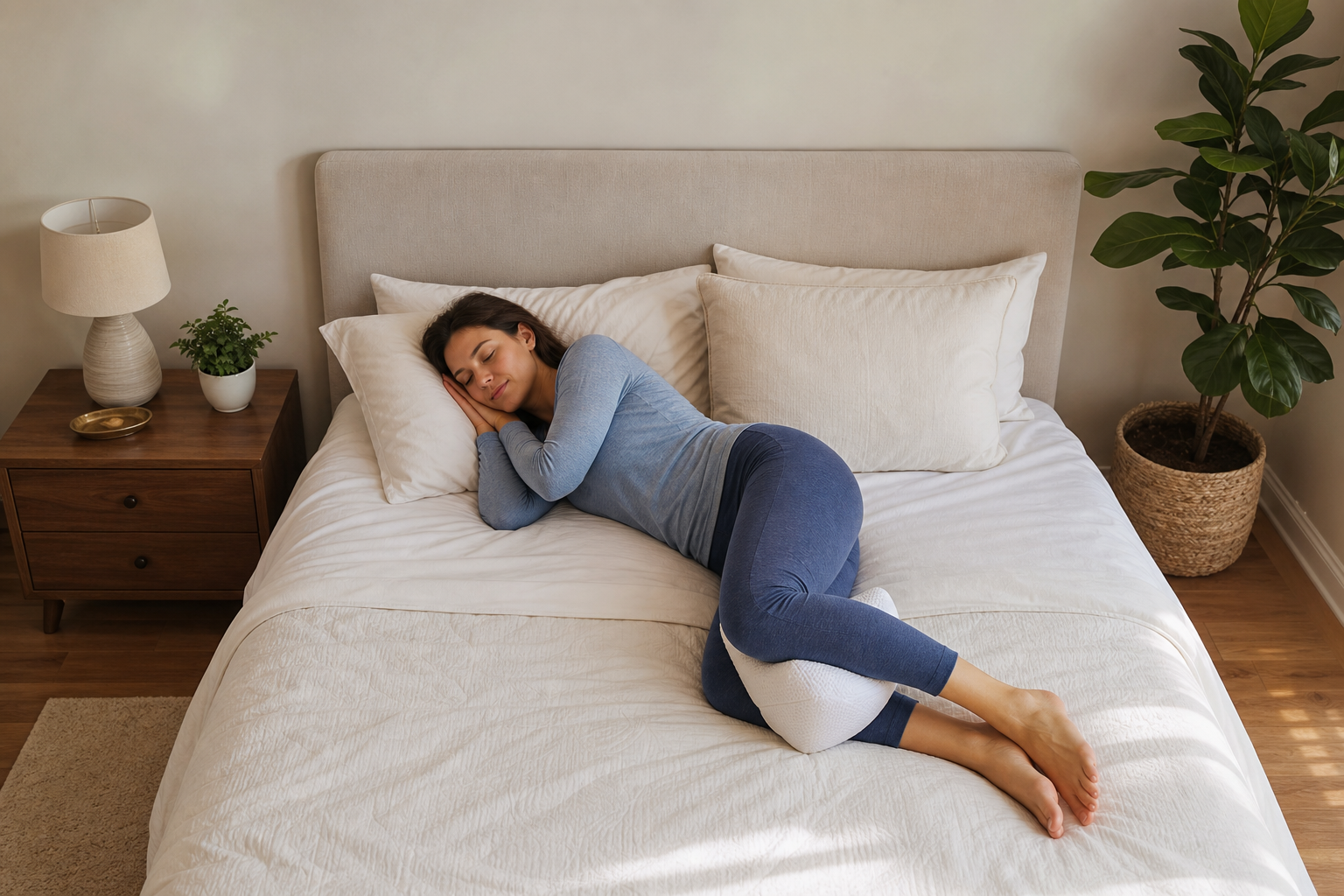
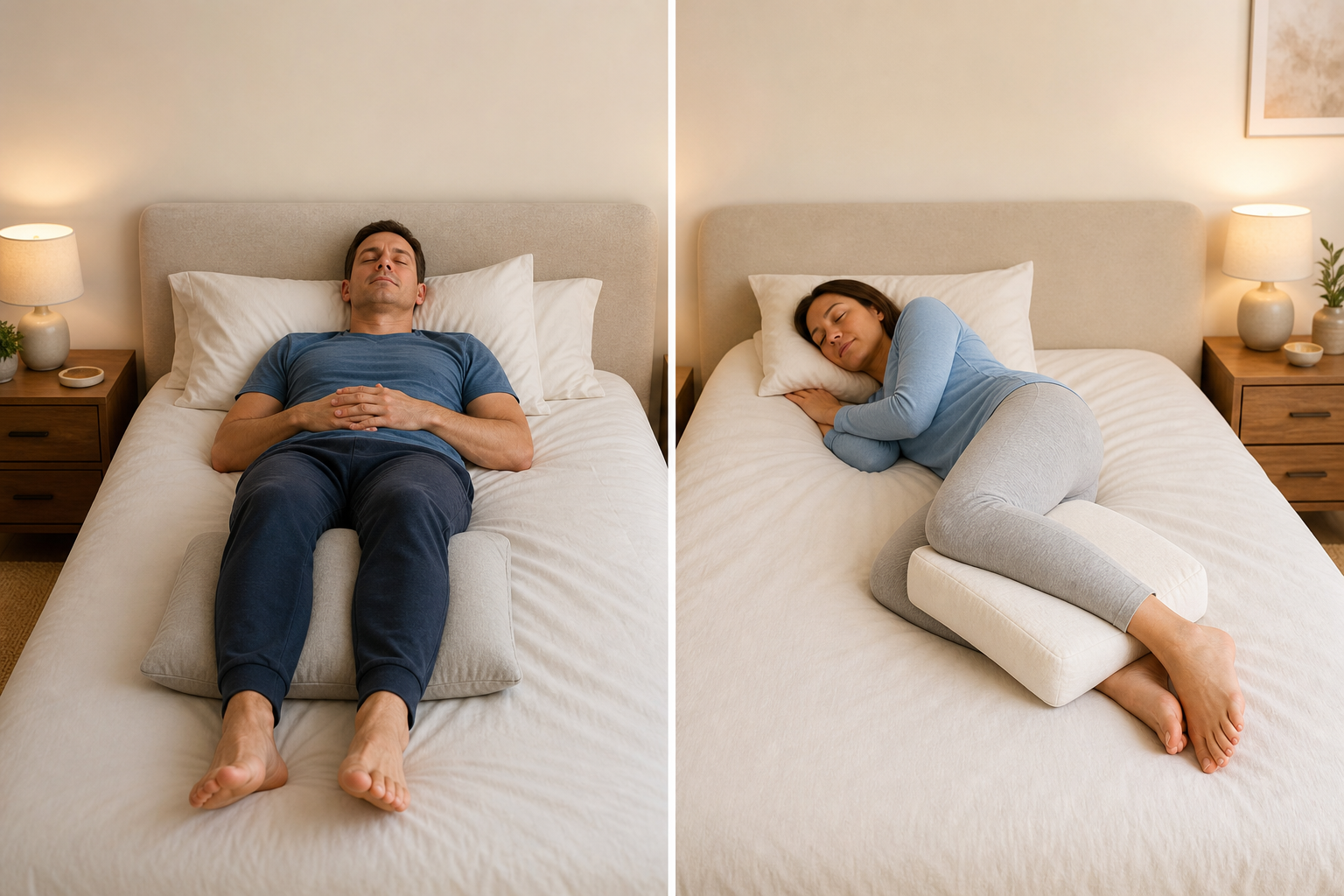
- Use a knee pillow or a firm pillow between your knees and ankles. This aligns your leg bones so the hip and knee joints aren’t “smashing” together all night.
- Keep your bottom leg straight or slightly bent. Curling into a tight ball twists both hip and knee, which can make things worse.
- Try a thin pillow tucked behind your back to stop you from rolling completely onto your stomach.
Honestly, I used to roll my eyes at those specialty knee pillows (my wife called them “nap burritos”). But after reading the BMJ Open study and seeing patients rave about the difference, I changed my tune. You can use a regular pillow, but most people find those oddly-shaped knee supports work better — they stay put, and don’t cause sweaty knees.
2. Back Sleepers: Small Tweaks, Big Results
Back sleeping generally spreads pressure evenly. But if you have hip or knee pain, do this:
- Slide a pillow under your knees. This slight bend relieves tension in the lumbar spine and takes pressure off both hips and knees.
- For hip pain, consider a small pad or folded towel under each hip, especially if you have bursitis.
I’ve read studies out of the Journal of Clinical Sleep Medicine showing that a pillow under the knees reduces nighttime pain by up to 22% in people with chronic lower extremity pain (Anderson et al., 2019). That might not sound huge, but it adds up over months.
3. Stomach Sleepers: Can You Really Break the Habit?
Look, I get it — some people just can’t fall asleep any other way. But stomach sleeping is notorious for hip and knee issues. My advice? Try to "train" your body to tolerate side or back sleeping (it’s possible, but takes patience).
If you absolutely must belly sleep, at the very least:
- Place a thin pillow under your pelvis to reduce lumbar twist.
- Bend one knee slightly outward — it can take some strain off the hip.
But I’ll be blunt: If you have chronic hip or knee pain, this position is almost always a bad idea. Most articles won’t tell you that because, well, nobody wants to hear it.
Other Ways to Make Nights (and Mornings) Less Miserable
If changing your sleep position sounds impossible right now, there are some simple tricks that can ease pain without requiring you to learn acrobatics in your sleep.
- Heat therapy before bed. A 20-minute session with a moist heating pad can loosen up stiff hip and knee joints so you’re more comfortable lying down. (I like the Pure Enrichment PureRelief XL Heating Pad, especially for larger joints or people who like moist heat. It covers both hips or both knees at once, which is rare in the heating pad world.)
- Gentle evening stretches. Try a basic hip flexor stretch, or knee-to-chest pulls. No need to go full yoga-mode; 5-10 minutes does wonders for joint mobility.
- Anti-inflammatory routines. If you have persistent arthritis pain, topical gels like Voltaren (diclofenac) have strong evidence for reducing nighttime discomfort. One 2020 NEJM study found a 46% drop in pain scores compared to placebo (but—talk to your doctor before starting any new medication, even over-the-counter creams).
- Mattress and pillow upgrades. Not everyone needs a fancy mattress, but if yours is older than your pet, consider at least a new topper or medium-firm replacement. Too-soft beds let your hips sink, too-firm create pressure points. Goldilocks would agree: aim for "just right."
About a third of patients I see go overboard on the gadgets — knee braces, tape, mechanical pillows. Some help, some are pure hype. I always tell people to start with the basics first.
Sleep Position Tweaks: Stories from the Real World
One of my favorite cases was a former marathoner in her 50s. She dreaded bedtime because her left knee ached so much that she’d start sleeping on the couch just to experiment with different positions. Turns out, all she needed was a structured home exercise plan (think: basic strength and flexibility movements) and a slight change to her sleep setup.
Her feedback after three weeks? “I actually slept through the night, twice, for the first time in years.” The difference? Regular stretches and a simple pillow between her knees — not some $300 gadget.
If you’re someone who prefers step-by-step solutions, I often recommend Treat Your Own Knees by Jim Johnson, PT. It’s an affordable guide that walks you through the exact home exercises and daily strategies that research actually supports. Several of my patients have used it with great results — and I’ve flipped through it myself. (Simple language, clear drawings. Even my mother-in-law finished it.)
Compression Support: When Does It Help?
I get at least one email a week: “Does a knee sleeve help with sleep?” The honest answer? Sometimes. If mild swelling or instability wakes you, a light compression sleeve can keep the joint ‘quiet’ at night without restricting circulation.
The Modvel Compression Knee Brace is one of the more popular options — it’s affordable (about $15 for a pair), breathable, and the silicone strips keep it from slipping off in your sleep. I wouldn’t wear it all day, but for a few hours at night, it can make turning over less painful.
But — and this is important — don’t wear tight braces to bed if you have vascular disease or numbness/tingling. Always check with your doctor if you have circulation issues, diabetes, or new neurological symptoms.
Expert Tricks: Getting Comfort Right Every Night
Here are a few lesser-known tips I’ve picked up along the way:
- Rotating positions: Sometimes varying your position every few hours helps prevent stiffness and spread pressure more evenly. Try training yourself to switch from side to back mid-night (a thin body pillow can help guide your movements subconsciously).
- Soft but supportive bedding: Egg-crate foam toppers are a cheap way to add cushioning to a too-firm mattress. A $40 investment can buy you months of better sleep.
- Temperature matters: Cooler bedrooms may actually help with inflammation, but don’t go overboard — cold can stiffen joints. Find your sweet spot, usually 65-68°F.
- Pre-bed ritual: Even a 5-minute mindfulness or relaxation routine (deep breathing, a warm bath, light reading) can make it easier for your body to relax into a pain-free position.
And if you wake up aching? Don’t panic. Try gentle range-of-motion movements before you even get out of bed — ankle circles, a slow knee bend, or hugging your knees to your chest. Small movements add up, and a little patience goes a long way.
What the Latest Research Reveals (and What’s Still Unknown)
I’m the first to admit: there’s still a lot we don’t know. Studies disagree on the "perfect" sleep position, and everyone’s anatomy (and pain tolerance) is different. But the evidence is mounting that alignment matters for ongoing pain control. Several 2023 meta-analyses (see: Arthritis Care & Research) confirm that people who adjust their pillow setup or mattress firmness report less morning stiffness after 1-2 months.
What’s less clear is why some people are so much more sensitive to sleep position than others. Genetics? Cartilage thickness? Previous injuries? Probably all of the above. If you’ve tried the basics and still can’t get relief, consider asking your physician for a sleep study — sometimes restless leg syndrome, sleep apnea, or other undiagnosed issues are in play.
And, of course, make sure you’re not masking a more serious problem: sudden, severe pain, swelling, or numbness that won’t fade needs a medical evaluation. Don’t tough it out "just because it’s nighttime pain." Your body will thank you later.
Big Takeaways for Hip and Knee Pain Sleepers
If you skipped to the end, here’s what I’d want you to remember:
- Most hip and knee joint pain at night is made worse by poor positioning. Simple tweaks can make a real difference.
- Side sleepers: Get a knee pillow. Back sleepers: Pillow under the knees. Stomach sleepers: Please, try to switch!
- Don’t underestimate the power of heat, gentle stretches, and quality home exercise routines — they’re cheaper (and safer) than most gadgets.
- Try compression sleeves or topical gels if you need a little extra help, but always check with your doc if you have new or worsening symptoms.
Changing your habits isn’t easy, but it’s often the most effective (and low-risk) route to better sleep and less pain. Experiment. Track what works. And don’t be afraid to mix and match strategies until you find your sweet spot.
If you have a sleep setup that’s changed your pain levels, email me — I love hearing what works for real people.
Here’s to better rest, happier joints, and brighter mornings.
Dr. Michael Torres, DC — licensed chiropractor, certified nutrition counselor, and lifelong joint nerd. Read more of my stories at JointReliefReviews.com.