
Why My Wrist Pain Story Is Probably Yours, Too
First, a quick confession: I wasn't immune to desk-induced wrist pain either. Years ago, after long clinic days spent charting on a laptop, I’d head home with a dull ache that made even stirring pasta uncomfortable. Not exactly the badge of honor I wanted as a physical therapist.
If you’re wincing while reading this, you’re in very good company. Recent studies (see 2023’s Journal of Occupational Rehabilitation) estimate up to 60% of office workers report ongoing wrist pain by their second year at a desk job. That’s not just discomfort—it’s a productivity killer, and, left unchecked, a fast track to tendinitis or even carpal tunnel syndrome.

How Desk Work Really Wrecks Your Wrists
Look, most advice online just skims the surface. "Take breaks! Adjust your chair!" Good ideas—until your third meeting in a row and your wrists are screaming. Here’s where the science gets interesting (or alarming):
- Repetitive micro-movements (think endless typing, mouse scrolling, swiping) strain flexor and extensor tendons, leading to microtears over time.
- Constant wrist extension (wrists cocked upwards for keyboard use) compresses the median nerve. Over months, that’s a recipe for numbness and tingling—the hallmarks of carpal tunnel.
- Poor posture at the shoulder and elbow shifts more load downward, so even if your wrists are angled correctly, your upper body may be passing the buck.
Most articles won’t tell you this, but there’s no single "perfect" wrist position that works for everyone. Our bones, muscle mass, and even daily stress levels change what feels right—sometimes daily. That’s why real ergonomic solutions aren’t one-size-fits-all.
11 Ergonomic Tips for Desk Workers with Wrist Pain
1. Float, Don’t Press
Your wrists should gently "float" above your keyboard, not press or rest against the desk edge. That edge pressure—called "mechanical compression" in the Journal of Hand Surgery—increases carpal tunnel risk by nearly 30% in long-term computer users. Try rolling up a small towel under your forearms, not your wrists, to keep you mindful of this.
2. Keep Elbows at Your Sides
This one’s subtle, but effective. When your elbows drift forward or outward, your wrists compensate with awkward angles. Adjust your chair or keyboard position so your upper arms stay relaxed at your sides, forming a gentle L-shape at the elbow. It sounds simple, but trust me—it’s a game-changer for many of my patients.
3. Mouse (and Keyboard) Makeover
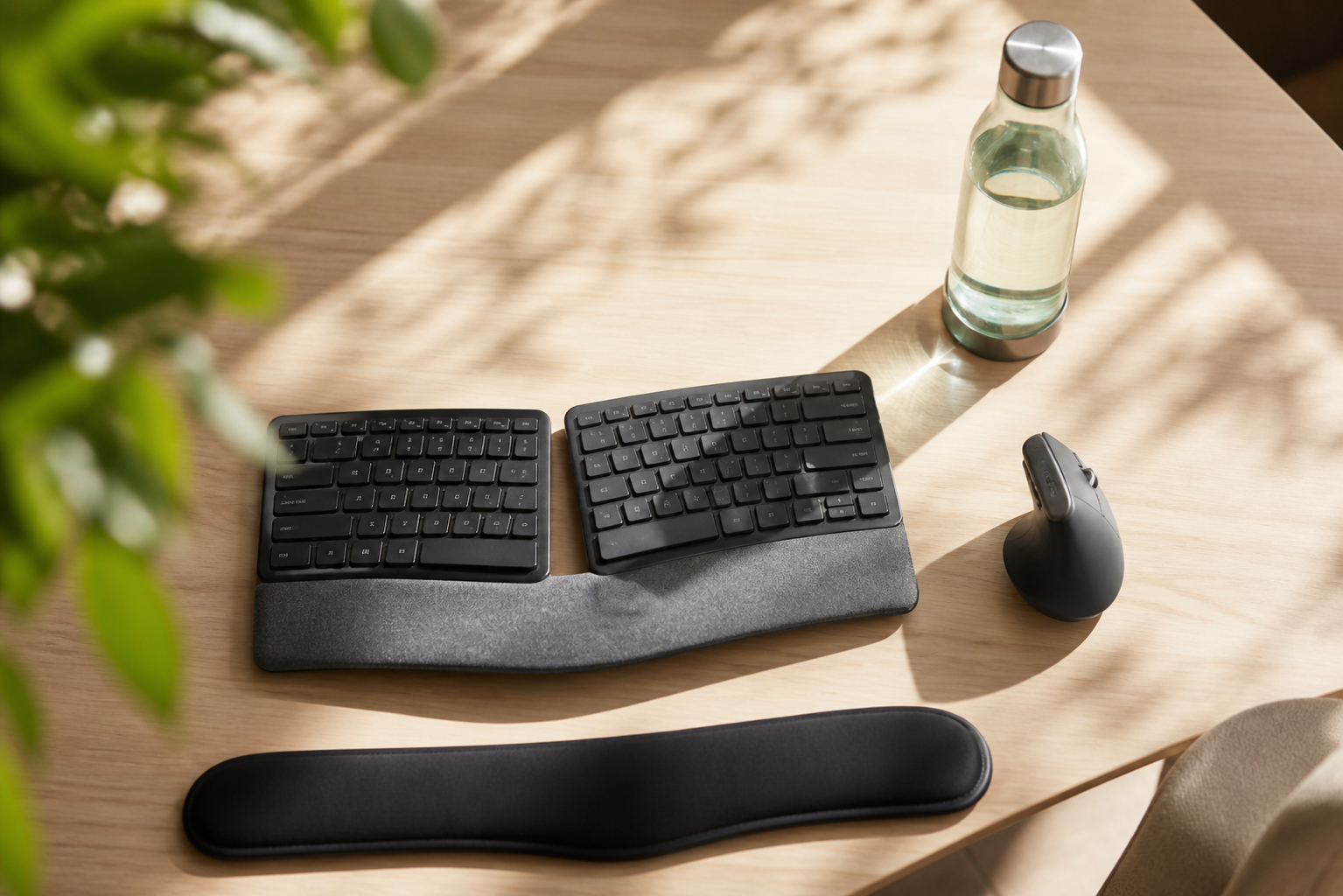
Not gonna lie—I used to scoff at "ergonomic" mice. Then a client brought in a vertical mouse, and I could see the difference in her wrist angle immediately. The research backs her up: 2022’s Applied Ergonomics found vertical mice reduce wrist extension by 25%, which lowers compression on carpal tunnel structures. If a fancy new mouse isn’t in the cards, even switching your dominant hand (for 10-15 minutes per day) can help balance muscle use.
4. Mind Your Keyboard Height
Your keyboard should sit just below elbow level—no higher. Too high, and you’ll hike your shoulders, straining neck and traps. Too low, and you’ll end up flexing (bending) the wrists, compressing nerves. If you’re using a laptop, invest in a separate keyboard and mouse, and pop your laptop on a riser. Cheap fix, big reward.
5. Shortcuts Are Your Friend
If you’re clicking that mouse for every. single. thing.—your wrists are working overtime. I challenge my clients to learn five useful keyboard shortcuts each month. Ctrl+C/V (copy/paste), Alt+Tab (switch windows), and Ctrl+Z (undo) are a good start. Fewer clicks = happier wrists.
6. The "Microbreak" Method
Ever heard of the 20/8/2 rule? For every 20 minutes seated, spend 8 minutes standing and 2 minutes moving (stretch, shake, or just walk). I’ll be honest—nobody does this perfectly. But I ask my desk-bound clients to at least stand every 30-40 minutes, even if just to stretch their hands. Regular movement beats marathon stretches at day’s end every time.
7. Hydration and Hand Health
Here’s a surprise: mild dehydration can actually increase muscle cramping and nerve compression, especially in small joints like the wrist. Keep a water bottle nearby, and aim for 60-70 ounces per day if you’re mostly sedentary. I keep a goofy, bright blue bottle at my workstation—silly, but it works.
8. Warm It Up (or Cool It Down)
Heat is my go-to early in wrist pain—especially for stiffness or after long typing stints. Moist heat pads (like the Pure Enrichment PureRelief XL Heating Pad) work wonders for diffusing that deep, achey throb. If swelling or burning pain is your trouble, gentle ice packs—10 minutes at a time—bring down nerve irritation. Just don’t apply ice directly to skin: wrap it in a thin towel, always.
9. Try a Wrist Compression Sleeve
Here’s where it gets interesting: many of my desk-bound clients see surprising relief with a simple, well-fitted compression sleeve. Mild compression (think the Modvel Compression Knee Brace—yes, technically a knee sleeve, but their sizing and soft, breathable material works for many wrists and small forearms). It offers gentle support, improves proprioception, and keeps you "aware" of your position. I know this is an unusual hack, but several readers emailed me after getting creative with small/medium sleeves—and raved about the results.
10. The Power of Daily Wrist Mobility Drills
I’m not saying you need a 30-minute yoga flow at your desk, but two minutes of focused mobility work can make a stunning difference. My go-tos:
- Prayer stretch: Palms together, push gently down to stretch wrist flexors.
- Reverse prayer: Backs of hands together, push up gently for extensors.
- Wrist circles: Slow, controlled, both directions—really focus on the full range.
Do these when you refill your coffee. No fancy equipment required.
11. Don’t Ignore Fatigue or Numbness
Here’s the thing: if your wrists feel weak, you’re noticing grip strength dropping, or you get regular tingling—don’t "tough it out." Those are red flags. Check in with your doctor or a physical therapist. Sometimes custom splints, targeted therapy, or even a change in office setup are non-negotiable for recovery.
Other Real-World Strategies (And a Few Honest Controversies)
Alright, time for a bit of myth-busting and real talk.
- "Rest" isn’t always best. Brief breaks? Yes. But total immobilization (unless directed by your doctor) can actually make wrists stiffer and weaker long-term. Movement is medicine—just make it mindful.
- Don’t bother with generic wrist splints for desk work unless you’ve been advised by a clinician. Over-bracing can cause muscle atrophy and worsen pain patterns. (I know, unpopular opinion, but the evidence is clear—see BMJ, 2021).
- Supplements are hit-or-miss. I’m often asked about B6, turmeric, or even collagen peptides for wrist pain. Some early evidence supports a role for collagen in tendon health (see 2020 Arthritis & Rheumatology), but the effects are modest at best—and not a substitute for ergonomic fixes.
When to Seek Expert Help
If you’ve tried these strategies consistently for 2-3 weeks and your wrist pain persists (or worsens), reach out to a specialist. Early intervention makes a world of difference. As both a PT and a former patient, I can’t stress this enough—by the time there’s tingling or loss of grip strength, it’s absolutely time to get a professional assessment.
What About Desk Accessories and Wrist Gadgets?
So, do those cushy wrist pads and fancy mouse pads actually help? My take:
- Gel pads under wrists can help if your setup puts pressure on the carpal tunnel area. But if you use them as a "resting" point (all day), they can actually make things worse.
- Split keyboards—while awkward at first—are backed by studies (2021, Human Factors) showing a significant reduction in ulnar deviation and wrist extension. Worth trying if you’re a heavy typist or have persistent issues.
And for those with recurring flare-ups, heat therapy is as old as time—and still effective. The Pure Enrichment PureRelief XL Heating Pad (linked above) is extra-large, so you can wrap it not just around your wrist but over the forearm where those angry tendons hide out.

If You Remember Nothing Else…
Wrist pain shouldn’t be your new normal—and you don’t need a bank-breaking overhaul to feel better. Focus on the basics: keep your wrists neutral (not cocked or flexed), float instead of pressing, and build in small, regular movement breaks. Ergonomic tools are helpful, but only if you use them alongside healthy habits.
If you pick up only one new habit this week, make it the "microbreak"—your wrists will thank you. And if you want to try a clever hack, consider repurposing a small compression sleeve for extra support (just make sure it’s snug, not tight).
Questions? Stories? I love hearing what’s worked (or hasn’t) for real readers. Shoot me a note, and I’ll do my best to help you decode your desk set-up—no judgment, just real solutions.
—
Dr. Sarah Mitchell, DPT
Senior Health Editor, JointReliefReviews
12+ years treating chronic joint and workplace injuries (and surviving ergonomic fails myself)