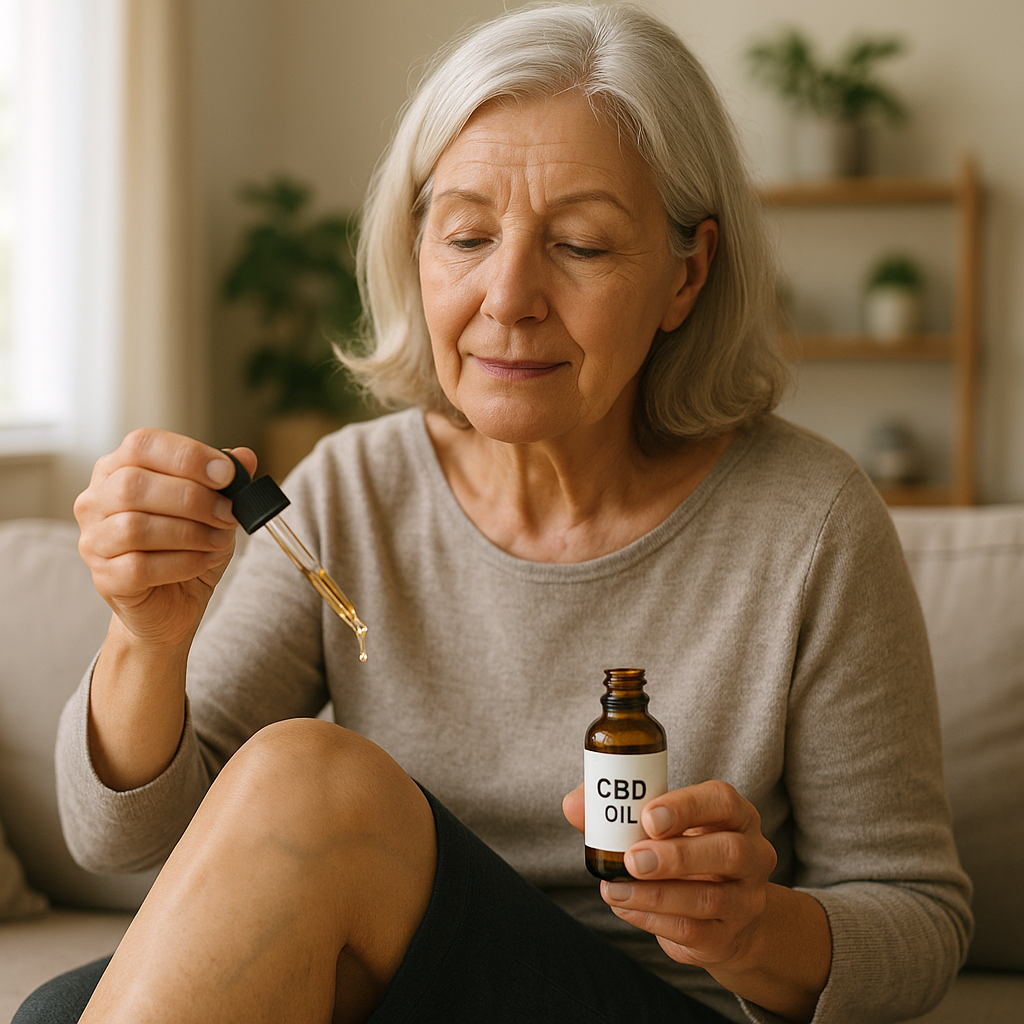
CBD Oil for Joint Pain and Inflammation: Does It Really Work? A Chiropractor’s Deep Dive
It was my neighbor, Linda, who first pressed a little blue bottle into my hands. She’d just returned from a wellness expo, clutching a sample of CBD oil and raving—somewhat skeptically—about her newfound knee comfort. “You’re the spine guy, doc,” she said, “Is this stuff legit?”

Look, if you’re reading this, chances are you’ve heard similar tales. Maybe you’ve tried CBD oil yourself. Or maybe you’re baffled by the hype, wary of snake oil claims, and just want an honest answer: Can CBD oil really help with joint pain and inflammation—the kind that stalks you through the day and wakes you up at 3 a.m.?
Why Joint Pain and Inflammation Feels Like a Never-Ending Chore
I see it every day in my clinic. That dull, persistent ache in your knees, hips, or fingers. The frustration of canceling walks, skipping pickleball, or feeling ancient just getting out of bed. I know—I’ve watched as even the most stoic patients wince during basic movements.
The numbers don’t lie, either. Roughly 1 in 4 adults in the US (CDC, 2022) report chronic joint pain, often tied to osteoarthritis or old injuries that just won’t quit. And while NSAIDs and prescription medications help, they come with their own baggage—upset stomachs, foggy heads, and, let’s be real, nagging concerns about long-term safety.
So when something “natural” like CBD oil promises relief, it’s no surprise folks are curious. The big question: Is that curiosity justified?
What Is CBD Oil, Really?
Here’s the thing: CBD (short for cannabidiol) is a compound found in cannabis plants, but—important!—it doesn’t get you high. That’s THC’s department. CBD oil is usually extracted from hemp (not marijuana) and sold legally in most states.
But does “natural” mean safe? Not always. And does it mean effective? That’s the kicker—the science is catching up, but we do have some solid clues.
How CBD Might Help Your Joints (Without the Hype)
The real action happens inside your body’s endocannabinoid system. Yes, that’s a mouthful. In plain English: this system helps regulate pain, inflammation, and how your nerves transmit those signals. CBD interacts with receptors in this system—sort of like a volume knob for pain and swelling.
Animal studies have repeatedly shown CBD reduces inflammatory markers and dulls pain response (see Eur J Pain, 2016; Front Pharmacol, 2017). Human research? It’s still early days, but the trends are promising—especially for arthritis and chronic joint pain.
Let me give you a few specifics:
- 2017 (Pain journal): Topical CBD gel reduced joint swelling and improved limb movement in rats with osteoarthritis.
- 2020 (Arthritis Care & Research): In a survey of 2,600 arthritis patients, over half who tried CBD reported improvement in pain and physical function.
But here’s what most articles won’t tell you: The gold standard—large, double-blind human trials—are still few and far between. Anecdotes abound, but reliable dosing and results? We’re still mapping those out.

Is CBD Safe for Daily Use? (And Who Should Be Cautious?)
I’ll be honest—CBD is gentler than most prescription painkillers. Side effects are usually pretty mild: dry mouth, drowsiness, maybe some digestive quirks. But (and this is a big but) CBD can interact with blood thinners, seizure meds, and certain antidepressants. If you’re on regular prescriptions, have liver issues, or are pregnant, talk to your doctor before experimenting.
And quality matters—a lot. The CBD world is still the Wild West. I’ve seen products tested that contained way less (or more) CBD than the label claimed. Some even had trace THC or contaminants. Stick with brands that share real lab reports—no exceptions.
How Do People Use CBD Oil for Joint Pain?
Here’s where it gets interesting. Most folks go one of three routes:
- Topical applications: Creams, balms, or oils massaged directly into the joint. These target the pain locally—great for knees, hands, or elbows.
- Oral CBD oil: Dropped under the tongue or mixed into food. This seems to offer broader (if sometimes milder) relief and may help with sleep issues tied to pain.
- Capsules and gummies: Easier dosing but generally slower-acting.
Most people start with 10-25mg of CBD per dose, once or twice daily. Some need more, some less. My advice? Start low, go slow, and keep a symptom diary for a week or two. It’s not an instant fix, but you’ll know if it’s helping.
Combining CBD with Other Natural Pain Strategies
This part is close to my heart—because no oil, cream, or pill will do all the heavy lifting. The best results I see are with an integrated approach:
- Compression support: A quality knee or elbow brace (like the Modvel Compression Knee Brace) helps stabilize sore joints so you can stay active. I like that these come as a pair and don’t slide down mid-walk.
- Moist heat therapy: Devices like the Pure Enrichment PureRelief XL Heating Pad are game-changers for stiffness. The moist heat gets deep into tissues—it’s what I use after a long day on my own cranky back.
- Joint-friendly supplements: There’s some decent, if mixed, evidence for glucosamine and turmeric blends. I like formulas that combine these with MSM and Boswellia, such as Glucosamine Chondroitin Turmeric MSM & Boswellia, especially for folks wanting a plant-based approach.
CBD oil can slot right alongside these strategies. A few patients even remark that using a topical CBD balm before slipping on their knee brace gives them an extra hour on their feet. I’m not saying it’ll work for everyone, but when it clicks, it’s a real win.
What the Research Says—and Where It Falls Short
This wouldn’t be a true deep dive if I didn’t lay out the science—and its limits. Yes, preclinical research is overwhelmingly positive, and small human trials (like the 2020 Arthritis Care & Research survey) suggest real benefit.
But here’s the rub: we need more high-quality studies. Ideal dosing, long-term safety, specific types of pain—these are all questions still being sorted out. And CBD is not a cure for joint degeneration or advanced arthritis. It’s a tool, best used as part of a broader toolkit.
I had a patient, Jim, who tracked his progress meticulously for two months. He found that oral CBD oil (30mg nightly) allowed him to halve his ibuprofen, sleep through the night, and finally get back to tending his tomatoes. But his wife? Barely noticed a difference. That’s the pattern: response varies and expectations must be realistic.

Who Should Consider CBD Oil for Joint Pain (and Who Shouldn’t)
If you’re struggling with stiffness, lingering pain from arthritis or injury, and standard over-the-counter meds aren’t cutting it—or are causing more trouble than they’re worth—CBD oil is worth a shot. Especially if you value gentler, plant-based options.
But be smart. If you’re taking prescription blood thinners, have a liver condition, or are pregnant/nursing, put safety first. Always talk to your doctor or pharmacist. And remember: if it sounds too good to be true (“cures arthritis in days!”), it probably is.
Tips for Choosing Quality CBD Oil
This is where most folks trip up. The market is full of sketchy products. Here’s my checklist:
- Third-party lab results (COA): Must be batch specific. No COA, no purchase.
- Clear CBD content: Check the mg per serving, not just “hemp extract.”
- No wild health claims: Avoid companies promising miracles. That’s a huge red flag.
- Minimal, transparent ingredients: You want pure carrier oil (like MCT or hempseed) and CBD—no mystery additives.
And buy from reputable sources—not just random social media links. In my own household, we’ve experimented with both local dispensary products and top-rated online brands, and there’s a world of difference in consistency and effect.
What Does Realistic Relief Look Like?
Here’s where the rubber meets the road. If you’re expecting instant, complete pain erasure, you’ll be disappointed. But if you’re looking for:
- a reduction in daily pain (often 20-40% less by week three, per patient logs)
- better sleep (several of my patients stopped waking from pain at night)
- a bit more flexibility, especially in the morning or after sitting
—then CBD oil might be worth a try. Especially when paired with smart movement, compression sleeves, and heat therapy.
The Bottom Line (And My Best Advice)
I know some colleagues scoff at CBD, and fair enough—there’s still more research to be done. But I’ve seen enough “before and after” stories in my own practice to say this: For a subset of folks with chronic joint pain and inflammation, CBD oil can be a meaningful part of the puzzle. Not a cure. Not for everyone. But far from snake oil, either.
If you’re nodding along and ready to experiment, start low and track your progress. And always, always verify your source.
Got questions about integrating CBD with your current therapy, or want a real-world success story? Reach out. I’ve got more than a few to share—and a few cautionary tales, too.
Here’s to moving forward, one (less-painful) step at a time.
Dr. Michael Torres, DC
Chiropractor, Nutrition Counselor, and Joint Relief Columnist