
Can CBD Oil Really Ease Joint Pain and Inflammation?
I’ll never forget the email I got from a reader in Ohio. He wrote: “Karen, my knees have been killing me. Ibuprofen tears up my stomach, but a neighbor swears by CBD oil. Is there anything to it, or is this just snake oil with better branding?”
If you’ve found yourself staring at those tiny CBD oil bottles at the pharmacy — stomach in knots, joints throbbing — wondering if you should finally try it, you’re in good company. The market’s exploded, the promises are everywhere, and the actual science? Well, that’s where things get interesting.

Joint Pain Isn’t Just “Getting Older” — It’s Exhausting
Here’s the thing: joint pain and inflammation can just grind you down. I’ve covered rheumatoid arthritis and osteoarthritis for 17 years, and the stories always circle back to the same themes — frustration, sleep problems, and that nagging sense you’re missing out on life because your knees or hands or hips just won’t cooperate. (My own mother-in-law used to call her flare-ups “weather forecasts.”)
But whether you’ve got a diagnosis or just those suspicious morning aches, you want relief. And maybe, like millions, you’re hesitant about prescription drugs — or your stomach simply can’t take another round of NSAIDs.
What Exactly Is CBD Oil?
Let’s clear this up fast. CBD — cannabidiol — is one of over 100 active compounds found in cannabis. It’s not the part that gets anyone high (that’s THC), and since 2018, hemp-derived CBD (with under 0.3% THC) is legal at the federal level in the U.S. Most products you see at the store — tinctures, gummies, creams — are made from industrial hemp. No prescription required.
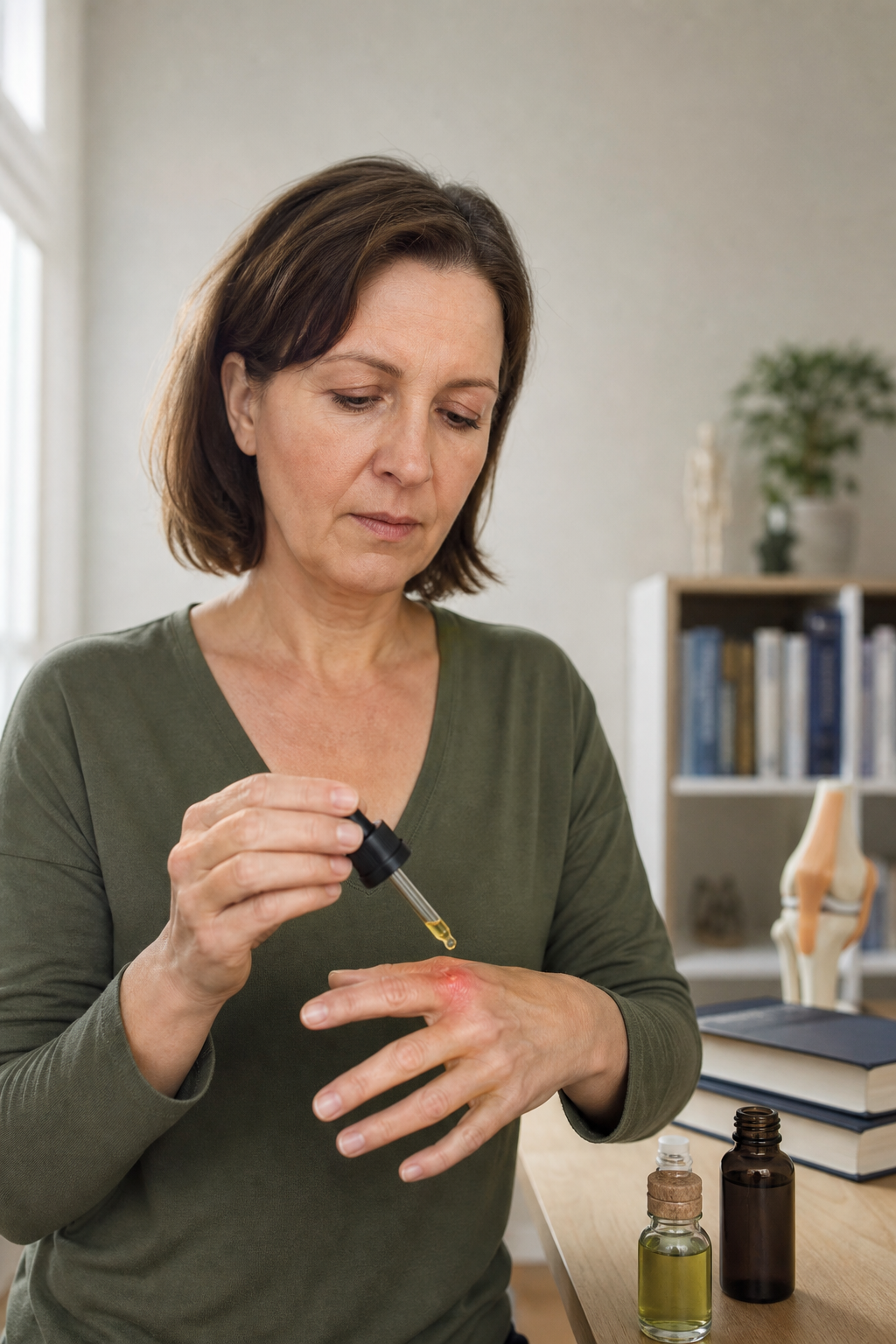
What’s important: CBD oil can be taken under the tongue, swallowed, or applied topically. And yes, the “oil” part just means it’s dissolved in a carrier oil like MCT, olive, or hempseed.
How CBD Might Help with Joint Pain and Inflammation
Let’s talk about why people — and increasingly, researchers — are actually interested in CBD for joint pain. The theory centers on your own body’s endocannabinoid system, a network involved in pain signaling, immune response, and inflammation. Several lab studies (including a 2017 review in Pain) suggest CBD can influence these pathways, potentially dialing down inflammation and pain sensitivity.
But here’s the real kicker: animal studies have been surprisingly promising. A 2016 paper in European Journal of Pain found that topical CBD gel reduced joint swelling and pain behavior in rats with arthritis. Human studies, though, are just beginning to catch up.
What the Research Really Says — And What It Doesn’t
I’ll be honest: most headlines you see about “proof” for CBD and arthritis come from lab and animal research. In actual humans, the gold-standard trials are thin — but not nonexistent. Here’s what we do know:
- 2018, Journal of Clinical Medicine: A small pilot study found that patients with knee osteoarthritis reported noticeable reductions in pain after using topical CBD oil, compared to placebo. No serious side effects noted. But — and this is big — it only tracked 29 people, for 12 weeks.
- 2020, Current Rheumatology Reports: Reviewed all available CBD trials in arthritis and chronic pain. Conclusion? "Preliminary evidence" for pain relief, especially sleep and stiffness improvements, but larger studies are urgently needed.
- Patient surveys: The Arthritis Foundation’s 2019 poll found 29% of arthritis patients had tried CBD; most said it improved sleep and pain, but only 12% reported it helped “a lot.”
So no, CBD oil is not a miracle cure — and if your doctor tells you there’s “not enough long-term data,” they’re right to be cautious. Still, the safety profile is reassuring (mild drowsiness and dry mouth for most, potential medication interactions for some — more on that in a second).
The Elephant in the Room: Is CBD Legal, Safe, and Regulated?
Here’s where most articles get squeamish. Yes, hemp-derived CBD is legal federally, but the FDA doesn’t regulate supplements the way they do drugs. Quality varies — wildly. That means some bottles contain the advertised dose and are free of contaminants, while others... not so much.
I always tell readers: Look for products with third-party testing (sometimes called a “COA,” Certificate of Analysis). This is especially critical if you’re taking other medications, pregnant, or have liver disease. And always run new supplements past your doctor or pharmacist, especially if you’re on blood thinners, anticonvulsants, or certain antidepressants. Safety matters more than hype.
How to Actually Use CBD Oil for Joint Pain
Not gonna lie, the range of choices can make your head spin. Oils, balms, roll-ons, capsules, even bath salts. Here’s what matters most for joint pain and inflammation:
- Topical vs. Oral: Most folks with isolated joint pain (think knees, hands, ankles) do well with topical creams or oils. You rub it right where it hurts — less systemic absorption, fewer drug interactions. For widespread pain (like fibromyalgia, or diffuse arthritis), oral drops or capsules might be better, but take longer to kick in.
- Dosage: There’s no official “arthritis dose,” but studies often use 10-40mg of CBD per dose, 1-2 times daily. Start small (5-10mg), see how you feel, and work up. For topicals, a pea-sized amount to the sore joint, repeat 2-3 times daily.
- Timing: Topicals work fastest — relief in 15-45 minutes, usually lasting a few hours. Oils or capsules may take an hour or two. Consistency helps: if you’re going to try, stick with it for at least 2-4 weeks before judging.
One reader, Deb from Atlanta, told me she swears by a 500mg CBD roll-on after her morning walk, but gets more relief when she pairs it with gentle stretching and an Epsom salt soak. (See? CBD isn’t magic on its own, but it can fit into a bigger self-care routine.)
What to Combine — And What to Avoid
CBD might play nicely with other joint relief tools. For instance, I’ve heard from folks who use a compression knee sleeve over a thin layer of CBD balm, and swear the combo helps them walk farther without pain. One product that comes up a lot in my inbox is the Modvel Compression Knee Brace — it’s affordable, doesn’t slide down, and gives your joint a bit of gentle support while topical solutions get to work.
Some people use heating pads after applying CBD oil to “drive it in” — but there’s zero evidence that actually helps absorption. That said, the soothing heat from something like the Pure Enrichment PureRelief XL Heating Pad is fantastic for stiff joints and muscles, CBD or not. (I personally use it after long writing days — my shoulders thank me.)
Please — avoid using CBD with other products that cause drowsiness or slow your breathing, unless you’ve cleared it with your doctor. And don’t use CBD topicals on broken skin or open wounds.
The Unpopular Truth: It May Not Work for Everyone
I know this is unpopular, but CBD isn’t a guaranteed fix. Some people notice a big difference in their joint pain and swelling; others just don’t. Genetics, type of arthritis, dosage, even placebo effect — all play a role.
That said, side effects are usually mild (fatigue, dry mouth, sometimes diarrhea), and serious reactions are rare. The 2020 BMJ Open review concluded CBD is “well-tolerated by most adults” when used for up to 13 weeks. Still, anyone with liver disease or on complex meds should check with their provider first.
Shopping Tips: How to Avoid CBD Disappointment
- Check for third-party lab results (COA). If a brand won’t provide them, skip it.
- Look for clear labeling of CBD content per serving, not just “per bottle.”
- Full-spectrum (a wider range of plant compounds, trace THC) vs. broad-spectrum (THC-free) vs. CBD isolate. For pain, some evidence suggests full- or broad-spectrum works better — the "entourage effect." But if you have to pass a drug test, stick with isolate.
- Start low, go slow — and keep a symptom diary. (It sounds tedious, but it’s how you know what actually works for you.)
- Consider price per mg of CBD, not just per bottle. The cheapest option is rarely the most effective.

CBD Oil vs. Other Joint Pain Solutions: How Does It Stack Up?
Here’s where the comparisons get fun — and a little controversial. I’ve reviewed dozens of arthritis products, and I’ll say this: CBD oil is not a replacement for disease-modifying drugs if you have inflammatory arthritis (like RA or psoriatic arthritis). It’s also not a substitute for physical therapy, gentle exercise, or anti-inflammatory diets (which do help).
But for folks who can’t tolerate NSAIDs, or who just want a safer “add-on” tool for occasional pain, CBD oil is worth a trial. Topicals like Voltaren gel (Voltaren Arthritis Pain Gel) remain the most clinically proven OTC option — multiple 2018 studies in Arthritis & Rheumatology show it can rival oral ibuprofen for hand and knee OA. But Voltaren doesn’t work for everyone, and long-term use isn’t always practical.
Supplements like glucosamine, turmeric, and MSM have a checkered evidence base — some people swear by them, others see no change. I usually suggest a trial of one supplement at a time, tracking symptoms. Most importantly: they can all “stack” — you can use CBD, Voltaren, and a knee sleeve safely (just not all at once in the exact same place without checking for interactions or skin irritation).
What Real People Are Saying
I hear from a lot of you. Here’s a snapshot:
- Angela, 62, Michigan: “CBD cream helps me open jars again. Not perfect, but I’ll take it over more pills any day.”
- Mike, 48, California: “Did nothing for my back, but the tincture does take the edge off my foot pain after long shifts.”
- Sarah, 71, Texas: “I use Voltaren first, then CBD balm if I still hurt. The combo gets me through gardening.”
If you’re nodding along, you’re not alone. But if CBD does nothing for you, don’t feel like you failed. The variability is real, and that’s why more research is coming fast and furious.
Final Takeaways: Is CBD Oil Worth a Try for Joint Pain?
So, does CBD oil help joint pain and inflammation? For some, yes — especially when it’s part of a bigger routine including movement, rest, and tried-and-true basics like gentle heat or compression. (I still reach for my heating pad more often than the CBD cream, if I’m honest.)
Start conservatively, use trusted brands with verified third-party testing, and always loop in your doctor or pharmacist if you have medical questions. For those who do find relief, it can be a game-changer — even if the science is still catching up.
And if CBD isn’t your thing? That’s okay. There’s no “one size fits all” in joint pain relief. But for many, the experiment is worth it.
Take care of those joints — we only get one set. I’ll keep tracking the evidence so you don’t have to.
Karen Whitfield
Veteran health journalist, joint health advocate, and researcher for JointReliefReviews.com