
The Moment That Changes Everything
I’ll never forget the call from my friend Mark. He’s a big, tough guy—ex-army, always quick with a joke. But this time, his voice cracked: “Mike, my knee is killing me. Doc says it’s bone on bone. Is there anything—seriously, anything—that actually helps?”
And that’s the question millions of folks ask after hearing those ominous words from their doctor: you’ve got bone on bone knee pain. Osteoarthritis that’s gone past the point of “a little wear and tear.” It’s a game-changer—and not in a good way.

Why Bone on Bone Knee Pain Feels So Unfair
If you’re nodding along, you’re not alone. The reality is, once cartilage wears away and bone rubs on bone, simple things become a struggle: walking to the mailbox, getting up from a chair, even sleeping. I’ve had patients who, honestly, looked more exhausted from the constant pain and grinding fatigue than anything else.
Here’s the other gut-punch: there’s a lot of hype online, but very few real solutions. You’ll see miracle cures, misleading “before and afters,” and dozens of supplements with more marketing than data. No one needs more false hope. You want relief that makes a real, daily difference—something that helps you walk, sleep, and live again.
How Does It Happen? The Science, Minus the Jargon
Let’s clear up what “bone on bone” really means. In a healthy knee, you’ve got a layer of cartilage—think of it like soft padding—between the femur (thigh bone) and tibia (shin bone). But with osteoarthritis, that padding erodes. Eventually, the hard bones grind directly against each other. Ouch doesn’t even begin to cover it.
And when this happens, it’s not just pain. You get inflammation, swelling, reduced mobility, and those ominous crunching or locking sensations. The 2020 Journal of Rheumatology review put it bluntly: severe cartilage loss leads straight to chronic, disabling pain and function loss. No sugar-coating.
Fun fact (or not-so-fun, depending on your perspective): according to the CDC, over 32.5 million Americans suffer from osteoarthritis, and advanced “bone on bone” knees are a big chunk of that.
Treatments That *Actually* Help: The Real-World Shortlist
Before we get too deep, a quick reality check: there’s no magic bullet. But there are options that make life better. I’m going to be honest—not all of them are glamorous. Some are surprisingly simple. And a few, frankly, are under-appreciated by the mainstream.
1. Physical Therapy and Targeted Exercise (Don’t Roll Your Eyes Yet)
Look, I know: “Exercise” sounds like a cruel joke when moving hurts. But here’s where it gets interesting. Numerous studies (see: Arthritis Care & Research, 2016; BMJ, 2015) show that strengthening the muscles around the knee—even with bone on bone arthritis—reduces pain and boosts function. It’s not about running marathons; it’s about targeted, gentle movements that build support.
My personal pick? The home-based program from Treat Your Own Knees by Jim Johnson—simple, research-backed, and actually doable at home. I’ve handed out copies to dozens of patients, and my own mother-in-law swears by it. (She’s not easily impressed.)
- Why it works: You strengthen the quads, hamstrings, and hips, so your knee joint isn’t doing all the work.
- Bonus: Improves balance, which cuts fall risk—a big deal as we age.
Big caveat: always talk to your doctor or PT before starting any exercise, especially if your knee is severely unstable.
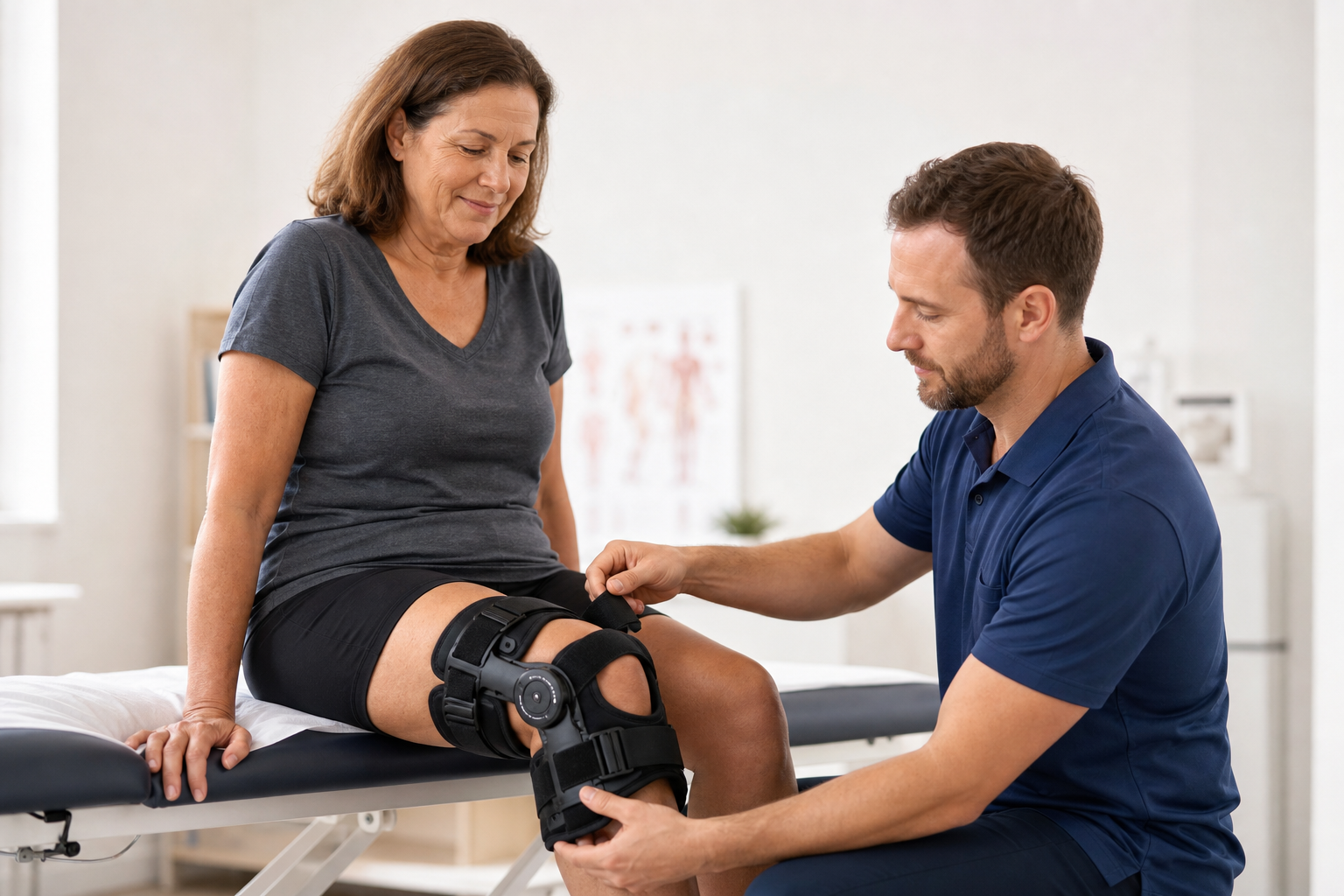
2. Bracing and Compression: The Right Support Can Change the Game
Ask any orthopedist: a good brace can be a life-saver during flare-ups. But there’s a big difference between those stretchy drugstore sleeves and true medical-grade supports. I’ve seen folks limp into my office in a $10 neoprene sleeve and walk out with a real brace that lets them get through the grocery store again.
If you need everyday support, I usually steer patients toward the NEENCA Professional Knee Brace. Why? Side stabilizers, patella gel pad, actual adjustability—it’s not flimsy. Of course, it’s not as “cool” as custom $300 orthotics, but for $25, it’s a surprisingly big upgrade.
- Compression sleeves (like the Modvel pair) help with mild swelling and can be good for exercise sessions.
- Rigid braces provide more lateral support and can help realign the joint, which eases grinding pain.
But here’s the thing: no brace is a substitute for muscle strength. Think of it as a helper, not a cure.
3. Topical and Oral Pain Relief: What Works (And What’s Overhyped)
Sometimes you just need to take the edge off. Topical NSAIDs like Voltaren Arthritis Pain Gel genuinely help some people, especially with surface-level joint pain from osteoarthritis. The active ingredient, diclofenac sodium, is FDA-approved and has real data behind it (Arthritis & Rheumatology, 2016). No, it’s not a cure—but on bad days, it can mean the difference between making dinner and ordering takeout. My wife uses it on marathon gardening days.
Oral NSAIDs (ibuprofen, naproxen) help too, but long-term use is risky (think GI bleeds, kidney strain). For severe pain, doctors may prescribe stronger meds—a short-term fix, not a long-term plan.
Supplements? Here’s my controversial take: glucosamine and chondroitin are hit-or-miss. The 2018 meta-analysis in JAMA showed mixed results; about 10-20% of people seem to get mild pain relief at doses like 1500mg glucosamine sulfate daily. Worth trying, but don’t mortgage the house for it.
4. Heat, Ice, and Activity Modification
Old-school, but essential. Heat (via compresses or a microwavable pad) relaxes stiff muscles and boosts circulation. Ice (10-20 minutes after flare-ups) cuts inflammation. Don’t get fancy—often, it’s the consistent, boring stuff that adds up.
And don’t overlook what I call “activity editing.” You don’t need to climb Everest, but finding a happy medium—staying active without overdoing it—protects your knee from further damage.
5. Injections: The Real Picture
Corticosteroid shots can knock down inflammation for a few weeks or months. But repeated use may speed up cartilage loss (Radiology, 2019). Hyaluronic acid injections (“gel shots”) are a mixed bag—some folks swear by them; others feel nothing. Insurance doesn’t always cover them, and the evidence is, honestly, lukewarm.
6. Surgery: When It’s Time (And When It’s Not)
Total knee replacement is the nuclear option. For some, it’s life-changing—86% success rate at one year, per Annals of Internal Medicine, 2022. But it comes with risks: infection, blood clots, and, sometimes, persistent pain. I always urge patients: try everything else first, and only consider surgery when mobility and quality of life flatline.
What About Alternative Therapies?
Here’s where I get reader emails loaded with questions: “What about acupuncture? Stem cells? Platelet-rich plasma?”
- Acupuncture offers short-term pain relief for some (2019 BMJ review), but isn’t a structural fix.
- Stem cell and PRP injections are still experimental—and expensive. Some early promise, but lots of hype. Most insurers consider these “investigational.”
But hey—if something works for you and doesn’t drain your bank account or carry big risks, I’m all for it.
Real-World Tips for Living With Bone on Bone Knees
Managing this isn’t just about products or procedures. It’s about small wins that stack up over time. Here are a few strategies my patients swear by (and, frankly, so do I):
- Weight Loss: Every pound lost takes 4 pounds of pressure off your knee joint. Even a 5% weight loss can cut pain dramatically (Arthritis Care & Research, 2018).
- Supportive Shoes: Ditch the heels. Go for cushioned, stable sneakers.
- Raised Toilets and Chairs: Makes standing/sitting easier and less painful—small upgrade, big difference.
- Mobility Aids: Don’t be too proud for a cane or walker during flare-ups. It’s not defeat; it’s smart protection against falls.
- Mind-Body Techniques: Guided imagery, meditation, or CBT can help break the pain-anxiety cycle.

What I Tell My Own Family: Honest Advice
Mark—the friend I mentioned at the start—ended up using a mix: daily strengthening from that Treat Your Own Knees book, a serious brace, Voltaren gel for bad days, and—most importantly—accepting that his knee had limits. He staved off surgery for three years and stayed active, golfing and (occasionally) chasing his grandkids.
Is he “cured”? No. Does he move better and suffer less? Absolutely. That’s the real win. And most doctors won’t promise perfection, but they will help you stack up enough small wins for a better quality of life.
Final Takeaways: Your Best Path Forward
- Don’t buy into miracle cures. If it sounds too good to be true, it probably is.
- Consistent, targeted exercise—backed by real research—remains the single most effective way to slow progression and reduce pain.
- The right brace and topical relief can get you through tough days.
- Stay open to multiple strategies—sometimes the best plan is a mix.
You’re not alone in this, and you’re not out of options. Take it one step, one day, one small victory at a time. And talk to your doctor before starting any new regimen—especially with advanced joint damage or other health concerns.
If you’ve tried a strategy that surprised you—good or bad—drop me a note. Those real-world stories are gold, and they help all of us find a little more hope.
— Dr. Michael Torres, DC
Chiropractor, Nutrition Counselor, JointReliefReviews.com