
CBD Oil for Joint Pain and Inflammation: What the Science (and Real People) Are Saying
I’ll be honest—when CBD oil first started popping up everywhere a few years ago, I rolled my eyes. Another “miracle cure”? Please. But then, the emails started coming in—folks in their 50s, 60s, and even 80s asking me if this stuff could help soothe their joint aches when nothing else worked. One reader, Doug from Portland, told me CBD was the first thing that let him take a full walk around the block in months. Color me surprised.

I Get It—Living with Joint Pain Isn’t Just “Aging”
If you’re reading this, you’ve probably tried everything: ice packs, heating pads, doctor’s visits, maybe even prescription meds or surgery consults. You wake up stiff. You dread the stairs. Gardening, dancing, even simple walks get replaced by “maybe tomorrow.”
Look, I’ve spent over a decade as a physical therapist and strength coach. I know firsthand that chronic joint pain is more than an inconvenience. It messes with your hobbies, your sleep, and even your mood. And it’s not just “wear and tear” or “part of getting older”—it’s inflammation gone wild, cartilage breaking down, and nerves sounding off like an alarm system that won’t quit.
So when a natural remedy like CBD oil shows up promising relief, skepticism is healthy. But curiosity is allowed, too.
What Exactly Is CBD Oil? (And Why’s It Supposed to Help?)
Here’s the thing: Cannabidiol, or CBD, is a non-psychoactive compound from the cannabis plant. No, it won’t get you high. It’s chemically distinct from THC (that’s the part that messes with your head). The big idea? CBD interacts with your body’s endocannabinoid system (ECS)—a network of receptors influencing pain, inflammation, and how you feel stress or discomfort.
Scientists only started looking closely at the ECS in the 1990s (crazy, right?). Turns out it helps regulate inflammation and pain signaling. CBD seems to boost the body’s own “chill out” signals, quieting pain messages and reducing inflammatory responses at the joint level. That’s the theory, anyway.
But what about real proof?
CBD Oil and Joint Pain: What the Research Actually Shows
If you look at PubMed, you’ll find thousands of CBD studies—but most are on animals or test tubes, not humans with arthritis. Still, some early findings are promising:
- One 2016 study in European Journal of Pain rubbed CBD gel onto rats with arthritis. Their joint swelling and pain behaviors dropped by over 50%—with zero side effects.
- A small 2020 study in Arthritis Care & Research followed 29 people with knee osteoarthritis using topical CBD. After 12 weeks, those using CBD had a “trend toward improvement” in pain scores—especially notable at higher doses (up to 250mg per day), but the placebo effect was strong here, too.
- The Journal of Rheumatology (2019) surveyed arthritis patients—80% who tried CBD reported some symptom relief; around 30% said it helped “a lot.” Not controlled science, but that’s a big number.
What’s missing? Huge, gold-standard clinical trials on humans. But anecdotally, the “CBD crowd” is vocal. In my own inbox, I hear more positive than negative—from folks using it for knees, hips, even fingers.

Why Conventional Treatments Sometimes Fall Short
The tough truth is, standard painkillers like NSAIDs (think: ibuprofen or naproxen) carry risks—especially long-term. I’ve seen clients wind up with stomach ulcers, blood pressure spikes, or even kidney issues after months or years of daily use. Prescription options like opioids? Don’t get me started—addiction risk, groggy mornings, and they don’t even help inflammation much.
Other methods—heated pads, topical gels, compression sleeves—can absolutely help. (I still recommend Voltaren Arthritis Pain Gel for localized relief. Diclofenac sodium is legit; see the 2018 BMJ meta-analysis.) But these aren’t systemic solutions; they wear off, and not everyone gets full relief.
How People Actually Use CBD Oil for Joint Pain
Unlike a quick Tylenol, CBD comes in lots of forms:
- Oils/tinctures: Place drops under your tongue for fastest absorption. This is what most people picture when you say "CBD oil." Typical starting dose: 10-20mg once or twice daily.
- Topicals: Creams, balms, or roll-ons, rubbed directly on sore joints. This is great for knees, wrists, or fingers—especially if oral supplements upset your stomach.
- Capsules: Predictable dosing, easy travel, but slower to kick in. I’ve had older clients prefer these because they “don’t like the taste.”
Dosing is personalized (and can get confusing). The Arthritis Foundation—yes, the big one—recommends starting low (5–10mg twice daily) and going up slowly, not exceeding 70mg per day without your doctor’s blessing. I agree. I’ve seen folks do well on as little as 20mg a day—others need 50mg or more for stubborn pain.
What to Watch Out For: Quality, Legality, and Side Effects
Here’s where it gets interesting. The CBD market is the wild west. Not every bottle on the shelf contains what it claims. In 2017, the Journal of the American Medical Association found that 70% of online CBD products were mislabeled—either too much, too little, or contaminated with THC. Yikes.
If you’re going to try CBD, only buy from companies that provide third-party lab results (often called a COA—certificate of analysis). These prove your oil is pure, contains the advertised amount, and doesn’t sneak in THC or heavy metals. Look for "full-spectrum" (includes minor cannabinoids) or "broad-spectrum" (THC-free) options, depending on your sensitivity or local laws.
Legally, CBD from hemp (<0.3% THC) is federally allowed in most US states, but local laws vary. Always check. Never buy something you’re not comfortable with.
Side effects? Generally mild: dry mouth, mild sleepiness, and sometimes, changes in appetite. (I remember my mother-in-law giggling that it made her crave pretzels—she’s not alone.) But if you’re on blood thinners or heart meds, talk to your doctor first—CBD can interact, especially at higher doses.
Does CBD Oil Work for Everyone?
I know this is unpopular, but: No. Some people feel nothing. Maybe 1 in 4, by my count, in emails and client check-ins. Why? Genetics, severity of inflammation, and—let’s be real—expectations. It’s not a magic fix. For many, it’s a nudge: less pain, more comfortable movement, better sleep. That’s real, but not a cure-all.
Real Stories, Real Relief
I’ve had readers in their 70s email me about finally being able to garden again after a month on CBD. My neighbor Ed—bad sciatica, two knee surgeries—swears by a twice-daily tincture. But there’s also my buddy Jan, who tried two brands with zero change. Again, this stuff isn’t universal.
Stacking CBD with Lifestyle Tweaks: What Actually Moves the Needle
I’d never tell a client to rely solely on a supplement (CBD or otherwise) for joint pain. Here’s a formula I’ve seen actually work:
- Movement: Gentle daily exercise—think walking, tai chi, or water aerobics—reduces stiffness better than any bottle. If you want structured home routines, I like the book Treat Your Own Knees. Nothing fancy, just solid science-based moves.
- Compression: For knees or elbows, a supportive sleeve can be a game-changer for swelling and confidence. The Modvel Compression Knee Brace is one of the most affordable and best-rated I’ve seen. Over 75,000 reviews—hard to argue with that.
- Anti-Inflammatory Diet: More fish, greens, and turmeric; less sugar and processed snacks. Combine this with CBD and, in my experience, the results are better.
- Therapeutic Heat/Cold: Classic for a reason. Heat before activity, ice if you’re swollen after. Still, topical CBD balms can sometimes bridge both worlds for those who prefer “natural.”
The real kicker? When people combine these basics with a high-quality, correctly dosed CBD oil, I see more “wins” than with anything else alone.
The Big Questions: What Brand? What Dose? How Long Until I Feel It?
Here’s what I tell my own family: Buy CBD oil from a reputable source (insist on lab reports). Start with 10mg at night for a week. No effect? Try 10mg morning and night. Still nothing after two weeks? Try a topical CBD cream instead, up to 250mg per day on sore joints. If after a full month you’re not noticing easier movement, better sleep, or less pain, it might not be your answer.
Doses above 70mg/day (for oil) should be monitored by your doctor. If you’re still getting prescription painkillers, discuss CBD before combining—your pharmacist can check for interactions.
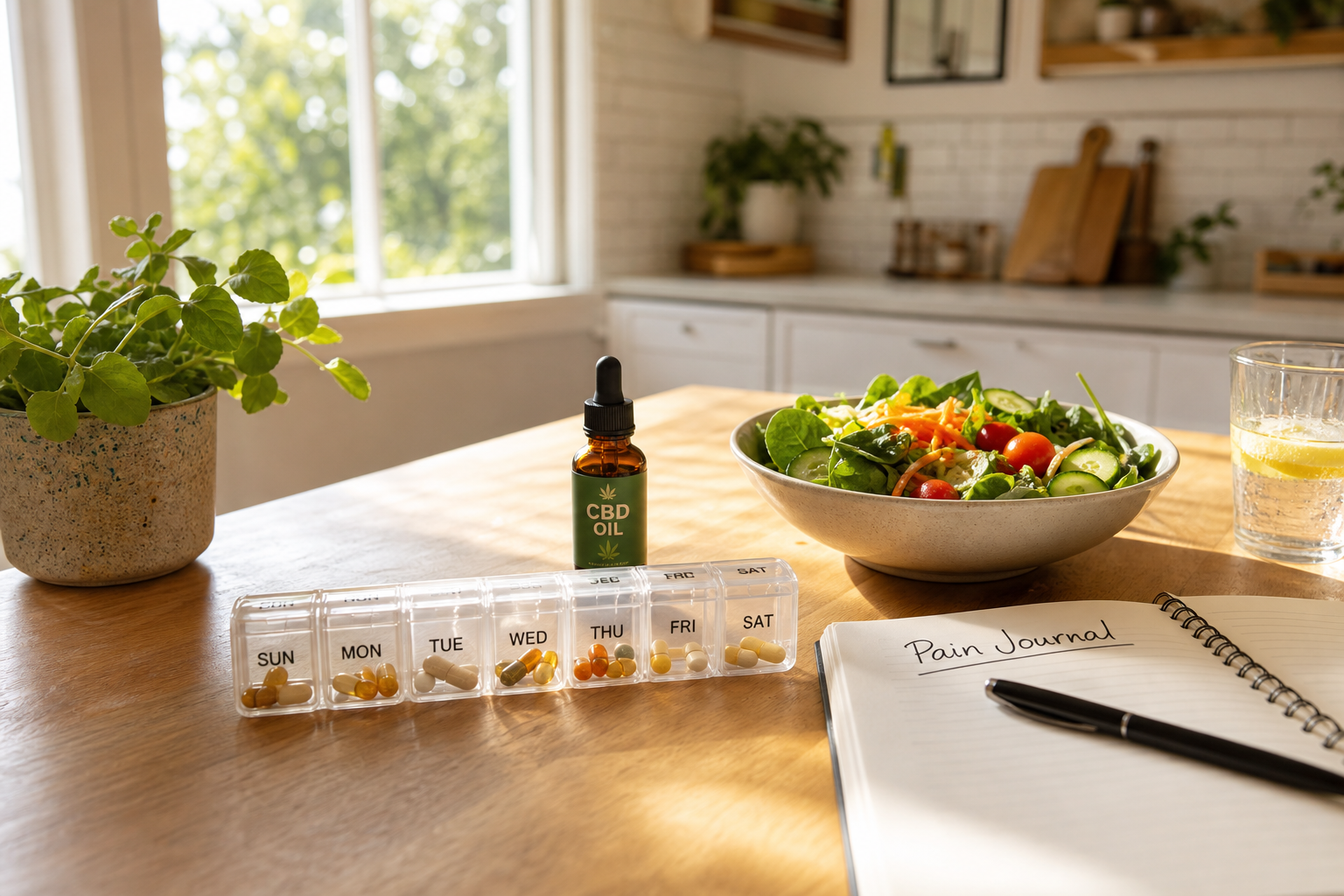
Relief can be subtle—a little more flexibility in the morning, less throbbing at night. For some, it hits in days; for others, it’s weeks. Patience is key, and so is tracking your pain with a journal.
Comparing CBD Oil to Other Popular Joint Supplements
This comes up constantly. “Should I bother with CBD or stick with glucosamine?” Short answer: they work differently. Glucosamine (usually 1,500mg daily) and chondroitin are most effective for cartilage preservation, especially in mild to moderate knee OA (see BMJ 2018). CBD seems to help with nerve irritation and inflammation more than actual cartilage repair. You can, in many cases, use both—but again, check with your provider.
Other natural options (like turmeric, MSM, or boswellia) have anti-inflammatory evidence, but their effects are usually milder than a high-quality CBD oil, based on user reports I see.
Takeaways: What I Really Think About CBD Oil for Joint Pain
Here’s my bottom line—CBD oil isn’t a miracle, but for many, it’s a meaningful tool. Especially if you:
- Struggle with chronic joint pain or inflammation that resists standard meds
- Hate the idea—or the side effects—of daily NSAIDs
- Want something natural to add to existing exercise or nutrition habits
But—don’t buy from just anyone. Stick with brands that show you lab results. Start low, go slow. And if you’re not seeing change after a month (or you feel weird side effects), move on. There’s no “one-size-fits-all.”
And no, it won’t fix bone-on-bone arthritis. But if stiffness, nerve pain, or swelling have you searching for something extra, it’s reasonable to consider.
Your Next Step
If you’re curious, talk with your doctor—especially if you’re on other medications. And track your symptoms honestly. Relief might not be dramatic, but a little less pain can mean a lot more living.
I’ll keep updating this column as more science comes out. If you try CBD oil (or already have), let me know what worked—and what didn’t. This is one area where real stories matter as much as the data.
Wishing you more pain-free days and brighter mornings,
James Chen, MS, CSCS
Joint Relief Reviews
Physical therapist, exercise science nerd, and relentless joint health advocate