CBD Oil for Joint Pain and Inflammation: What Science (and Real People) Are Saying
Three years ago, my neighbor Carol hobbled over after a particularly rough week with her knees. She flashed me a small amber bottle and said, "Sarah, does this CBD stuff really do anything for joint pain, or is it just snake oil?" That conversation stuck with me—not only because Carol is a firecracker (she's in her 70s, still bowls every Thursday), but because questions about CBD flood my clinic inbox almost daily. And the hype, frankly, is almost deafening.
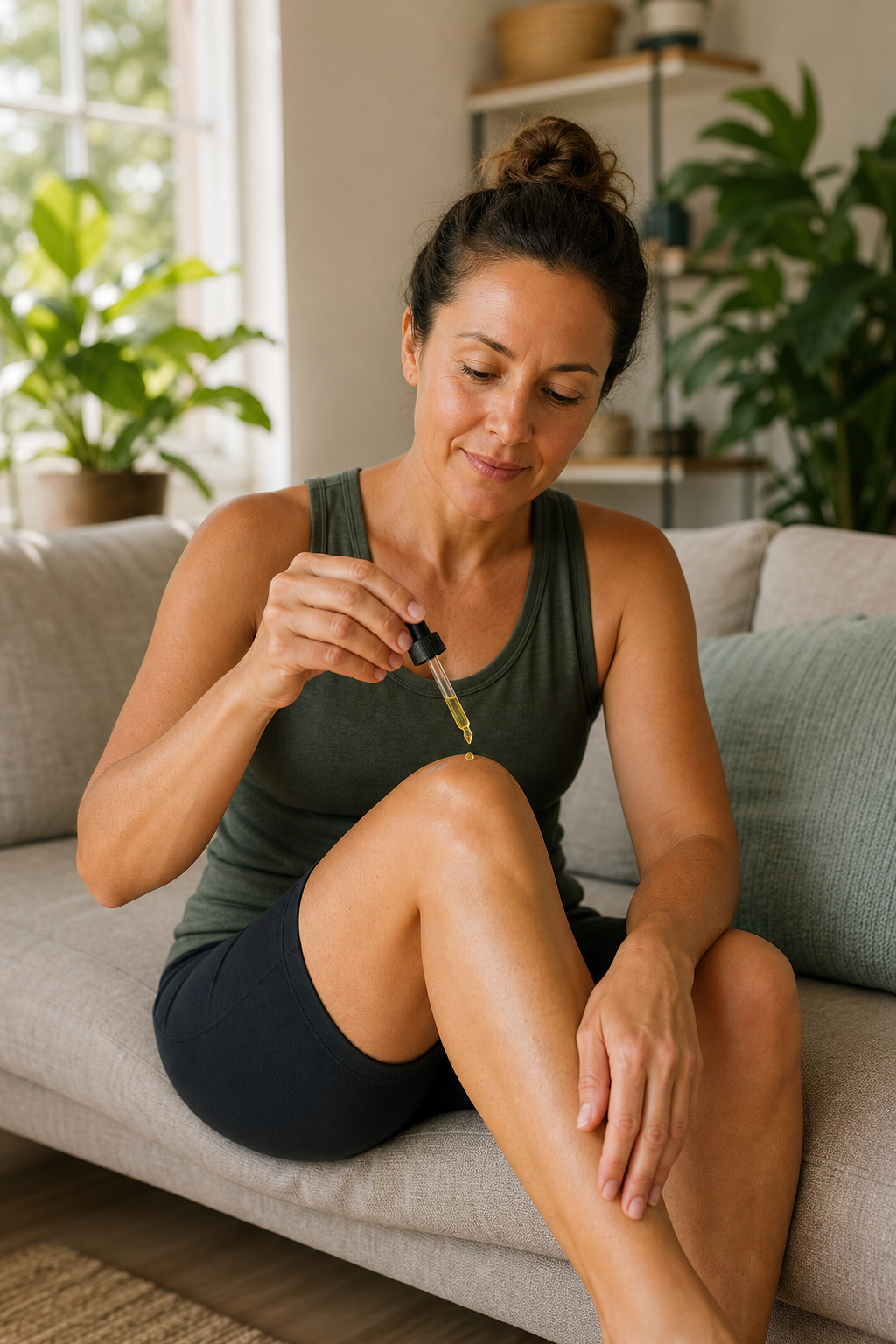
Why Joint Pain and Inflammation Are So Darn Frustrating
If you’re reading this with a knee throbbing or wrists stiff from last night’s sleep, I get it. I work with people every day—young, old, athletic, sedentary—who are desperate for relief. Joint pain isn’t just "ouch, that hurts"; it's the slow grind of not being able to grip a mug, bend down for the laundry, or climb the stairs without calculating every step. Add in swelling, and suddenly even your favorite walk around the block feels impossible.
Here’s the thing: the search for something—anything—that tones down inflammation and pain never really stops. NSAIDs? They help, but long-term use can mess with your stomach, blood pressure, even your kidneys. Physical therapy (yes, I’m biased) works, but it takes time, commitment, and sometimes progress is slow. So, when something “new” like CBD oil pops up, promising safe, plant-based pain relief, it’s no wonder people are curious.
What Actually *Is* CBD Oil?
First, the basics. CBD stands for cannabidiol—a compound found in the cannabis plant. Unlike its cousin THC, it won’t make you high. Most CBD oils come from hemp, not marijuana, so there’s almost no THC (<0.3% by law in the US).
CBD oil is usually sold in dropper bottles, softgels, or as part of a topical cream. You’ll see everything from "Full Spectrum" (which includes tiny amounts of other hemp compounds) to "CBD Isolate" (pure cannabidiol). Purity, strength, and sourcing vary wildly—I'll talk more about how to choose a decent one in a bit.
How Does CBD Oil Work for Joint Pain and Inflammation?
Here's where it gets interesting. CBD interacts with your body’s endocannabinoid system (ECS)—basically, a network of cell receptors and signaling molecules that help regulate pain, inflammation, sleep, and mood. (Don’t worry, I’m not going to take you back to high school biology.)
The short version: your ECS has receptors—mainly CB1 (in the brain, nerves) and CB2 (in the immune system, organs). CBD doesn’t "plug into" these like a key in a lock. Instead, it seems to modulate how these receptors respond, often by influencing other molecules involved in pain and inflammation.
The Journal of Pain published a 2020 review summarizing preclinical findings: in animal models, CBD reduced joint swelling, slowed down joint damage in arthritis, and dialed down inflammatory markers. Sounds promising...for mice. But what about humans?
What Does the Research Say? (Spoiler: It’s a Mixed Bag)
Okay, here’s the honest truth—most major human studies on CBD for joint pain are either small, preliminary, or focus on related conditions (like neuropathic pain or sleep). But let me break down what we do know:
- Osteoarthritis: A small 2019 trial (published in European Journal of Pain) used topical CBD in people with knee osteoarthritis. The patients using CBD reported reduced pain and improved function, but it wasn’t a home run for everyone. No serious side effects, though.
- Rheumatoid Arthritis: There’s some early data—like a 2022 open-label study in Arthritis Care & Research—suggesting CBD may lessen pain and sleep issues in people with RA. But dosing varied a ton (20-50mg daily, taken orally), and the study didn’t have a placebo group.
- General Chronic Pain: A 2022 meta-analysis in the BMJ looked at all cannabinoid studies for pain. The verdict? "Modest improvements," especially in sleep and quality of life, but not a miracle cure. Adverse effects (drowsiness, digestive upset) were generally mild.
Here’s the kicker: Many of my patients report the best results when CBD is combined with other therapies—gentle exercise, structured stretching, topical NSAIDs, heat, or compression sleeves. I’ll touch on the "cocktail approach" below.
So…Does CBD Actually Help Joint Pain?
I’ll be blunt: it depends. Some people see real relief—especially for milder, nagging pain or morning stiffness. Others notice little or nothing. Last year, one of my longtime clients (let’s call him Mike) tried a well-reviewed CBD oil for his post-meniscus repair knee pain. He told me it “took the edge off” enough to skip his afternoon ibuprofen, but didn’t erase flare-ups after a tough workout.
Several readers have messaged me similar stories—minor pain reduction, better sleep, less anxious tossing and turning. But it’s rarely dramatic. If a product promises instant, total pain freedom, run the other way. The science just doesn’t back that up—yet.
What to Look For in a CBD Oil for Joint Pain
Look, the market is flooded. I’ve reviewed dozens of brands—some great, some sketchy, and a few that left me asking, “Did they just bottle olive oil?” Here’s what I tell my family and patients:
- Third-party testing: Always check for a certificate of analysis (COA) from an independent lab. You want to see proof there’s the stated amount of CBD—and no heavy metals or pesticides.
- Full or broad-spectrum CBD: Oils with additional hemp compounds (terpenes, minor cannabinoids) sometimes offer better relief, thanks to the "entourage effect."
- Transparent sourcing: US- or EU-grown hemp is generally safer. Bonus points if the company shares farm details.
- Realistic dosing: Most studies use 20-50mg of CBD daily for pain. If the label says “1000mg,” check the serving size—it might be per bottle, not per dropper!
- No wild claims: If it says “Cure for arthritis!”—it’s likely all hat, no cattle.
One product that’s come up frequently in my reader emails is this popular hemp-derived CBD oil, which ticks all the above boxes for transparency and third-party testing. (Just a heads up, always talk to your doctor before starting any supplement, especially if you take other meds—CBD can mess with certain prescriptions.)
Ways to Use CBD: Oils, Topicals, and More
There’s a buffet of options now—tinctures under the tongue, softgels, edibles, even creams and patches. Here’s my take, after watching patients (and a few family members) experiment:
- Sublingual oils: Absorbed under the tongue, these hit the bloodstream faster. Good for overall pain/calming, but taste varies.
- Topical CBD creams/gels: Great for targeting a specific joint. A 2020 Journal of Rheumatology review found topicals may help with hand/knee pain, but effects fade after a few hours.
- Capsules and gummies: Convenient for consistent dosing, slower to act, and less flexible if you need to tweak your dose.
I’ve also had several folks try layering CBD oil with other approaches—say, applying a heating pad first, then a topical CBD cream (like the PureRelief XL Heating Pad). The warmth can boost absorption of topical ingredients and relax sore muscles. Win-win.
Lifestyle Tweaks: Don’t Rely on CBD Alone
Here’s where I’m going to sound like every physical therapist on earth: pain relief isn’t a one-pill—or one-oil—solution. CBD oil might help take the edge off, but the most lasting joint relief I’ve seen comes from a mix of:
- Gentle exercise: Walking, swimming, or light cycling keep joints moving and inflammation in check. (Yes, it’s counterintuitive, but the data backs it up.)
- Compression/support: A quality knee sleeve—like the Modvel Compression Knee Brace—can provide much-needed support, especially during activity or flare-ups.
- Supplements: Some people find extra relief with glucosamine/chondroitin or turmeric, but results are mixed. (Check with your doctor first!)
- Diet tweaks: Aim for anti-inflammatory foods (think berries, leafy greens, fatty fish), and minimize sugar and processed carbs.
One of my favorite quick resources for knee pain is Jim Johnson’s Treat Your Own Knees—it’s a little book, but packed with research-backed moves and practical tips. (Available on Amazon, if you’re a reader like me.)
Common Concerns (and Misconceptions) About CBD
I know some of you are wary—either it sounds too “woo-woo,” or you’re worried about legality, side effects, or addiction. Let’s take these one by one:
- Will CBD make me high? Nope. Pure CBD (from hemp) is non-intoxicating. If you’re drug-tested at work, check for THC-free formulas to be safe.
- Is it legal? Federally, yes (if it’s hemp-derived and under 0.3% THC). Some states have quirks, so check local rules.
- Is it addictive? No credible evidence says it is. In fact, some studies are looking at CBD for addiction management in other contexts.
- Are there side effects? Mild ones are possible: dry mouth, soft stools, tiredness. Rarely, it can interact with blood thinners or certain meds—again, check with your physician if you take prescriptions.
- How long until I feel relief? Some users feel subtle effects in 30–60 minutes (especially with sublingual oils or topicals), but for chronic pain, expect to give it a couple weeks. Track your symptoms in a journal—patterns help.

How Does CBD Compare to Other Joint Pain Options?
Here’s an unpopular (but honest) opinion: I don’t think CBD oil replaces tried-and-true treatments. What I do see is that it can fit into a "toolbox" approach. For example, for folks sensitive to NSAIDs or who can’t tolerate oral pain meds, CBD—especially in topical form—offers a low-risk, non-addictive option. It’s also popular among those who value "natural" approaches, or who want to layer therapies for better effect.
Let’s say you already use a heating pad for hip pain and a compression sleeve for your knee—adding a CBD topical or oil is unlikely to interfere with either. In fact, many report the trio helps more than any one part alone. And compared to something like acetaminophen, CBD’s side effect profile (at reasonable doses) is generally milder, though it’s still smart to start low and go slow.
What About Dosage and Consistency?
Dosage is the wild west right now. Most clinical trials start with 20-25mg per day (oral), increasing to 50mg if needed. Many commercial oils contain 10-50mg per dropper, but some are much less potent. Topicals are less precise—rub on as directed, up to three times a day.
I often suggest: start low, be consistent for 2-3 weeks, and track your experience. Some folks are "responders," others not so much. And please, watch for interactions (especially if you take blood thinners or medications with a grapefruit warning).
Red Flags and Smart Shopping for CBD Oil
I’d be remiss not to mention: the CBD market is a bit like the Wild West. Here’s what sets off my alarm bells:
- Products with no third-party lab testing.
- Companies that won’t tell you where their hemp comes from.
- Oils with "proprietary blends" (usually code for "who knows what’s inside").
- Anything making outlandish claims—no, CBD will not regrow cartilage or "cure" arthritis.
The brand I mentioned earlier (see it here on Amazon) is one I’ve pointed several readers toward because it checks the transparency boxes and has a solid reputation.
Takeaways: My Advice as a DPT (and a Real Human)
So, should you try CBD oil for joint pain and inflammation? If you’ve got nagging pain, want to avoid (or cut down on) NSAIDs, and your doctor gives you the green light—it may be worth a shot. Set realistic expectations, use it as part of a "toolbox" approach (think: movement, heat, compression), and shop smart. And if you’re not sure where to begin, start with a transparent, third-party-tested oil or topical, and give your body a few weeks to tell you if it’s helping.
Honestly, I’ve seen the full spectrum—some folks become loyal CBD-users, others are underwhelmed. But as part of a bigger self-care plan? The evidence (and the real-world experiences I hear every week) suggests it can have a seat at the table. Just…keep your coffee mug close and your skepticism closer.
Stay curious, keep moving, and don’t let pain boss you around.
Dr. Sarah Mitchell, DPT
Senior Health Editor, JointReliefReviews.com
12+ years in orthopedic & chronic joint rehab