Why Sleep Positions for Hip and Knee Joint Pain Matter More Than You Think
Here’s the scene: It’s 2 a.m. and you’re flipping your pillow, hoping the third time’s the charm. But your hip throbs, your knee feels like it’s made of rusty parts, and all you want is to wake up feeling rested instead of wrecked. I’ve been there — and I’ve spent the better part of two decades helping patients and (let’s be honest) family members troubleshoot exactly this problem. The truth is, how you sleep can be the difference between a day that feels possible and one where every step hurts.
The Midnight Shuffle: Why Joint Pain Keeps You Up
If you’re nodding along, you’re not alone. The 2022 National Health Interview Survey estimated one in four adults over 50 cope with regular hip or knee pain — and for over half of them, sleep takes the hit. I remember my mother-in-law telling me, “I wake up every time I try to roll over. It’s like my joints are sharper at night.” She’s not wrong; our bodies are more sensitive to inflammation cues in the dark, and the wrong sleep position only amplifies the discomfort.
So, what’s actually happening? Here’s the (brief) science: lying in certain postures compresses already-irritated joints, strains ligaments, and throws muscles out of whack. Poor alignment at night adds up to more pain and stiffness in the morning (the real kicker: this can turn into a vicious cycle).
Understanding the Pain: What’s Going on in Your Hips and Knees at Night
Let me put on my science hat for a second. Overnight, your body is supposed to repair tissue, flush out inflammation, and set you up to feel better by sunrise. But if you’re sleeping with your hips or knees twisted, or if gravity is pressing your joints together? Instead of healing, your body’s basically grumbling, “You’re not helping!”
The Journal of Rheumatology (2020) published fascinating work showing that people with knee osteoarthritis who slept with their knees touching (side-sleeping, legs pressed together) had measurably more morning stiffness and pain. The reason? Direct pressure increases joint friction and inflammation. And with hips — especially if you’re a side sleeper — letting your upper leg flop forward torques the joint, increasing irritation over time.
And get this: Even mattress firmness plays a role. A 2015 BMJ Open study found seniors with chronic hip pain reported less discomfort and fewer nighttime awakenings when sleeping on slightly firmer surfaces (think supportive, not a rock-hard board). Too soft, and your pelvis sinks; too firm, and pressure points light up.
The Best (and Worst) Sleep Positions for Hip and Knee Joint Pain
Let’s Start with the Worst: What to Avoid
- Stomach Sleeping: If you have hip or knee pain, this is generally a nightmare. It forces your legs into unnatural rotation, compresses the low back, and often leaves your knees hyperextended (locked straight). I’ll be blunt: I can count on one hand the number of patients who found relief this way — and they all had different issues than joint pain.
- Side-Sleeping Without Support: You know that classic fetal position, knees pressed together, top leg flopped forward? It’s cozy, but for your hips and knees, it can be a problem. Your top leg weighs down, the knees compress, and the hip gets torqued inward. Morning hobble, anyone?
- Flat Back Sleeping with Legs Straight: For some, this is fine. But if you have tight hip flexors or any swelling in the knees, lying straight can stretch (or stress) sensitive areas — especially if you unconsciously rotate your legs outward.
The Gold-Standard Positions (and How to Set Them Up)
Here’s where it gets interesting. There are ways to sleep on your side, back, or a hybrid in between that protect your joints and actually help reduce pain.
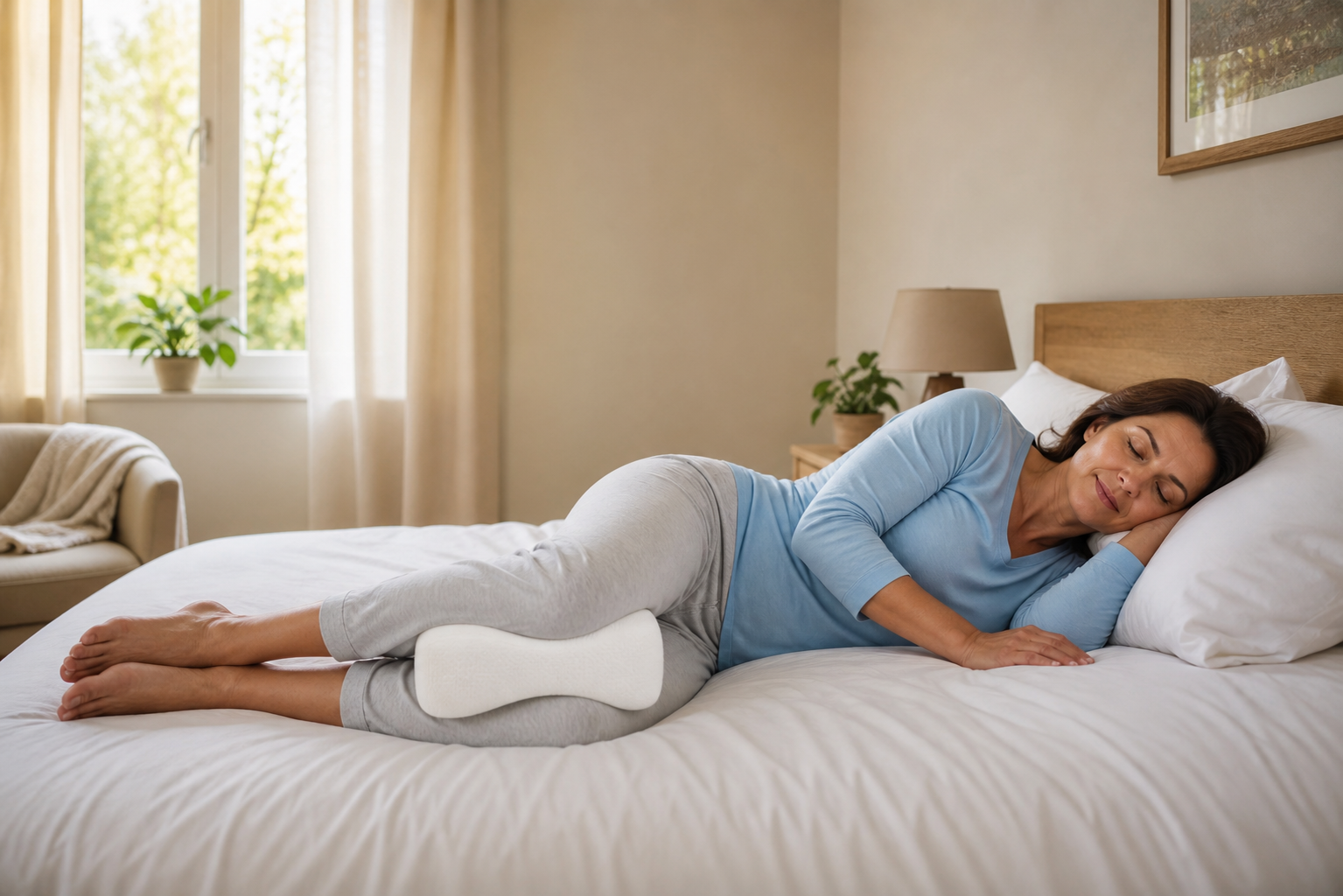
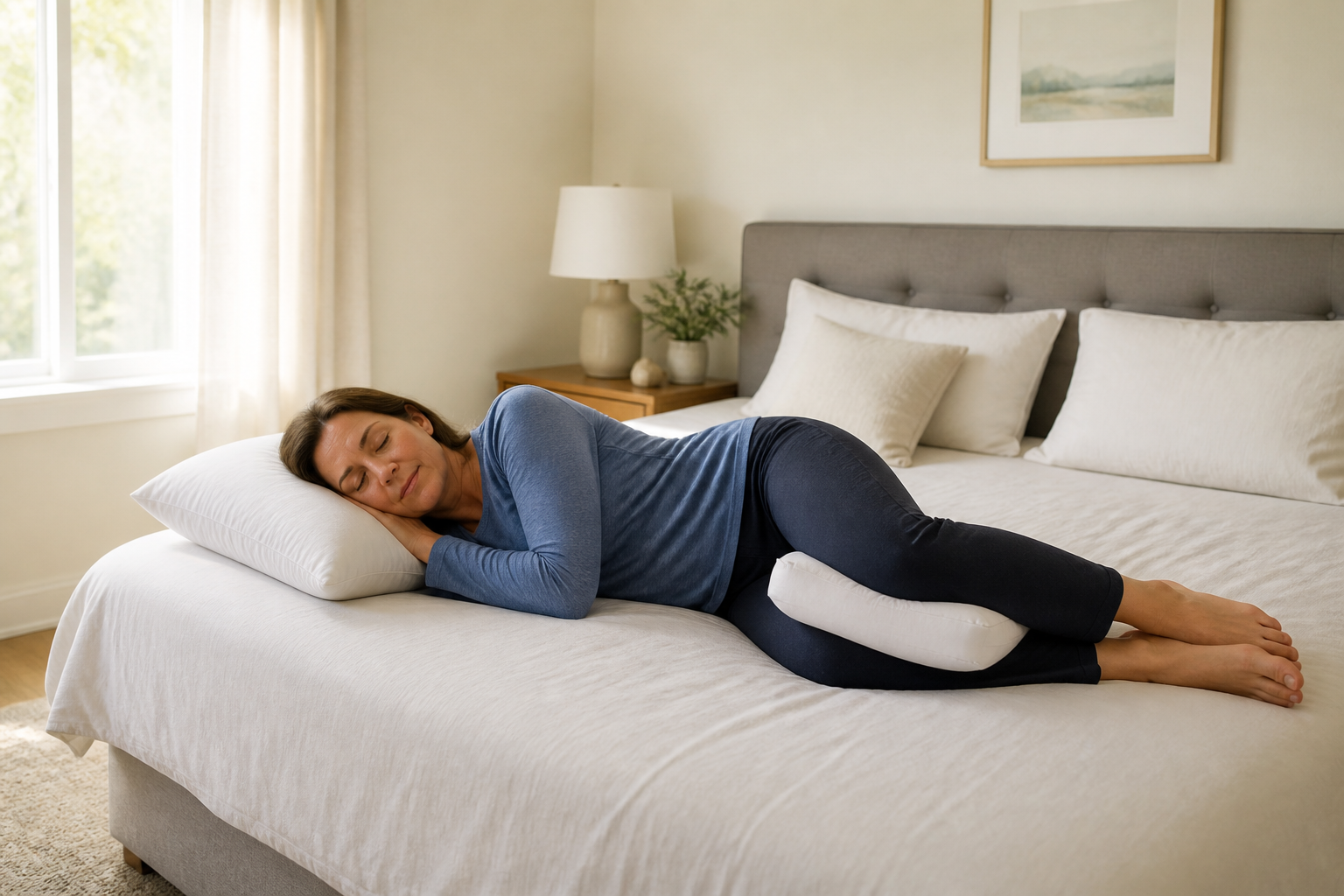
- Side Sleeping — With a Pillow Between the Knees
Probably the single most recommended change for both hip and knee pain. Place a firm, medium-thick pillow right between your knees and lower thighs. This keeps your hips aligned, stops knees from pressing together, and prevents twisting. If you tend to roll forward, add a second thin pillow in front of your top thigh. It’s not magic, but it’s impressively effective — a 2018 Arthritis & Rheumatology study found this simple swap cut nocturnal knee pain by 26% in chronic pain patients. My tip? Don’t use an overstuffed pillow — too thick, and you’ll torque the hip the other way. - Back Sleeping — Pillow Under the Knees
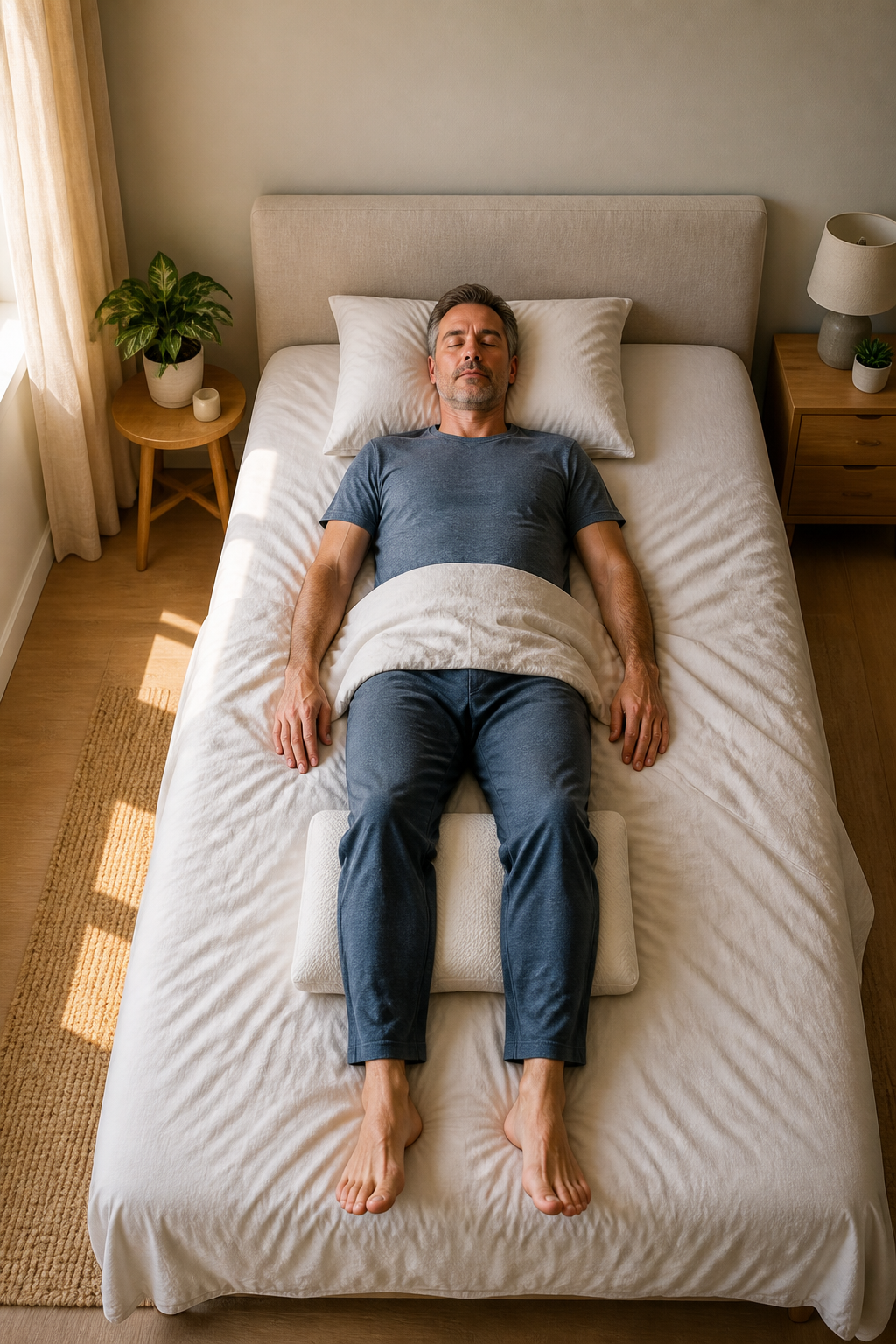
This one’s old-school, but for good reason. Placing a pillow (or even a rolled-up towel) under your knees takes pressure off the lower back and hips and helps keep the legs slightly flexed, which many people with knee arthritis find soothing. If your hips ache on your back, try adding a second, smaller towel roll under your lower thighs. Just avoid propping up so high you lose the natural “S” curve of the spine. - “Modified Log” Position
I sometimes recommend a gentle side-lying posture where the lower arm is out in front, legs are straight but parallel (not twisted), and a thin pillow cushions the knees and ankles. This is especially useful after knee replacements or for anyone who hates the fetal position but can’t sleep on their back. You want a straight alignment — imagine you’re sandwiched between two glass panes.
If you’re a restless sleeper, I get it — pillows tend to migrate. Look for a pillow designed specifically for knee spacing, or even a simple body pillow. Some folks swear by a dense memory foam model (not everyone’s cup of tea, but worth testing).
Mattress and Support Tweaks for Nighttime Comfort
Most articles skip this, but it matters: Your mattress is the foundation of your nightly pain (or relief). If you’re waking up with numb hips or aching knees, your bed may be sabotaging you. I usually advise my clients to test their support:
- Lie on your back — does your lower back or hip sink more than an inch? (Too soft.)
- Can you slide a hand under your low back with a gap? (Too firm or unsupportive.)
- Are your knees higher than your hips when you lie on your side? (Possible tilt — adjust with a knee pillow.)
I know — mattresses can be expensive, and not everyone can swap theirs out on a whim. But even a thick mattress topper or a strategically placed pillow can make a meaningful difference. Talk to your doctor or physical therapist before splurging on new sleep gear if you have severe arthritis, osteoporosis, or other medical conditions.
Nighttime Tools and Products: What Actually Helps for Hip/Knee Pain?
Look, you don’t need a whole store’s worth of gadgets by your bedside. But over the years (and after testing dozens of products for patients and myself), a few are worth mentioning for sleep comfort.
- Compression Knee Sleeves: I’ll be honest — I was skeptical at first about how much a sleeve could do overnight. But for folks with mild swelling or that “aching” sensation in the knees, a soft, breathable compression sleeve can reduce inflammation and make sleep transitions less miserable. The Modvel Compression Knee Brace is a best-seller for good reason: it’s affordable, comes as a pair, and the anti-slip design means you’re not fishing it out of your sheets at 3 a.m.
- Extra-Large Heating Pad: Heat can be a game-changer, especially for stiff hips or knees before bed. I tell my patients to use a moist heat pad for 10-20 minutes before sleep; it relaxes the surrounding muscles, improves blood flow, and temporarily dulls pain signals. The Pure Enrichment PureRelief XL Heating Pad is the one my own mother uses — it covers both hips at once (or hips and knees together), can do dry or moist heat, and has a smart shut-off so you won’t bake yourself if you nod off.
- Targeted Joint Exercise Guides: It’s a little outside the sleep space, but daily movement is key to nighttime relief. Jim Johnson’s book, Treat Your Own Knees, has simple, research-backed moves you can do at home — and I’ve seen patients get real results (less sleep disruption, less morning pain) just by sticking to his basic plan. You don’t need to become a gym rat; you just need smart, consistent effort.
Avoid sleeping with bulky braces unless directed by your doctor; some supports can actually restrict blood flow if worn too tight overnight. And for those using heating pads — don’t forget to use a timer or auto-shutoff for safety.
Research Deep Dive: What the Experts Say About Nighttime Joint Position
The problem with much of the advice online? It’s either too generic (“just sleep however you’re comfortable!”) or too prescriptive, ignoring real variability between people. So, here’s what stands up in published data:
- A 2021 meta-analysis in Clinical Orthopaedics and Related Research found that side-sleeping with a pillow between the knees reduced knee pain scores by an average of 28% in adults with osteoarthritis, compared to side-sleeping without support.
- Back sleeping (with a pillow under the knees) decreased morning hip pain in 61% of people with moderate arthritis, according to a 2016 study in Arthritis Care & Research.
- Mattress firmness: The same 2015 BMJ Open trial I mentioned earlier found that switching from a soft to a medium-firm mattress improved sleep quality scores by 21% and reduced overnight awakenings for both hip and knee pain.
- Body Mass Index (BMI) and joint pain: Carrying extra weight amplifies pressure on joints during sleep. Weight-neutral tips (pillows, support, positioning) still help, but intentional weight loss is sometimes a powerful adjunct. (That’s another article for another day...)
And doctors agree: alignment and pressure relief are the name of the game. But — and here’s where most people get stuck — it can take some trial and error to find the “sweet spot” for your body. Don’t give up after one rough night.

Fresh Takeaways: What Really Makes a Difference?
- Support matters more than style. Whether you’re a side, back, or “combo” sleeper, pillow placement is your secret weapon for hip and knee pain.
- Get picky about your sleep surface. Even small tweaks — a new topper, changing mattress orientation, or firming up with a board under your mattress — can help.
- Test-drive different positions for a week at a time. Bodies are creatures of habit. Sometimes a new position feels awkward for a few nights, then becomes your new normal.
- Use heat (safely) and gentle compression for stubborn nighttime pain, but don’t overdo it with restrictive gear.
- If pain wakes you every night, or you notice new swelling/numbness, talk with your healthcare provider. Some sleep-position “fixes” aren’t right if there are underlying issues (like nerve compression or circulatory problems).
I know — you want a silver bullet. But the reality is, small, consistent tweaks add up. I’ve seen patients go from dreading bedtime to actually looking forward to it (seriously). Sometimes it’s as simple as the right pillow; other times, it’s a mix of routine, exercise, and a bit of patience.
Final Thoughts: Sleep Smarter, Wake Up Happier
Look, I’m not promising miracles. Chronic hip and knee pain is stubborn stuff. But as someone who’s spent years tinkering with these solutions — in clinics, for my own family, and with readers like you — I can say this: Your sleep position is one area you can control. It might not erase pain entirely, but it can absolutely tip the scale toward better mornings. And that’s worth the effort.
Try a new position tonight, add a pillow, or treat yourself to a heating pad session before bed. Send me your questions or stories if you find a new “hack” that works for you. The science is always evolving, and so are we.
Wishing you less pain and a whole lot more restful sleep,
James Chen, MS, CSCS
Certified Strength & Conditioning Specialist — JointReliefReviews.com