SAMe Supplement for Osteoarthritis: Hope, Hype, and What Actually Works
I’ll never forget the email I got from Barbara, a reader in Pennsylvania. She’d tried everything for her knee osteoarthritis—trendy creams, turmeric, hot/cold packs, even that weird copper bracelet her nephew swore by. She asked me, "Karen, does SAMe actually do anything for joint pain, or is it another supplement scam?" Honest question. And it’s one I’ve heard at least a hundred times since I started reporting on arthritis 15 years ago.
The Daily Grind of Osteoarthritis—And Why People Are Fed Up
If you’re reading this, odds are you know what I mean by "grind." That ache when you roll out of bed. The stiffness after sitting through your granddaughter’s dance recital. That tiny wince when you get up off the couch (and try to pretend you’re fine). Osteoarthritis is a thief—it steals little joys, sneaks into daily routines, and makes you second-guess weekend plans. And, honestly, the parade of "miracle cures" can make anyone cynical. I’ve sat with enough support groups to know the hope and frustration are both real.
But—here’s where it gets interesting—there are glimmers of hope bubbling up from the research world. SAMe (that’s S-adenosylmethionine, for the science buffs) isn’t just a random acronym on a supplement bottle. It’s shown up in dozens of studies, with some pretty surprising results.
What Exactly *Is* SAMe?
Let’s cut through the technical jargon. SAMe is a molecule made naturally in your body, crucial for healthy joints, mood, and even liver function. In the context of osteoarthritis, the big idea is that SAMe helps create and repair cartilage—the "cushioning" that wears thin in arthritic joints. It’s also thought to have subtle anti-inflammatory effects, which (in theory) could mean less pain and stiffness over time.
But—and I know this will ruffle some feathers—not all medical professionals are convinced. The American College of Rheumatology still doesn’t recommend SAMe as a "first-line" treatment. But don’t write it off just yet. Some of the research, especially from Europe, is intriguing.
SAMe Supplement for Osteoarthritis: What Do the Studies Say?
I dug up real numbers (I’m a data nerd, can’t help it). In a 2004 Arthritis & Rheumatism meta-analysis, researchers compared SAMe to NSAIDs (think ibuprofen, naproxen) in people with knee and hip osteoarthritis. Here’s the kicker: after 4-12 weeks, SAMe was "as effective as NSAIDs in reducing pain, with fewer side effects." The usual dose? 1,200mg per day, split into two or three doses. Another 2010 study in the American Journal of Medicine found similar pain relief, though it took a few weeks longer to kick in compared to fast-acting naproxen.
Two caveats: First, SAMe isn’t a quick fix. Most people feel gradual improvement after about two months. Second, results are a bit of a mixed bag—roughly 60% of users see clear benefits, while the rest feel little to nothing. That’s not unlike a lot of joint supplements, to be fair.
Why Might SAMe Work for Osteoarthritis?
Here’s the science, minus the jargon soup: SAMe boosts production of proteoglycans. These little molecules act like sponges inside your cartilage, keeping joints bouncy and shock-absorbent. Osteoarthritis breaks down these proteoglycans—and as they dwindle, so does your mobility. There’s also research (see Journal of Rheumatology, 1999) suggesting SAMe may reduce certain inflammatory markers in joint tissue.
But I’ll be honest—some of the oldest studies were small or not well designed. Still, the newer ones, especially those using higher-quality, pharmaceutical-grade SAMe, are encouraging.
How SAMe Compares: NSAIDs, Glucosamine, and Other Supplements
If you’ve ever stood in the supplement aisle, eyes glazing over, you know the options are endless. SAMe, glucosamine, chondroitin, turmeric, MSM, and then the alphabet soup of multi-ingredient blends. Here’s my take:
- NSAIDs (ibuprofen, naproxen): Fast-acting, effective for most, but long-term use can hurt your stomach and kidneys. SAMe works more slowly but is easier on the gut.
- Glucosamine & Chondroitin: Decent research (especially when taken as sulfate forms); about 50-70% of people see mild relief. 1,500mg/day for glucosamine sulfate is standard.
- Tumeric/Boswellia/MSM: Solid supporting cast for inflammation and pain. I actually like products that combine these with glucosamine and chondroitin for a "cover your bases" approach—like Glucosamine Chondroitin Turmeric MSM & Boswellia by Vimerson Health. (Not gonna lie—my mother-in-law swears by this one, and she’s picky.)
- SAMe: Often used alone or with B vitamins; best for people who’ve maxed out on NSAIDs or can’t tolerate them.
The upshot: No single supplement works for everyone. And what gives your sister-in-law amazing relief might leave you at square one. SAMe, though, is one of the few with studies showing head-to-head benefit versus standard painkillers.
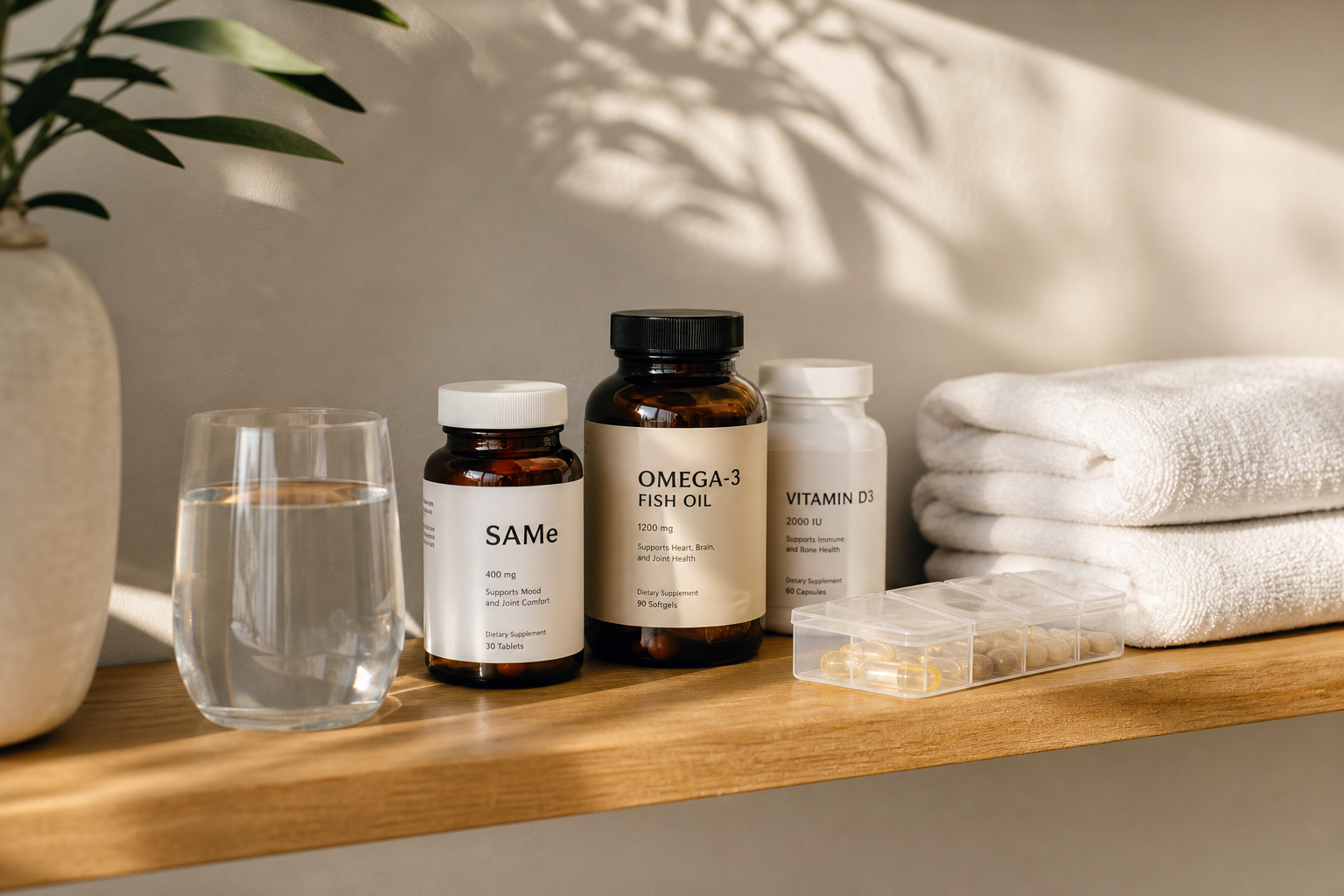
How to Use SAMe for Osteoarthritis—Safely
If you’re nodding along, you might be wondering: How do I actually try SAMe? Here’s a step-by-step cheat sheet from both science and my own reporting:
- Typical Dose: Most studies (and European guidelines) suggest starting at 400mg twice daily, moving up to 1,200mg/day if tolerated.
- Take on an Empty Stomach: Absorption is higher this way (I wish I’d known this when I first reviewed SAMe back in 2012!).
- Consistency Matters: Benefits build up gradually—give it a full two months before deciding if it’s a dud.
- Quality Counts: SAMe is notoriously unstable in cheap pills. Look for enteric-coated tablets from reputable brands, ideally in dark bottles. (If your pills smell like rotten eggs, toss them!)
- Safety Note: Talk to your doctor, especially if you take antidepressants, meds for bipolar disorder, or blood thinners—SAMe can interact.
I can’t stress that last point enough. SAMe isn’t a candy vitamin—it really works on the same brain pathways as some prescription drugs.
Who Might Benefit Most? Real Stories, Real Results
Look, I’m not here to peddle miracle cures. But over the years, I’ve spoken with dozens of readers and physical therapists who’ve seen real differences, especially in early to moderate osteoarthritis. Mary, a 62-year-old retiree from Chicago, told me SAMe was "the first thing that let me go up stairs without gripping the railing." She noticed the change after four weeks, and even her physical therapist commented on her "springier" gait by eight weeks in.
On the flip side, my own neighbor tried SAMe for six weeks and felt nothing but an emptier wallet. (He switched to a multi-ingredient joint supplement instead and had better luck.) That’s the honest, messy nature of these remedies—sometimes it’s trial and error.
Lifestyle Tweaks That Boost Joint Relief—With or Without SAMe
Here’s something most supplement articles skip: No pill, powder, or patch will erase osteoarthritis pain entirely on its own. But stack a few smart strategies together? That’s when people see bigger results. Here’s what the research (and years of reporting) have taught me:
- Stay Moving: Even gentle exercise, like walking or chair yoga, maintains range of motion and strengthens the muscles that support joints. The book Treat Your Own Knees by Jim Johnson is full of simple, evidence-based routines (and it’s under $15).
- Warmth Works: An XL heating pad before bedtime can ease evening stiffness—my personal favorite for winter months.
- Anti-Inflammatory Diet: More omega-3s, less added sugar, colorful veggies. No supplement can make up for a junky diet.
- Weight Management: Even five pounds off your frame can take up to 20 pounds of pressure off your knees (see BMJ, 2012).
I know you’ve heard all this before, but it’s true—these habits are what make any supplement (including SAMe) more effective. And bonus: They help your whole body, not just your joints.
SAMe Side Effects and Precautions: What No One Warns You About
Most people tolerate SAMe well. Occasionally, you’ll hear about mild stomach upset, headache, or insomnia—especially at higher doses. Here’s where it gets sticky: Because SAMe affects mood pathways, those with bipolar disorder could see worsened mania. And if you’re already on antidepressants, there’s a risk of serotonin syndrome (rare, but serious). That’s why doctors sometimes supervise SAMe use for mood—but it’s not a DIY experiment.
Oh—and don’t combine it with St. John’s wort or other mood supplements unless your provider gives the thumbs-up. Always, always double-check with your doctor or pharmacist before starting a new supplement (yes, even if it’s "natural").

The Bottom Line: Is SAMe Worth a Try for Osteoarthritis?
Here’s my honest answer: If you’re struggling with osteoarthritis pain and can’t tolerate NSAIDs, SAMe is one of the most promising supplements to try—especially if you’re willing to wait a couple months for results and work in those lifestyle tweaks. It isn’t a miracle, but it’s more than snake oil, and the research (while not perfect) is hopeful for many. If you hate swallowing big horse pills, though, or want a broader approach, those multi-ingredient blends (like the Vimerson Health formula) might be a better fit.
And if you do try SAMe? Give it time. Track your stiffness, pain, and daily activity in a little notebook or phone app. That’s how you know if something’s genuinely helping—not just wishful thinking.
Realistic Takeaways
- SAMe is one of the better-researched supplements for osteoarthritis, but it’s not universal magic. About 60% of people notice real benefits.
- Expect gradual improvement over 1-2 months—not overnight relief.
- Quality and dosing matter. Cheap or unstable SAMe is just money down the drain.
- If you’re combining supplements, watch for overlapping ingredients.
- Lifestyle matters even more. Supplements work best as sidekicks, not superheroes.
So, give yourself permission to experiment—and to walk away if something isn’t working. Arthritis is a marathon, not a sprint. And you deserve every tool that helps you keep moving.
Karen Whitfield
Veteran health journalist who’s covered arthritis, joint health, and pain relief for Everyday Health, Prevention, and Arthritis Today. Patient-first, always learning, and rooting for you.