
CBD Oil for Joint Pain and Inflammation: What I’ve Actually Seen in the Clinic
If you’d asked me five years ago whether I thought CBD oil for joint pain and inflammation would be a daily question in my clinic, I probably would have laughed. And yet, here we are. At least twice a week, a patient asks me if CBD is worth the hype—or if it’s just another expensive buzzword.

Look, I get it. The numbers don’t lie: According to a 2022 Consumer Reports survey, nearly one in four Americans with joint pain have tried a CBD product. My mother-in-law is one. My neighbor is another. Frankly, I tried it myself after a meniscus injury last year (more on that wild ride in a bit).
Daily Joint Pain? You’re Not Alone
If you’re searching for something—anything—that makes stairs, gardening, or even a neighborhood stroll less of a chore, you’re in good company. Chronic joint pain, whether it’s due to osteoarthritis, old injuries, or just the slow march of time, is relentless. The fact that so many people are looking beyond standard NSAIDs? That tells us two things: First, the need is real. Second, mainstream options aren’t cutting it for everyone.
Here’s the thing: painkillers like ibuprofen and naproxen can help, but they come with side effects if you use them long-term—think GI upset, kidney stress, and blood pressure issues. I’ve seen patients desperate for a gentler alternative, especially those juggling other meds.
How Does CBD Oil Actually Work?
Now, let’s get the basics straight. Cannabidiol (CBD) is a compound derived from the hemp plant—but unlike THC, it won’t get you high. What it does (at least, according to research from Arthritis Care & Research, 2020) is interact with our body’s endocannabinoid system. This network influences pain, inflammation, and even mood.
Here’s where it gets interesting. CBD appears to impact two key receptor types: CB1 (central nervous system) and CB2 (immune system and inflammation). When CBD interacts with these, it seems to reduce inflammatory signals—the kind that make your knees feel like they’re full of gravel on rainy days.
But (and this is a big but), the research is still young. The most promising animal studies—like the 2017 European Journal of Pain rat trial—showed reduced joint swelling and pain behaviors. Human data? It’s more complicated. Some small studies (Journal of Pain, 2020) found reduced arthritis pain with topical CBD. But larger, controlled trials are still few and far between. I sometimes tell my most curious patients: “The science is promising, but we’re not handing out miracle drugs here.”
Real Talk: What I’ve Seen CBD Oil Do (and Not Do)
I’ll be honest—I was skeptical at first. The supplement world is full of snake oil (please, don’t even get me started on magnetic bracelets). But curiosity (and my own injury) got the best of me. After my meniscus tear, I gave a reputable CBD oil a try. Did it erase my pain? No. But it helped me sleep a bit better, and after a week I noticed my knee felt less stiff in the mornings. Placebo? Possibly. But I’ve heard almost the exact same story from at least a dozen patients with osteoarthritis.
One reader emailed me last month: “Is it all in my head? I use a few drops of CBD under my tongue before bedtime and my fingers aren’t as swollen when I wake up. It’s subtle, but real.” Here’s my answer: even if the effect is modest, and even if placebo plays a role, relief is relief.
But here’s the kicker—not everyone feels anything at all. I’ve had patients who notice zero change, even on high-quality CBD oil. That’s the honest truth.
The Science: What the Studies Say (and What They Don’t)
The evidence for CBD oil and joint pain is a bit of a mixed bag. Let’s break it down:
- Animal Studies: Most early work was on rats and mice. The 2017 European Journal of Pain study I mentioned? They used topical CBD and saw reduced joint swelling and pain signals. Helpful, but we’re not rodents.
- Small Human Trials: In 2019, a tiny pilot study in Postgraduate Medicine found topical CBD reduced thumb pain in arthritis patients. But the sample size was microscopic (just 29 people).
- Systematic Reviews: A 2023 meta-analysis in BMJ Open concluded that while CBD looks safe and possibly effective for pain, there’s just not enough high-quality data to make sweeping recommendations yet. (And if you’ve read those dry, 80-page systematic reviews, you know they don’t mince words.)
It’s not all bad news. The tide is turning. The Journal of Rheumatology published a review in 2022 suggesting CBD “shows promise” for inflammatory arthritis, but called for larger, longer-term studies. In the meantime, anecdotal evidence—real people’s stories—keep pouring in. And sometimes, that’s enough to tip the scales for those desperate for relief (as long as you’re realistic about expectations).

So, What Kind of CBD Oil Is Best for Joint Pain?
Here’s where most people get overwhelmed. Walk into any wellness store (or scroll Amazon) and you’ll see hundreds of options. Full-spectrum, broad-spectrum, isolate, gummies, tinctures, roll-ons—my head spins and I have a doctorate in this stuff.
For joint pain and inflammation, most of my medically-minded colleagues recommend full-spectrum or broad-spectrum CBD oil. Why? These contain not just CBD, but other plant compounds (terpenes, minor cannabinoids) that might enhance the effect—a phenomenon called the “entourage effect.” A 2020 review in Frontiers in Pharmacology found full-spectrum products performed slightly better for inflammatory pain.
Topicals—like creams and balms—are popular for finger, knee, or elbow arthritis. Oral tinctures and oils are better for widespread pain or sleep issues. Dosing? That’s the wild west. Most start with 10-20mg once or twice daily; I’ve seen studies using up to 100mg/day safely, but more isn’t always better. And yes, talk to your doctor first—especially if you’re on other meds, since CBD can affect liver enzymes and drug metabolism.
Watch Out for These Pitfalls
Here’s where I get a little fired up. The CBD market is mostly unregulated. That means quality, purity, and actual CBD content vary wildly. In 2021, JAMA published a study showing nearly 60% of online CBD products were inaccurately labeled—some had barely any CBD at all.
- Stick to third-party tested brands. Look for a Certificate of Analysis (COA) from an independent lab. If a company won’t show you one, run (don’t walk) the other way.
- Watch for THC. Full-spectrum products may contain trace THC. It’s rarely enough to get you high, but if you’re drug-tested at work, be careful.
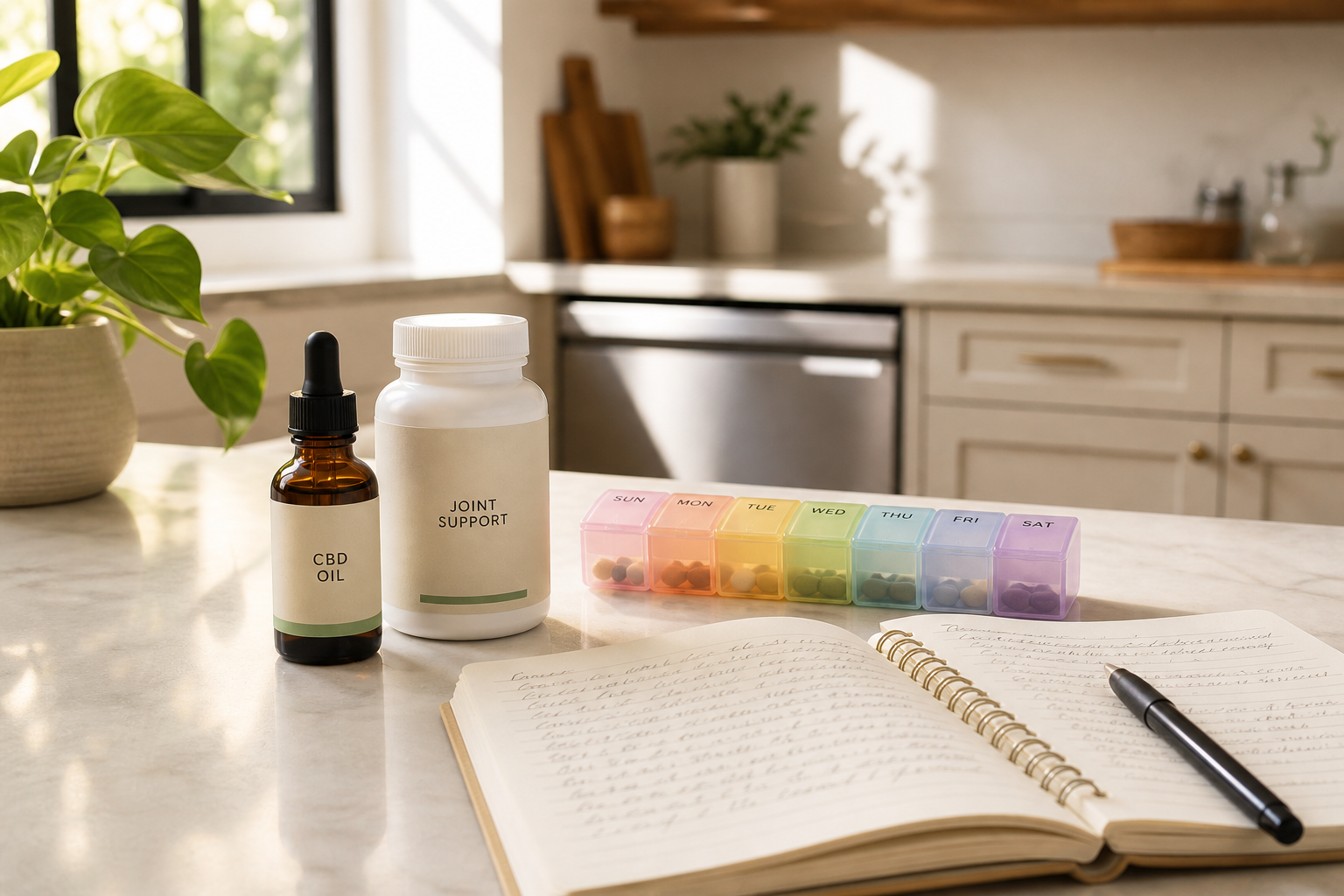
- Pill fatigue is real. If you’re already juggling pain meds, joint supplements, and vitamins, adding another daily dose can be overwhelming. Sometimes, a simple topical is just easier.
And for the record, CBD oil isn’t a replacement for physical therapy, strength work, or smart movement. It’s a tool—not a miracle.
Lifestyle Tweaks That Actually Move the Needle
If you’re nodding along, you’re probably someone who’s tried more than a few “joint health hacks.” Here’s my honest advice—from both personal experience and thousands of clinic hours:
- Stay moving. Gentle daily movement (think swimming, tai chi, or just walking) is gold for joint health. One recent Arthritis & Rheumatology study found 150 minutes/week of movement reduced pain scores by 25%—more than many supplements.
- Use targeted support. I’ve reviewed dozens of knee and wrist braces, but for my own cranky knees I keep a pair of Modvel Compression Knee Braces in the closet. They’re affordable, discreet, and sometimes make the difference between skipping or surviving a day of gardening. (Full disclosure: yes, that’s an affiliate link, and yes, I actually own them.)
- Mind your sleep. Quality sleep is the most underrated anti-inflammatory there is. CBD may help here—about 40% of patients in a 2021 Sleep Medicine study reported better sleep quality after a month of CBD use.
- Consider a supplement blend. While CBD can help, some patients swear by joint formulas with glucosamine, chondroitin, turmeric, and MSM. If you’re looking for a blend, look at Vimerson Health Glucosamine Chondroitin Turmeric MSM & Boswellia—it’s a mouthful, but with over 40,000 positive reviews, it’s one of the most trusted on Amazon. One of my retired patient’s swears by it for her morning stiffness.
- Stay skeptical, but open-minded. If you try CBD, give it a real shot: start low, go slow, and track your results honestly. Don’t expect fireworks on day one—it usually takes a week or two to notice subtle difference, if any.
If you’re struggling to find a health professional who’ll talk candidly about CBD, keep searching. The best doctors and PTs? They’ll give you an honest answer—even if it’s “maybe, maybe not.”
What About CBD Creams, Roll-ons, and Gummies?
Here’s where the options explode. A reader from Denver emailed me, “Is there any difference between CBD gummies, oils, and creams for my arthritic hands?” Great question. The short answer: yes.
- Oils/tinctures: Fastest absorption, flexible dosing, can be used under the tongue (sublingual). Good for widespread pain and sleep.
- Topical creams/roll-ons: Great for localized pain—think knees, fingers, wrists. The relief is usually milder but side effect risk is lower.
- Gummies/capsules: Convenient, but dosing can be inconsistent. Watch out for added sugars or fillers if you’re sensitive.
Most of my patients start with a topical, then branch out if needed. Again: look for products with reliable third-party testing. And if it’s not working after a few weeks? Don’t feel bad moving on—what works for one body can be completely meh for another.
The Real Limits (and Potential) of CBD for Joint Pain
Look, CBD oil isn’t going to regrow cartilage. It won’t reverse years of osteoarthritis. But if it helps you sleep, brings your daily pain from a 7 to a 5, or lets you cut back on the Aleve? That’s a win in my book.
And yes, the “CBD for everything” cheerleaders drive me a little nuts. But the stigma is fading, research is catching up, and in 2024, it’s not crazy to ask your doctor or PT, “Could this help me?” Just be a smart consumer—if something sounds too good to be true, it probably is.
Takeaways: My Honest Advice for Anyone Curious About CBD Oil
- Start with a reputable, third-party tested brand.
- Watch your dosing—most people start around 10-20mg daily and adjust as needed.
- Be patient. Relief may take a week or more to notice (if at all).
- CBD is not a substitute for movement, strength work, or medical care.
- If you’re on other meds, talk to your doctor or pharmacist first—especially blood thinners or anti-seizure drugs.
- Pair CBD with other proven joint care strategies (compression supports, physical therapy, sleep hygiene, anti-inflammatory diet).
What I Tell My Own Family (and Patients)
The question always comes up: “Would you use CBD oil for joint pain?” My honest answer? For some people, it’s worth a try—if you’re realistic, cautious, and informed. My brother uses a topical when his old football injury flares up. My mother-in-law prefers a low-dose oil before bed for her arthritic hands. Me? I still use it occasionally when my knee reminds me I’m not 25.
But—and I can’t stress this enough—CBD is a tool, not a cure. Use it wisely, trust your instincts, and don’t let slick marketing trump common sense. If you find something that genuinely helps you move, sleep, or enjoy life a bit more? That’s what matters.
Still have questions? Drop me a note or talk to your healthcare team. There’s no one-size-fits-all answer—but together, we can find what works for your joints and your life.
Stay curious, stay moving, and take care of those joints.
—Dr. Sarah Mitchell, DPT
Senior Health Editor, JointReliefReviews.com